
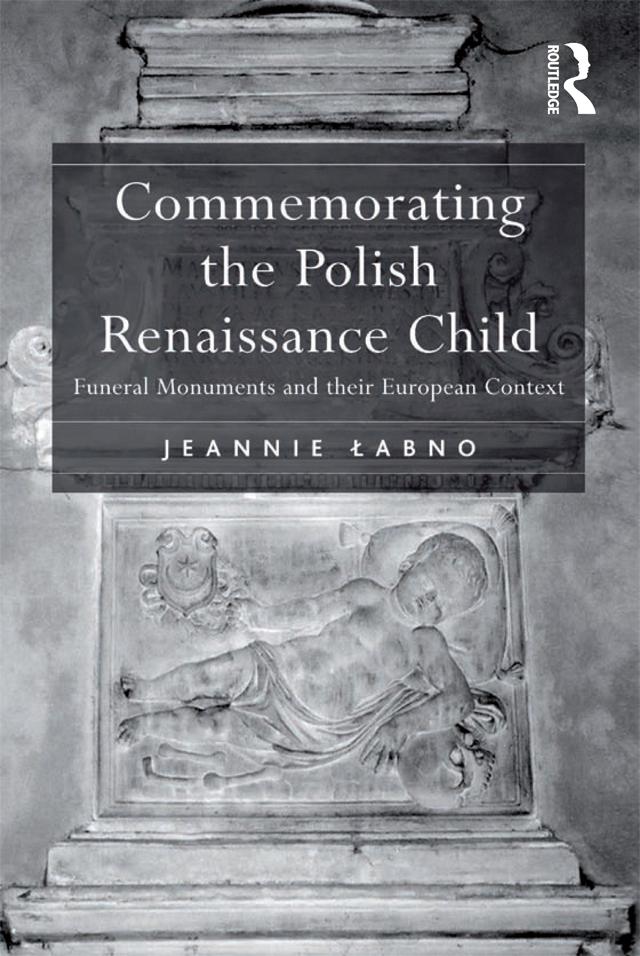
The study of funeral monuments is a growing field, but monuments erected to commemorate children have so far received little attention. Whilst the practice of erecting monuments to the dead was widespread across Renaissance Europe, the vast majority of these commemorated adults, with children generally only appearing as part of their parents' memorials. However, as this study reveals, in Poland there developed a very different tradition of funerary monuments designed for, and dedicated to, individual children - daughters as well as sons. The book consists of five major parts, which could be read in any order, though the overall sequencing is based on the premise that an understanding of the context and background will enhance a reading of these fascinating child monuments. Consequently, there is a progression of knowledge presented from the broader context of the earlier parts, towards the final parts where the actual child monuments are discussed in detail. Thus the book begins with an overview of the wider cultural contexts of funerary monuments and where children fitted into this. It then moves on to to look at the 'forgotten Renaissance' of central Europe and specifically the situation in Poland. The middle part addresses the 'culture of memory', examining the role of funerary monuments in reinforcing social, religious and familial continuity. The last parts deal with the physical monuments: empirical data, iconography and iconology. Through this illuminating consideration of children's monuments, the book raises a host of fascinating questions relating to Polish social and cultural life, family structure, attitudes to children and gender. It also addresses the issue of why Poland witnessed this unusual development, and what this tells us about the transmission of cultural and artistic ideas across Renaissance Europe. Drawing upon social and cultural history, visual and gender studies, the work not only asks important new questions, but provides a fresh perspective on some familiar topics and themes within Renaissance history.
Zahle einfach mit Karte, Klarna, Apple Pay oder Google Pay. Nicht zufrieden? Du hast immer ein 14-tägiges Widerrufsrecht. Lies mehr in unseren AGB. Hast du Fragen, schreib uns eine E-Mail an hello@memmo.org.
Memmo macht das Lernen einfacher – wo auch immer du bist. Bei uns findest du deine Kursbücher und smarte Lerntools an einem Ort: Zusammenfassungen, Quizzes, Podcasts und Lernkarten. Und Ted, dein Lernbuddy, beantwortet alles, was du wissen möchtest. Über 50.000 Studierende lernen bereits hier – gemacht, damit du schneller lernst und weniger Stress hast.
Das könnte dir auch gefallen
Buch kaufen0