
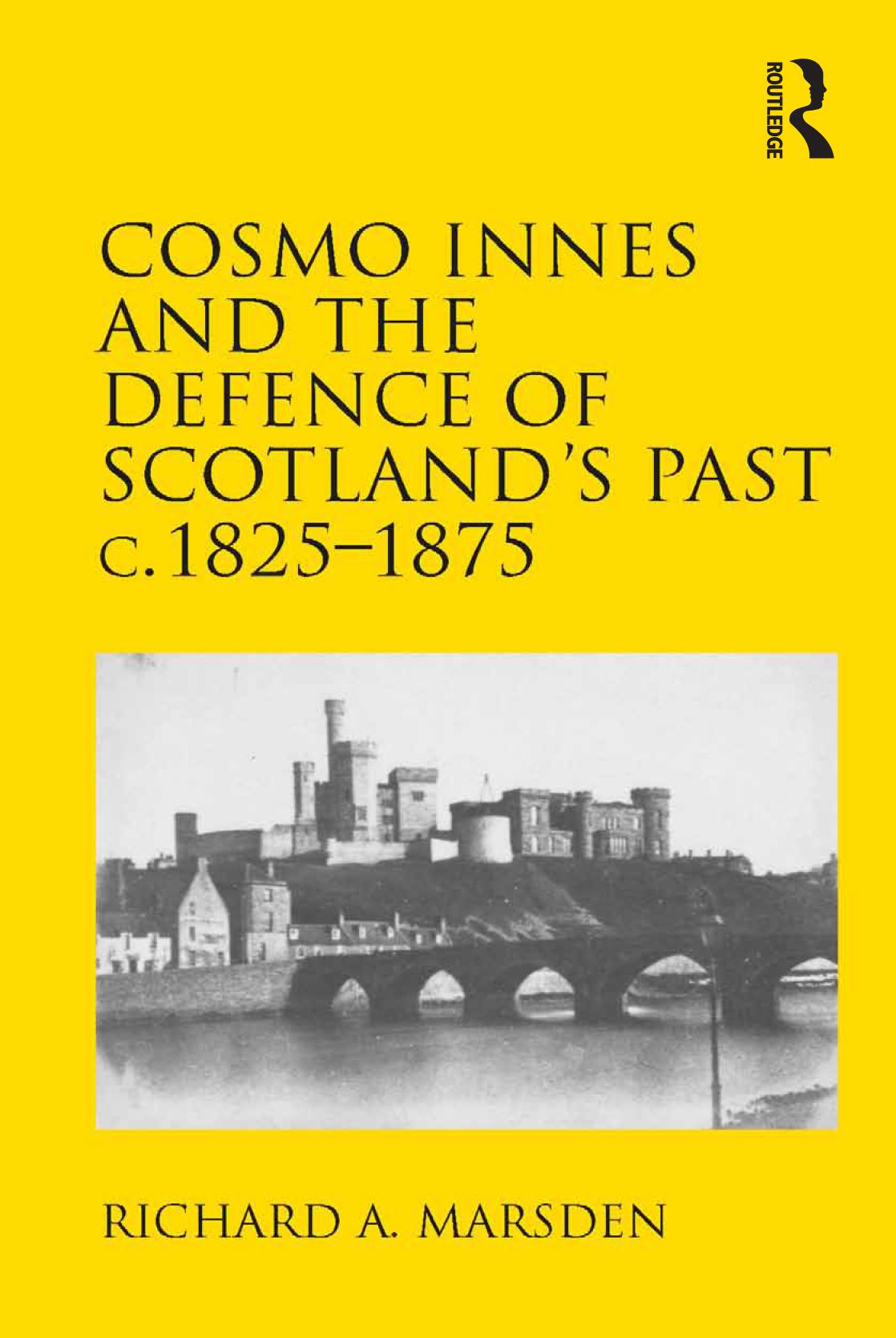
Today, Scotland's history is frequently associated with the clarion call of political nationalism. However, in the nineteenth century the influence of history on Scottish national identity was far more ambiguous. How, then, did ideas about the past shape Scottish identity in a period when union with England was all but unquestioned?
The activities of the antiquary Cosmo Innes (1798-1874) help us to address this question. Innes was a prolific editor of medieval and early modern documents relating to Scotland's parliament, legal system, burghs, universities, aristocratic families and pre-Reformation church. Yet unlike scholars today, he saw that editorial role in interventionist terms. His source editions were artificial constructs that powerfully articulated his worldview and agendas: emphasising Enlightenment-inspired narratives of social progress and institutional development. At the same time they used manuscript facsimiles and images of medieval architecture to foreground a romantic concern for the texture of past lives.
Innes operated within an elite associational culture which gave him access to the leading intellectuals and politicians of the day. His representations of Scottish history therefore had significant influence and were put to work as commentaries on some of the major debates which exorcised Scotland's intelligentsia across the middle decades of the century.
This analysis of Innes's work with sources, set within the intellectual context of the time and against the antiquarian activities of his contemporaries, provides a window onto the ways in which the 'national past' was perceived in Scotland during the nineteenth century. This allows us to explore how historical thinkers negotiated the apparent dichotomies between Enlightenment and Romanticism, whilst at the same time enabling a re-examination of prevailing assumptions about Scotland's supposed failure to maintain a viable national consciousness in the later 1800s.
Zahle einfach mit Karte, Klarna, Apple Pay oder Google Pay. Nicht zufrieden? Du hast immer ein 14-tägiges Widerrufsrecht. Lies mehr in unseren AGB. Hast du Fragen, schreib uns eine E-Mail an hello@memmo.org.
Memmo macht das Lernen einfacher – wo auch immer du bist. Bei uns findest du deine Kursbücher und smarte Lerntools an einem Ort: Zusammenfassungen, Quizzes, Podcasts und Lernkarten. Und Ted, dein Lernbuddy, beantwortet alles, was du wissen möchtest. Über 50.000 Studierende lernen bereits hier – gemacht, damit du schneller lernst und weniger Stress hast.