
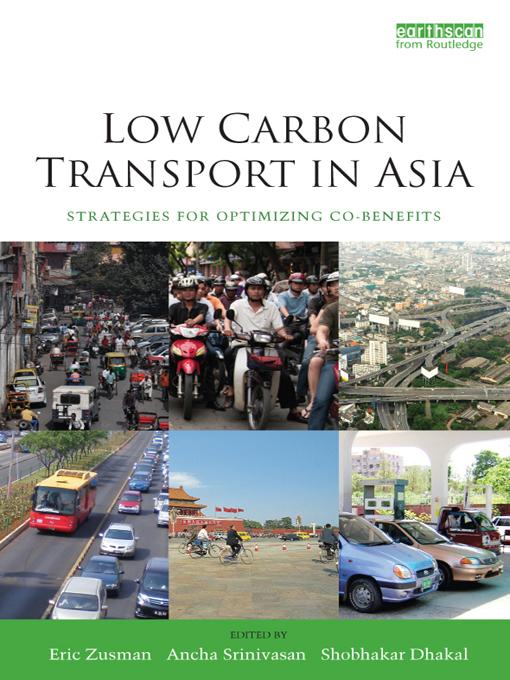
Without the effective participation of developing Asia, a climate crisis is certain. Within developing Asia, the key to averting such a crisis lies in low carbon transport. China, India and Asia's other emerging economies could promote fuel efficient vehicles, public transport, and sustainable urban planning. Or they could become locked into inefficient vehicles, energy intensive infrastructure, and suburban sprawl. The path they choose will have long-term implications for the entire world. And it will depend upon the extent to which they adopt a co-benefit approach.
A co-benefit approach involves recognizing that some transport policies mitigate greenhouse gases while simultaneously improving urban air quality, commuting times and energy security. Accounting for these additional benefits can overcome a reluctance to bear the costs of climate actions. But it also presents unique technical, financial, and institutional challenges to decision-makers unaccustomed to optimizing multiple benefits. The book represents a pioneering effort to identify and remove barriers to a co-benefit approach in developing Asia's transport sector.
The introductory section makes the case for co-benefits in developing Asia's transport sector. The second section features analytical frameworks to identify strategies with potential co-benefits, offering new findings on black carbon and dieselization. The third section grounds the analytic work in case studies on fuel switching in Pakistan, urban planning in Bandung, Indonesia, congestion charges in Beijing, vehicle restraints in Hanoi and bus rapid transit in Jakarta. A final section examines whether a post-2012 climate regime can help transform a rapidly motorizing Asia into a low carbon Asia.
This book is essential reading for transport policy makers, planners, and researchers concerned with low carbon transport, climate change and development in Asia and the wider world.
Zahle einfach mit Karte, Klarna, Apple Pay oder Google Pay. Nicht zufrieden? Du hast immer ein 14-tägiges Widerrufsrecht. Lies mehr in unseren AGB. Hast du Fragen, schreib uns eine E-Mail an hello@memmo.org.
Memmo macht das Lernen einfacher – wo auch immer du bist. Bei uns findest du deine Kursbücher und smarte Lerntools an einem Ort: Zusammenfassungen, Quizzes, Podcasts und Lernkarten. Und Ted, dein Lernbuddy, beantwortet alles, was du wissen möchtest. Über 50.000 Studierende lernen bereits hier – gemacht, damit du schneller lernst und weniger Stress hast.