
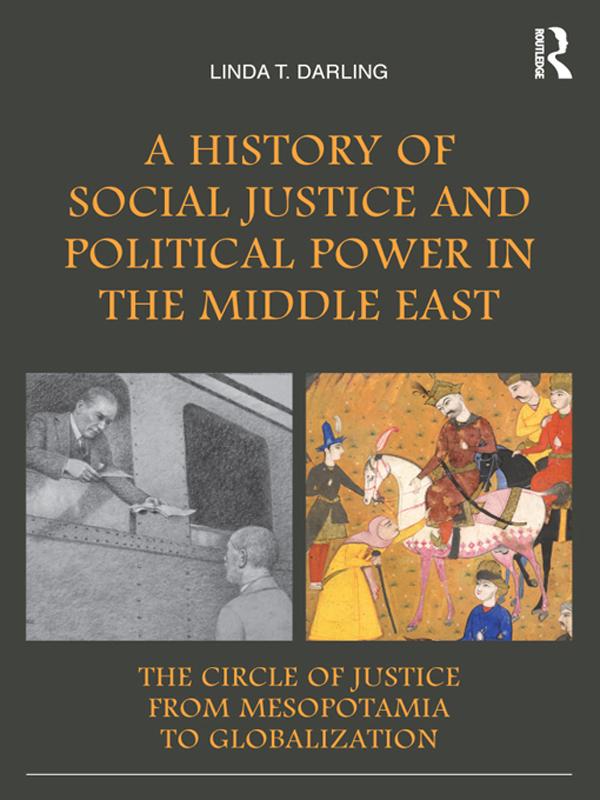
From ancient Mesopotamia into the 20th century, "the Circle of Justice" as a concept has pervaded Middle Eastern political thought and underpinned the exercise of power in the Middle East. The Circle of Justice depicts graphically how a government’s justice toward the population generates political power, military strength, prosperity, and good administration.
This book traces this set of relationships from its earliest appearance in the political writings of the Sumerians through four millennia of Middle Eastern culture. It explores how people conceptualized and acted upon this powerful insight, how they portrayed it in symbol, painting, and story, and how they transmitted it from one regime to the next. Moving towards the modern day, the author shows how, although the Circle of Justice was largely dropped from political discourse, it did not disappear from people’s political culture and expectations of government. The book demonstrates the Circle’s relevance to the Iranian Revolution and the rise of Islamist movements all over the Middle East, and suggests how the concept remains relevant in an age of capitalism.
A "must read" for students, policymakers, and ordinary citizens, this book will be an important contribution to the areas of political history, political theory, Middle East studies and Orientalism.
Zahle einfach mit Karte, Klarna, Apple Pay oder Google Pay. Nicht zufrieden? Du hast immer ein 14-tägiges Widerrufsrecht. Lies mehr in unseren AGB. Hast du Fragen, schreib uns eine E-Mail an hello@memmo.org.
Memmo macht das Lernen einfacher – wo auch immer du bist. Bei uns findest du deine Kursbücher und smarte Lerntools an einem Ort: Zusammenfassungen, Quizzes, Podcasts und Lernkarten. Und Ted, dein Lernbuddy, beantwortet alles, was du wissen möchtest. Über 50.000 Studierende lernen bereits hier – gemacht, damit du schneller lernst und weniger Stress hast.