
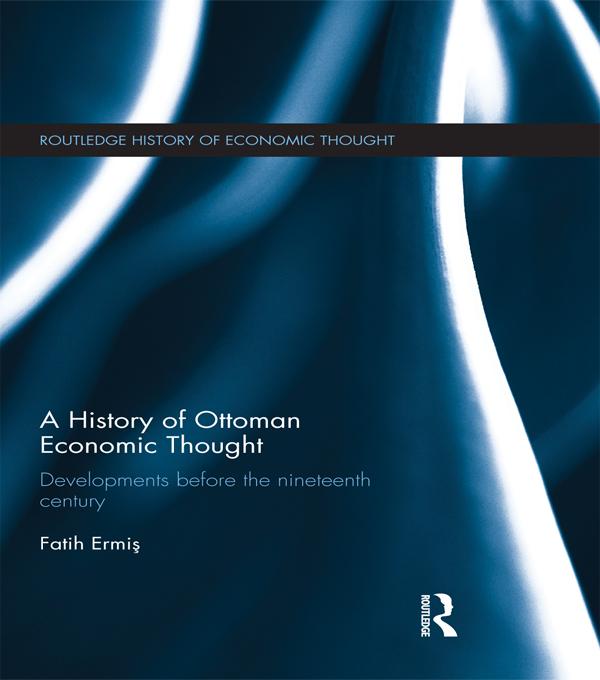
The Ottoman Empire (1299-1923) existed at the crossroads of the East and the West. Neither the history of Western Asia, nor that of Eastern Europe, can be fully understood without knowledge of the history of the Ottoman Empire.
The question is often raised of whether or not economic thinking can exist in a non-capitalistic society. In the Ottoman Empire, like in all other pre-capitalistic cultures, the economic sphere was an integral part of social life, and elements of Ottoman economic thought can frequently be found in amongst political, social and religious ideas. Ottoman economic thinking cannot, therefore, be analyzed in isolation; analysis of economic thinking can reveal aspects of the entire world view of the Ottomans.
Based on extensive archival work, this landmark volume examines Ottoman economic thinking in the classical period using three concepts: humorism, circle of justice and household economy. Basing the research upon the writings of the Ottoman elite and bureaucrats, this book explores Ottoman economic thinking starting from its own dynamics, avoiding the temptation to seek modern economic theories and approaches in the Ottoman milieu.
Zahle einfach mit Karte, Klarna, Apple Pay oder Google Pay. Nicht zufrieden? Du hast immer ein 14-tägiges Widerrufsrecht. Lies mehr in unseren AGB. Hast du Fragen, schreib uns eine E-Mail an hello@memmo.org.
Memmo macht das Lernen einfacher – wo auch immer du bist. Bei uns findest du deine Kursbücher und smarte Lerntools an einem Ort: Zusammenfassungen, Quizzes, Podcasts und Lernkarten. Und Ted, dein Lernbuddy, beantwortet alles, was du wissen möchtest. Über 50.000 Studierende lernen bereits hier – gemacht, damit du schneller lernst und weniger Stress hast.