
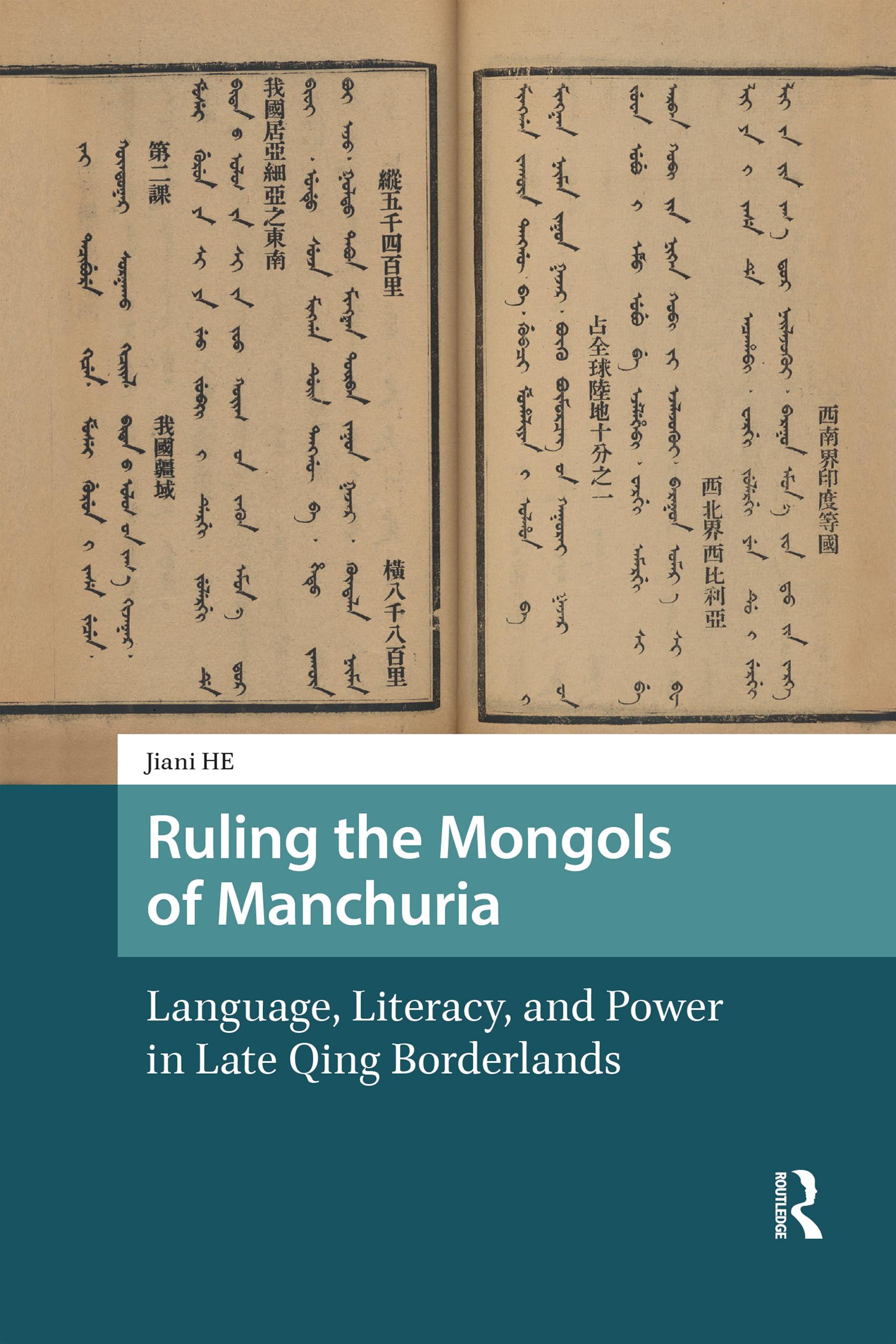
At the turn of the twentieth century, the Jirim League witnessed a linguistic struggle between Manchu, Mongol, Chinese, Japanese, and Russian powers. The Qing Empire envisioned a trilingual educational system, with the aim of improving the Jirim Mongols’ ability to read Chinese, Manchu, and Mongolian. Through this policy, the Qing sought to transform loyal imperial subjects into modern patriotic nationals and incorporate them into an integrated and united China under a Manchu constitutional monarchy. The late Qing’s language policy and strategy for ruling the Mongols of Manchuria was an attempt to address the enduring multilingual legacies in Qing administration and people’s everyday life, growing local ethnic tensions, cross-boundary connections, imperial rivalries, and the rise of new ideas concerning nation, modern state, and international relations in East Asia. This book challenges the notion of Chinese language reform as a story of linear progression towards national monolingualism, highlights the power of multilingualism in Chinese nationalist discourse from a peripheral, non-Han Chinese perspective, and questions the extent to which national languages dominate the writing of history.
Zahle einfach mit Karte, Klarna, Apple Pay oder Google Pay. Nicht zufrieden? Du hast immer ein 14-tägiges Widerrufsrecht. Lies mehr in unseren AGB. Hast du Fragen, schreib uns eine E-Mail an hello@memmo.org.
Memmo macht das Lernen einfacher – wo auch immer du bist. Bei uns findest du deine Kursbücher und smarte Lerntools an einem Ort: Zusammenfassungen, Quizzes, Podcasts und Lernkarten. Und Ted, dein Lernbuddy, beantwortet alles, was du wissen möchtest. Über 50.000 Studierende lernen bereits hier – gemacht, damit du schneller lernst und weniger Stress hast.
Das könnte dir auch gefallen
Buch kaufen0