
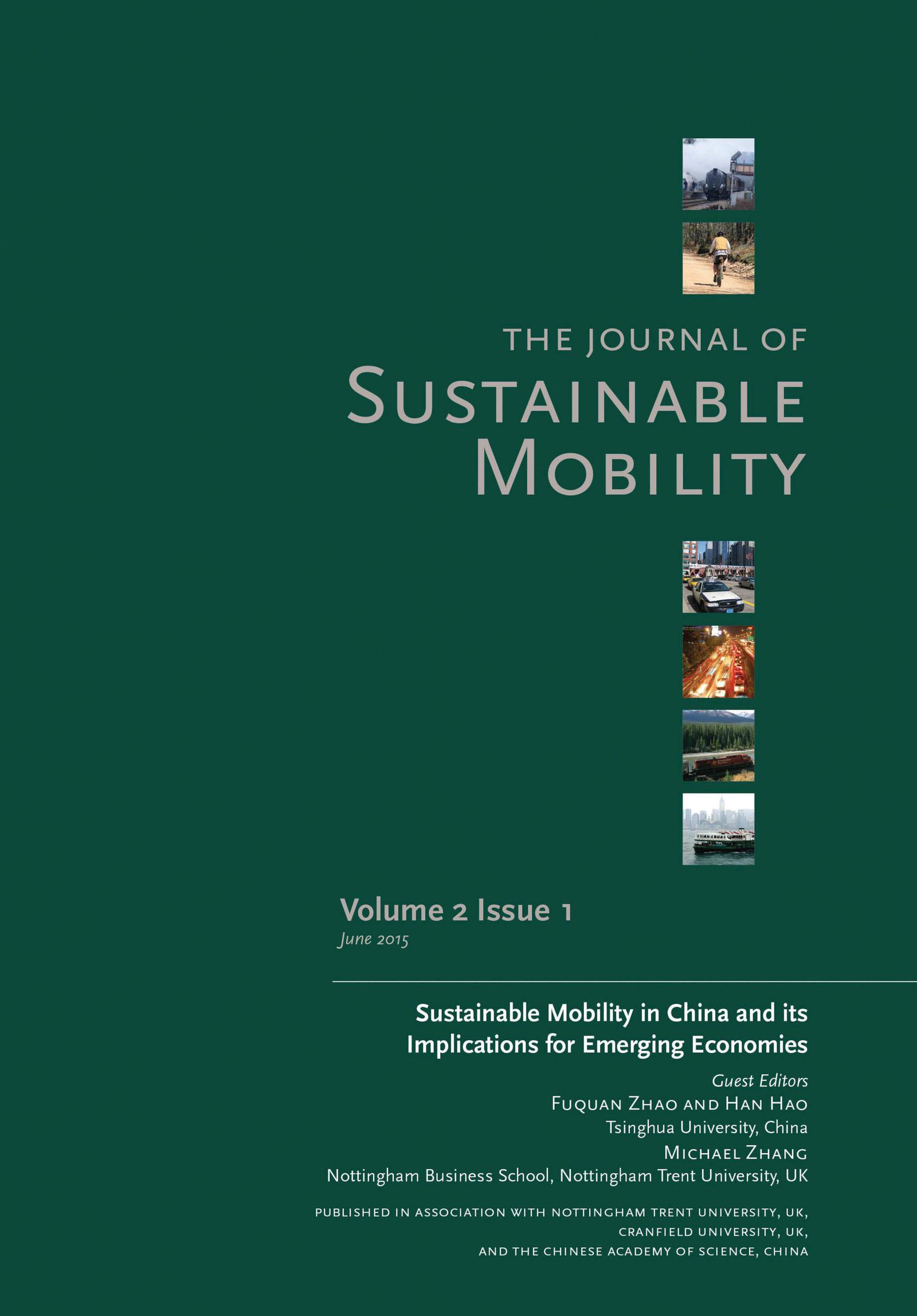
After three decades of rapid economic growth, China became the world’s second largest economy in 2010 after the United States of America. Along with the prospect of lifting millions out of poverty and improving living standards, China is facing yet new challenges of rapid urbanization. Recent research findings show that in 2012 urbanization rate was 52.6% in China (Lacy et al., 2013). It is predicted that by 2020 the number of megacities in China with an urban population of more than 10 million will increase to thirteen. Along with the increase in urban population and living standards there has been rapid increase of car ownership in China. It is estimated that there are more than five million vehicles in Beijing (Cheng, 2013; Economist, 2013). Large cities and prefecture-level cities already contributed 89.6% of China’s total industrial CO2 emissions. One day in January 2013 air in Beijing was heavily polluted to a level of toxicity (smog) forty times the standard safe level set by the World Health Organization (Economist, 2013).At the international level, transport contributed 61.5% to world petroleum consumption and 22.3% to global CO2 emissions in 2010 (IEA, 2012). While the overall level of CO2 emissions in developed economies is stabilizing and in some cases declining, the levels in the developing and emerging economies are increasing. Large emerging economies with megacities will imminently become the major concerns of transport-related CO2 emissions. Without strategic innovations in the automotive industry and transport management system the current state of China’s transport sector is not sustainable. The long-term sustainable solutions are likely to emerge from the interplay of economic, environmental, social and technological factors.The Special Issue, partnered with the Second International Symposium on Sustainable Mobility, focuses on the issues of developing policies and corporate strategies to help the automotive industry, transport management systems, and urban planning to embark on a sustainable path to future growth and development (WBCSD, 2007; World Bank, 2008). The critical debate and research findings of this issue shed light on future research and practice on sustainable mobility in emerging economies.
Zahle einfach mit Karte, Klarna, Apple Pay oder Google Pay. Nicht zufrieden? Du hast immer ein 14-tägiges Widerrufsrecht. Lies mehr in unseren AGB. Hast du Fragen, schreib uns eine E-Mail an hello@memmo.org.
Memmo macht das Lernen einfacher – wo auch immer du bist. Bei uns findest du deine Kursbücher und smarte Lerntools an einem Ort: Zusammenfassungen, Quizzes, Podcasts und Lernkarten. Und Ted, dein Lernbuddy, beantwortet alles, was du wissen möchtest. Über 50.000 Studierende lernen bereits hier – gemacht, damit du schneller lernst und weniger Stress hast.
Das könnte dir auch gefallen
Buch kaufen0