
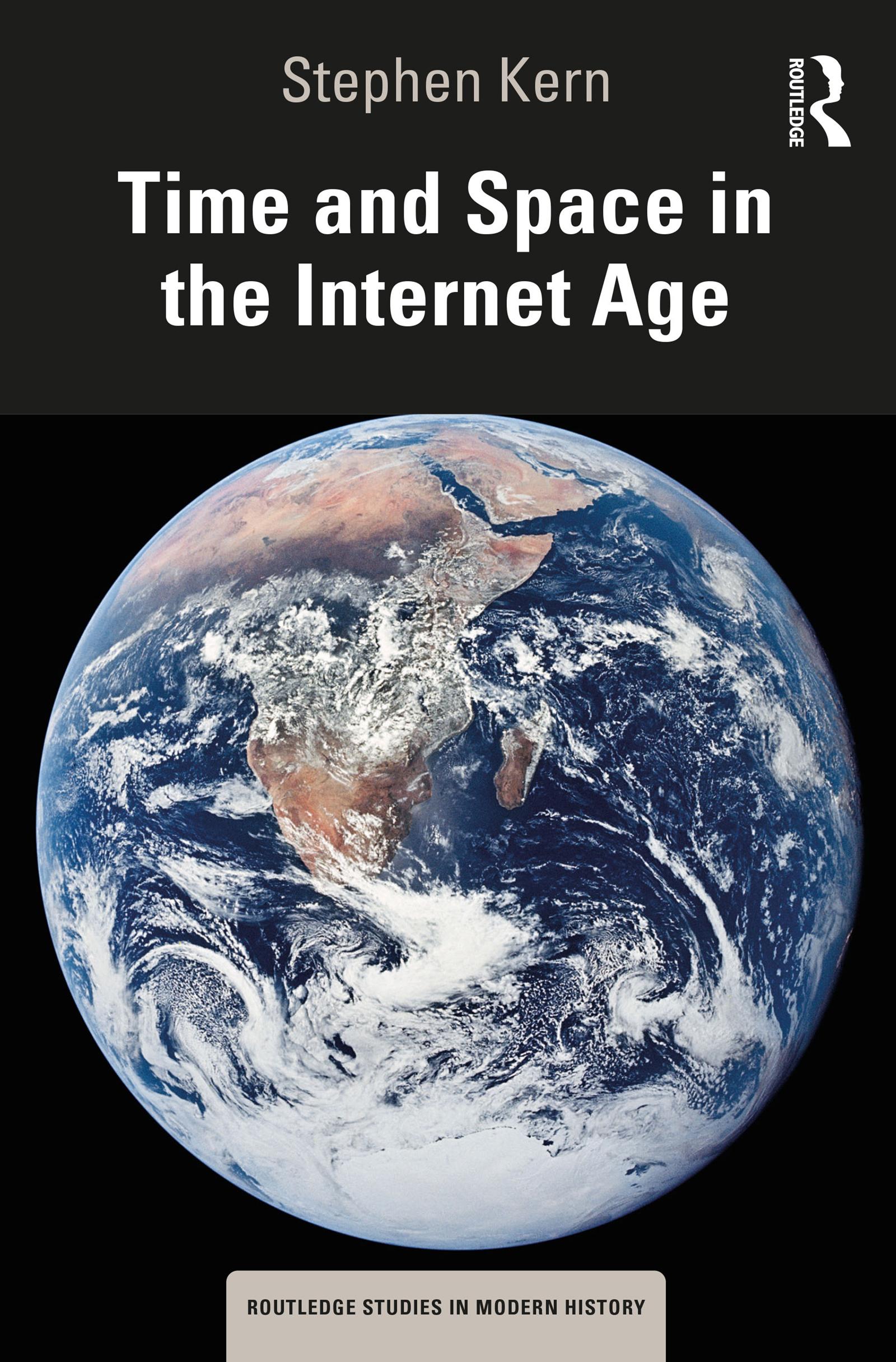
This book analyzes how new technologies transformed life and thought between two periods, 1880-1920 and 1980-2020, with a focus on temporal experiences of past, present, future and the spatial experiences of form, distance, and direction.
The signature contrast is between experiences of time and space transformed by the telephone in the earlier period and the Internet in the later period along with other sharp contrasts: the sinking of the Lusitania in 1915 and the attack on the World Trade Center on 9/11, World War I and the Gulf Wars, gravity bombs and smart bombs, the pandemics of 1918 and 2020, assembly lines and flexible production, Farmer’s Almanacs and computer-based weather predictions, cash transactions and one-click ordering, decolonization and globalization, internationalism and planetarity. The book also makes three interpretive arguments: the Epistemological Argument covers how greater knowledge introduced uncertainties; the Ethical Argument tracks how new technologies prompted ethical judgments about their value; and the Re-hierarchizing Argument tracks the erosion of spatial hierarchies most notably in religion, society, and politics with the increasing progress of secularization, social mobility, and democratization.
Time and Space in the Internet Age is a thought-provoking study for academics and general readers interested in the history of technology and science.
Zahle einfach mit Karte, Klarna, Apple Pay oder Google Pay. Nicht zufrieden? Du hast immer ein 14-tägiges Widerrufsrecht. Lies mehr in unseren AGB. Hast du Fragen, schreib uns eine E-Mail an hello@memmo.org.
Memmo macht das Lernen einfacher – wo auch immer du bist. Bei uns findest du deine Kursbücher und smarte Lerntools an einem Ort: Zusammenfassungen, Quizzes, Podcasts und Lernkarten. Und Ted, dein Lernbuddy, beantwortet alles, was du wissen möchtest. Über 50.000 Studierende lernen bereits hier – gemacht, damit du schneller lernst und weniger Stress hast.