
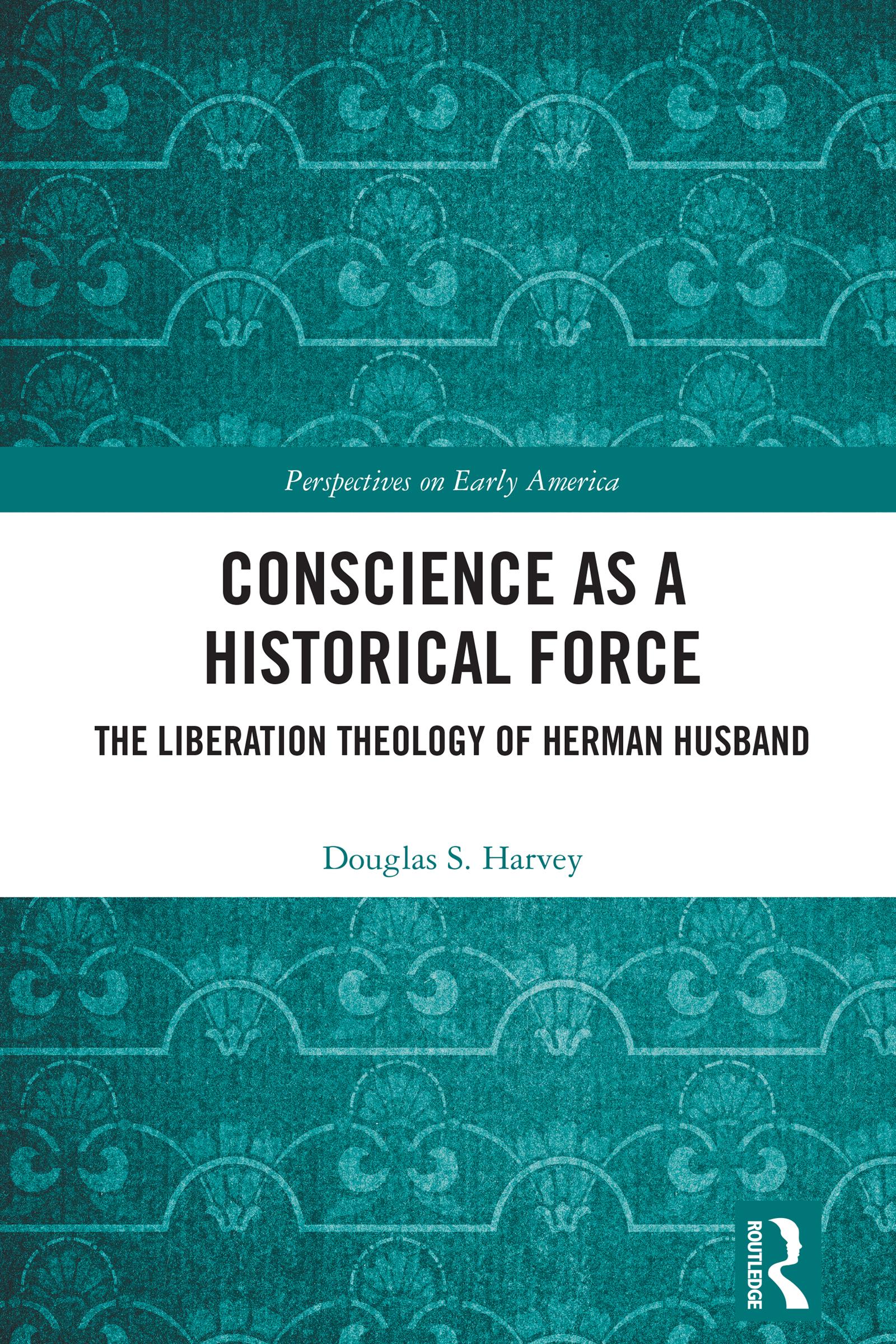
Conscience as a Historical Force is the first true analysis of the life and thought of the radically democratic eighteenth-century backcountry figure of Herman Husband (1724–1795) and his heavily metaphorical political and religious writings during the “Age of Revolution.”
This book addresses the influence of religion in the American revolutionary period and locates the events of Herman Husband’s life in the broader Atlantic context of the social, economic, and political transition from feudalism to capitalism. Husband’s metaphorical reading of the Bible reveals the timeless nature of his message and its relevance today. Other studies of Herman Husband fail in this regard even though, this book argues, this is the most valuable lesson of his life. The debate over the importance of religion in the American Revolution has neglected its connection with both the English radicals of the seventeenth century and continental religious radicals dating back further still. Essentially, the “antinomian” movement, where individuals refused to acknowledge any power greater than that of their own conscience, was Atlantic in scope and dates to the origins of Christianity itself.
With a chronological approach, this study is of great use to students and scholars interested in the politics and religion of eighteenth-century America.
Zahle einfach mit Karte, Klarna, Apple Pay oder Google Pay. Nicht zufrieden? Du hast immer ein 14-tägiges Widerrufsrecht. Lies mehr in unseren AGB. Hast du Fragen, schreib uns eine E-Mail an hello@memmo.org.
Memmo macht das Lernen einfacher – wo auch immer du bist. Bei uns findest du deine Kursbücher und smarte Lerntools an einem Ort: Zusammenfassungen, Quizzes, Podcasts und Lernkarten. Und Ted, dein Lernbuddy, beantwortet alles, was du wissen möchtest. Über 50.000 Studierende lernen bereits hier – gemacht, damit du schneller lernst und weniger Stress hast.