
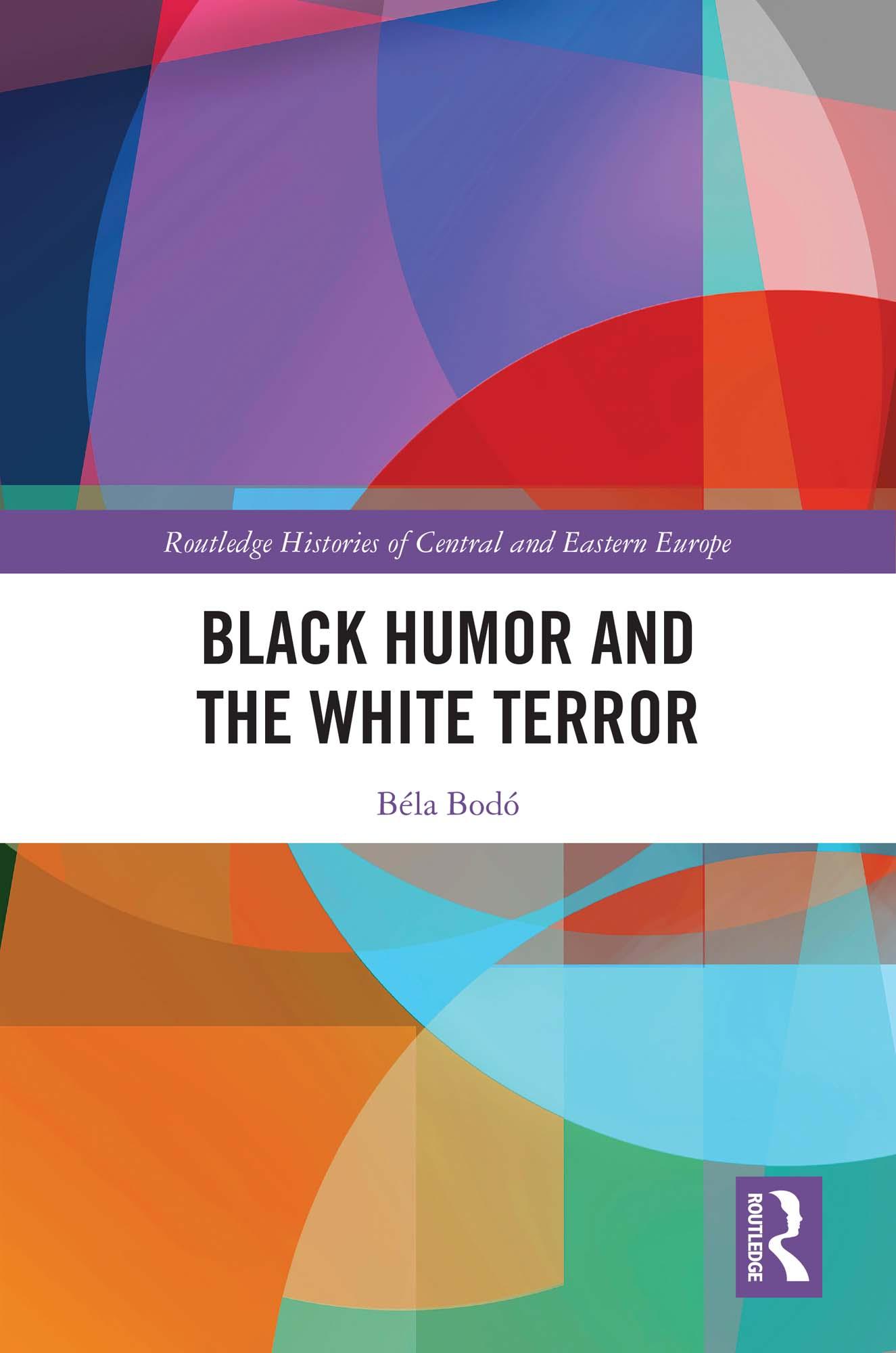
This book examines political humor as a reaction to the lost war, the post-war chaos, and antisemitic violence in Hungary between 1918 and 1922. While there is an increased body of literature on Jewish humor as a form of resistance and a means of resilience during the Holocaust, only a handful of studies have addressed Jewish humor as a reaction to physical attacks and increased discrimination in Europe during and after the First World War. The majority of studies have approached the issue of Jewish humor from an anthropological, cultural, or linguistic perspective; they have been interested in the humor of lower- or lower-middle-class Jews in the East European shtetles before 1914.
On the other hand, this study follows a historical and political approach to the same topic and focuses on the reaction of urban, middle-class, and culturally assimilated Jews to recent events: to the disintegration of the Dual Monarchy, the collapse of law and order, increased violence, the reversal of Jewish emancipation and the rise of new and more pernicious antisemitic prejudices. The study sees humor not only as a form of entertainment and jokes as literature and a product of popular culture, but also as a heuristic device to understand the world and make sense of recent changes, as well as a means to defend one’s social position, individual and group identity, strike back at the enemy, and last but not least, to gain the support and change the hearts and minds of non-Jews and neutral bystanders.
Unlike previous scholarly works on Jewish resistance during the Holocaust, this study sees Budapest Jewish humor after WWI as a joint adventure: as a product of urban and Hungarian culture, in which Jewish not only played an important role but also cofounded. Finally, the book addressed the issue of continuity in Hungarian history, the "twisted road to Auschwitz": whether urban Jewish humor, as a form of escapism, helped to desensitize the future victims of the Holocaust to the approaching danger, or it continued to play the same defensive and positive role in the interwar period, as it had done in the immediate aftermath of the Great War.
Zahle einfach mit Karte, Klarna, Apple Pay oder Google Pay. Nicht zufrieden? Du hast immer ein 14-tägiges Widerrufsrecht. Lies mehr in unseren AGB. Hast du Fragen, schreib uns eine E-Mail an hello@memmo.org.
Memmo macht das Lernen einfacher – wo auch immer du bist. Bei uns findest du deine Kursbücher und smarte Lerntools an einem Ort: Zusammenfassungen, Quizzes, Podcasts und Lernkarten. Und Ted, dein Lernbuddy, beantwortet alles, was du wissen möchtest. Über 50.000 Studierende lernen bereits hier – gemacht, damit du schneller lernst und weniger Stress hast.