
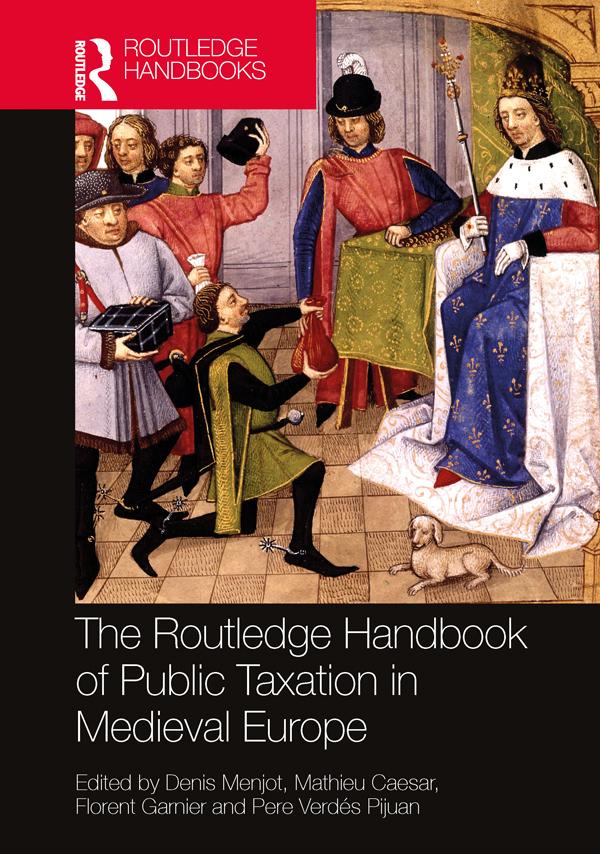
Beginning in the twelfth century, taxation increasingly became an essential component of medieval society in most parts of Europe. The state-building process and relations between princes and their subject cities or between citizens and their rulers were deeply shaped by fiscal practices. Although medieval taxation has produced many publications over the past decades there remains no synthesis of this important subject.
This volume provides a comprehensive overview on a European scale and suggests new paths of inquiry. It examines the fiscal systems and practices of medieval Europe, including essential themes such as medieval fiscal theory and the power to tax; royal and urban taxation; and Church taxation. It goes on to survey the entire European continent, as well as including comparative chapters on the non-European medieval world, exploring questions on how taxation developed and functioned; what kinds of problems authorities encountered assessing their fiscal power; and the circulation of fiscal cultures and practices across cities and kingdoms. The book also provides a glossary of the most important types of medieval taxes, giving an essential definition of key terms cited in the chapters.
The Routledge Handbook of Public Taxation in Medieval Europe will appeal to a large audience, from seasoned scholars who need a comprehensive synthesis, to students and younger scholars in search of an overview of this critical subject.
Zahle einfach mit Karte, Klarna, Apple Pay oder Google Pay. Nicht zufrieden? Du hast immer ein 14-tägiges Widerrufsrecht. Lies mehr in unseren AGB. Hast du Fragen, schreib uns eine E-Mail an hello@memmo.org.
Memmo macht das Lernen einfacher – wo auch immer du bist. Bei uns findest du deine Kursbücher und smarte Lerntools an einem Ort: Zusammenfassungen, Quizzes, Podcasts und Lernkarten. Und Ted, dein Lernbuddy, beantwortet alles, was du wissen möchtest. Über 50.000 Studierende lernen bereits hier – gemacht, damit du schneller lernst und weniger Stress hast.