
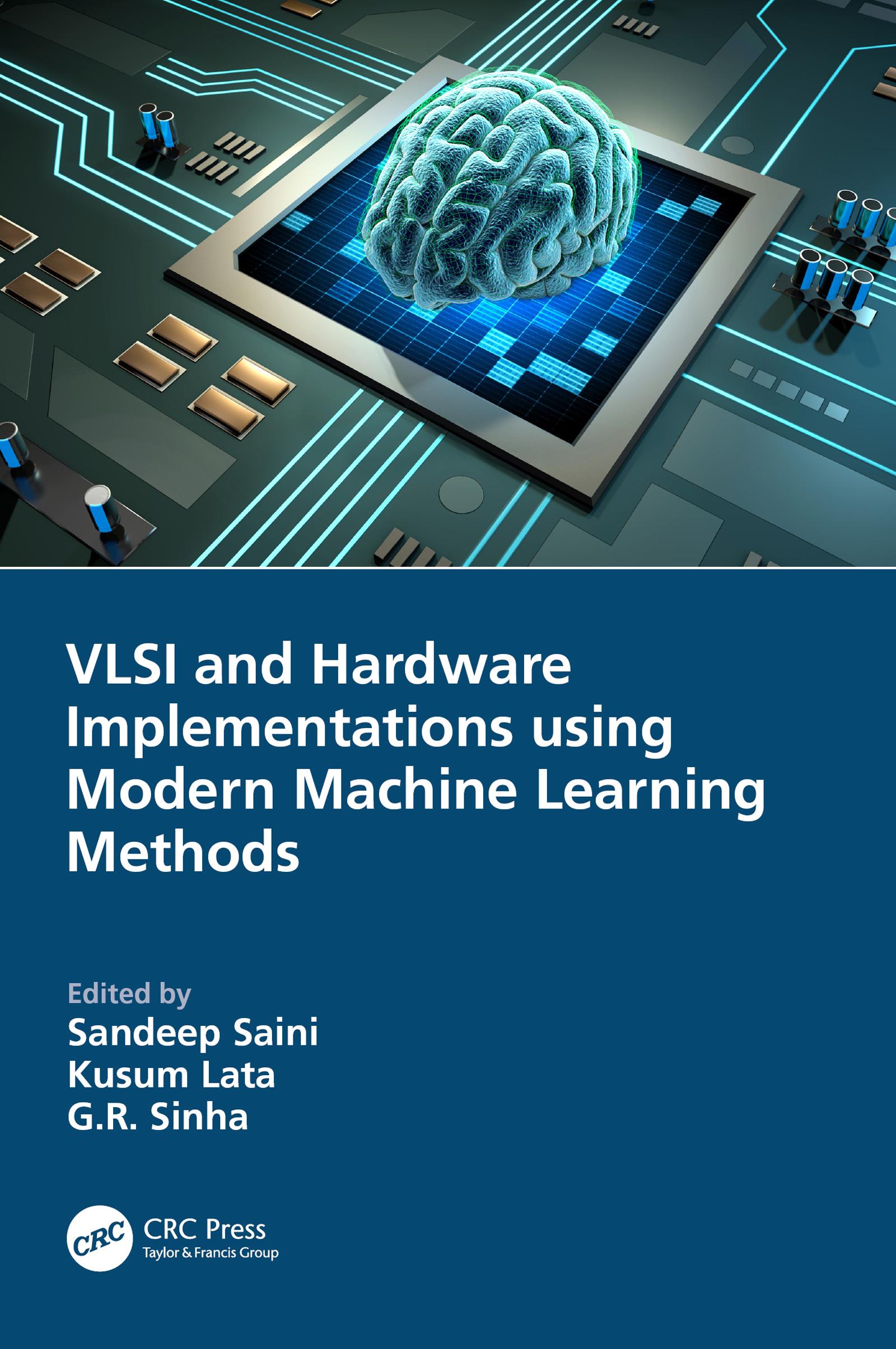
Machine learning is a potential solution to resolve bottleneck issues in VLSI via optimizing tasks in the design process. This book aims to provide the latest machine-learning–based methods, algorithms, architectures, and frameworks designed for VLSI design. The focus is on digital, analog, and mixed-signal design techniques, device modeling, physical design, hardware implementation, testability, reconfigurable design, synthesis and verification, and related areas. Chapters include case studies as well as novel research ideas in the given field. Overall, the book provides practical implementations of VLSI design, IC design, and hardware realization using machine learning techniques.
Features:
- Provides the details of state-of-the-art machine learning methods used in VLSI design
- Discusses hardware implementation and device modeling pertaining to machine learning algorithms
- Explores machine learning for various VLSI architectures and reconfigurable computing
- Illustrates the latest techniques for device size and feature optimization
- Highlights the latest case studies and reviews of the methods used for hardware implementation
This book is aimed at researchers, professionals, and graduate students in VLSI, machine learning, electrical and electronic engineering, computer engineering, and hardware systems.
Zahle einfach mit Karte, Klarna, Apple Pay oder Google Pay. Nicht zufrieden? Du hast immer ein 14-tägiges Widerrufsrecht. Lies mehr in unseren AGB. Hast du Fragen, schreib uns eine E-Mail an hello@memmo.org.
Memmo macht das Lernen einfacher – wo auch immer du bist. Bei uns findest du deine Kursbücher und smarte Lerntools an einem Ort: Zusammenfassungen, Quizzes, Podcasts und Lernkarten. Und Ted, dein Lernbuddy, beantwortet alles, was du wissen möchtest. Über 50.000 Studierende lernen bereits hier – gemacht, damit du schneller lernst und weniger Stress hast.