
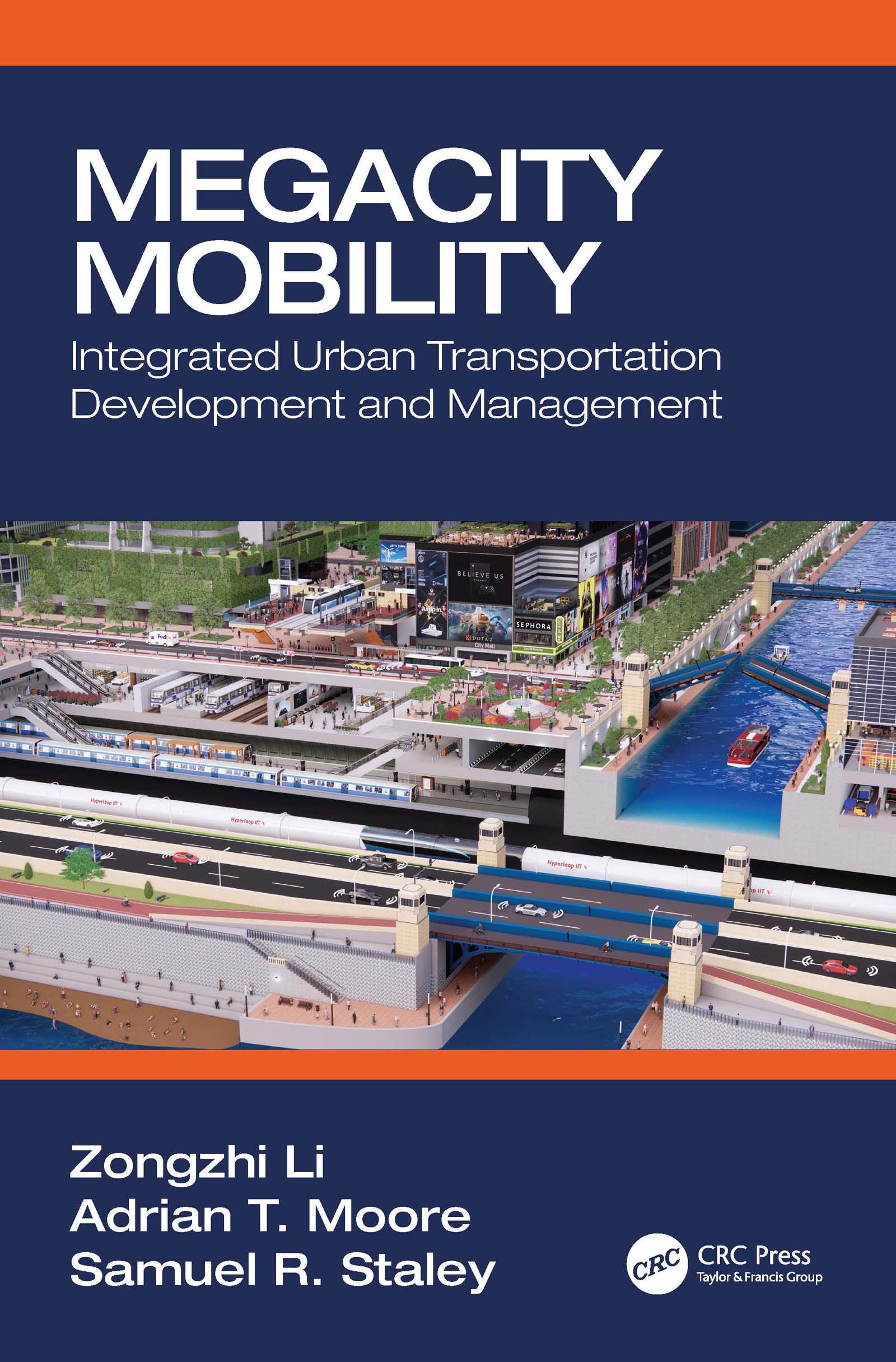
World population growth and economic prosperity have given rise to ever-increasing demands on cities, transportation planning, and goods movement. This growth, coupled with a slower pace of transportation capacity expansion and deteriorated facility restoration, has led to rapid changes in the transportation planning and policy environment. These stresses are particularly acute for megacities where degradation of mobility and facility performance have reached alarming rates. Addressing these transportation challenges requires innovative solutions.
Megacity Mobility grapples with these challenges by addressing transportation policy, planning, and facilities in a multimodal context. It discusses innovative short- and long-term solutions for meeting current and future mobility needs for the world’s most dynamic cities by addressing the influence of urban land use on mobility, 3D spiderweb transportation planning, travel demand management, multimodal transportation with flexible capacity, efficient capacity utilization driven by new technologies, innovative transportation funding and financing, and performance-based budget allocation using asset management principles. It discusses emerging issues, highlights potential challenges affecting proposed solutions, and provides policymakers, planners, and transportation professionals a road map to achieving sustainable mobility in the 21st century.
Zongzhi Li is a professor and the director of the Sustainable Transportation and Infrastructure Research (STAIR) Center at Illinois Institute of Technology (IIT).
Adrian T. Moore is vice president of policy at Reason Foundation in Washington, D.C., with focuses on privatization, transportation and urban growth, and more.
Samuel R. Staley is the director of the DeVoe L. Moore Center in the College of Social Sciences and Public Policy at Florida State University.
Zahle einfach mit Karte, Klarna, Apple Pay oder Google Pay. Nicht zufrieden? Du hast immer ein 14-tägiges Widerrufsrecht. Lies mehr in unseren AGB. Hast du Fragen, schreib uns eine E-Mail an hello@memmo.org.
Memmo macht das Lernen einfacher – wo auch immer du bist. Bei uns findest du deine Kursbücher und smarte Lerntools an einem Ort: Zusammenfassungen, Quizzes, Podcasts und Lernkarten. Und Ted, dein Lernbuddy, beantwortet alles, was du wissen möchtest. Über 50.000 Studierende lernen bereits hier – gemacht, damit du schneller lernst und weniger Stress hast.