
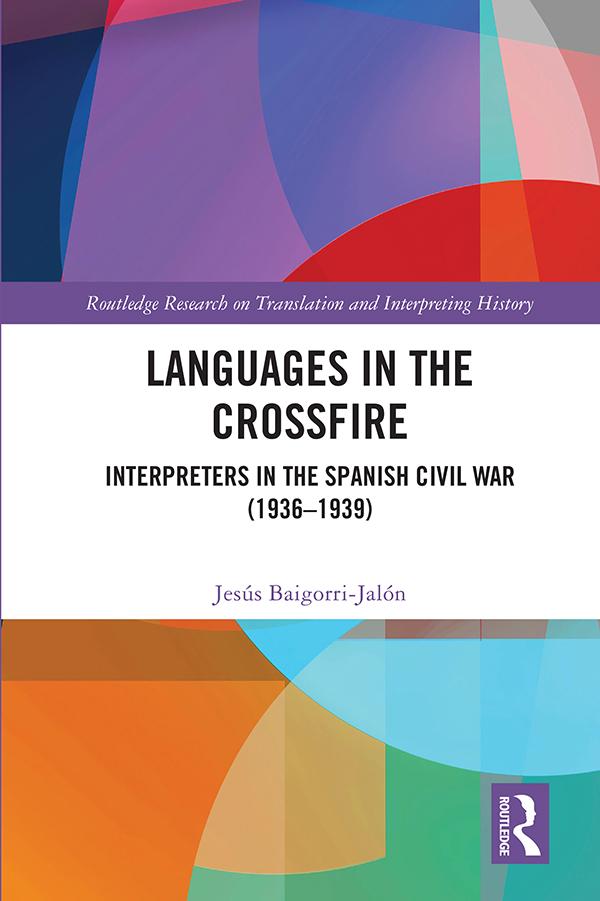
This book sheds light on the important role played by interpreters during the Spanish Civil War, offering a historical overview of the ways in which interpreters on both sides mediated the myriad linguistic, cultural, and ethical difficulties of wartime communication.
Drawing on archives, interpreters’ memoirs, and testimonies from their own children, the volume extends beyond traditional historiographic accounts to demonstrate the significance of interpreters’ work in facilitating communication during the war across a range of settings, including in combat, hospitals, interrogations, detention camps, and propaganda. Baigorri-Jalón showcases the diverse backgrounds of these interpreters through individual and collective portraits, paying special attention to the work of the many women working as interpreters during the conflict. In turning its attention to lessons from the past, the book reaffirms the work of interpreters in present-day international conflicts toward better understanding the ethical dilemmas they face, in wars, humanitarian aid, demobilization tasks, and multilingual criminal proceedings.
This volume, the first book in the Routledge Research on Translation and Interpreting History series, will be of interest to scholars in translation and interpreting studies, particularly those interested in historical and sociological approaches as well as Spanish Civil War scholarship.
Zahle einfach mit Karte, Klarna, Apple Pay oder Google Pay. Nicht zufrieden? Du hast immer ein 14-tägiges Widerrufsrecht. Lies mehr in unseren AGB. Hast du Fragen, schreib uns eine E-Mail an hello@memmo.org.
Memmo macht das Lernen einfacher – wo auch immer du bist. Bei uns findest du deine Kursbücher und smarte Lerntools an einem Ort: Zusammenfassungen, Quizzes, Podcasts und Lernkarten. Und Ted, dein Lernbuddy, beantwortet alles, was du wissen möchtest. Über 50.000 Studierende lernen bereits hier – gemacht, damit du schneller lernst und weniger Stress hast.