
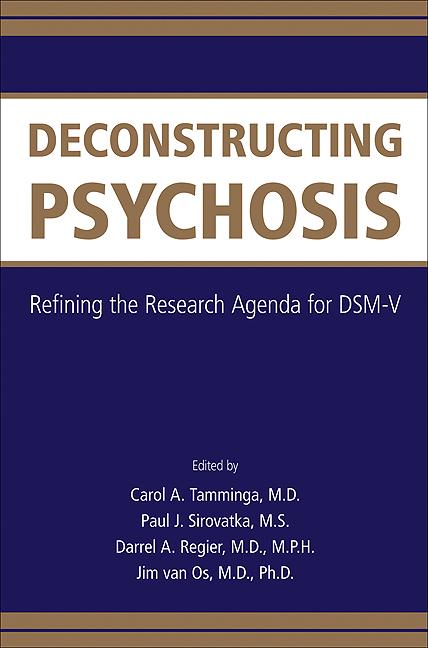
Deconstructing Psychosis: Refining the Research Agenda for DSM-V provides an all-important summary of the latest research about the diagnosis and pathophysiology of psychosis. This volume gives the reader an inside look at how psychotic phenomena are represented in the current diagnostic system and how DSM-V might better address the needs of patients with such disorders.
The book presents a selection of papers reporting the proceedings of a conference titled "Deconstructing Psychosis" convened by the American Psychiatric Association (APA) in collaboration with the World Health Organization (WHO) and the U.S. National Institutes of Health (NIH). The conference was designed to be a key element in the multiphase research review process for the fifth revision of DSM. This book is one in a series of ten that reflects some of the most current and critical examinations of psychiatric disorders and psychotic syndromes. APA published the fourth edition of DSM in 1994 and a text revision in 2000. DSM-V is scheduled for publication in 2013.
Deconstructing Psychosis: Refining the Research Agenda for DSM-V examines the current evidence regarding the diagnosis and pathophysiology of common psychotic syndromes including: Schizophrenia Bipolar disorder Major depressive psychosis Substance-induced psychosis
It also addresses broad issues relating to diagnosis such as the ways in which psychosis cuts across multiple diagnostic categories. Beyond merely summarizing the current state of the science, the authors of these papers critique the current research and clinical evidence, and raise questions about gaps in our knowledge.
The book provides recommendations for the most promising areas of research in psychosis, which may lead to more refined treatments based on a better understanding of what biological and environmental factors contribute to its development and symptoms.
In the learned editors' selection of papers for inclusion in this volume, they have exhibited their conviction that DSM-V is a "living document" that will reflect the pace of progress in multiple areas, ranging from molecular genetics and brain imaging to social, behavioral, and anthropological science.
As a book on the narrowly defined topic of linking the classification of psychotic syndromes with their underlying pathophysiology and potential etiology, there is no other writing of comparable content available today.
Zahle einfach mit Karte, Klarna, Apple Pay oder Google Pay. Nicht zufrieden? Du hast immer ein 14-tägiges Widerrufsrecht. Lies mehr in unseren AGB. Hast du Fragen, schreib uns eine E-Mail an hello@memmo.org.
Memmo macht das Lernen einfacher – wo auch immer du bist. Bei uns findest du deine Kursbücher und smarte Lerntools an einem Ort: Zusammenfassungen, Quizzes, Podcasts und Lernkarten. Und Ted, dein Lernbuddy, beantwortet alles, was du wissen möchtest. Über 50.000 Studierende lernen bereits hier – gemacht, damit du schneller lernst und weniger Stress hast.