
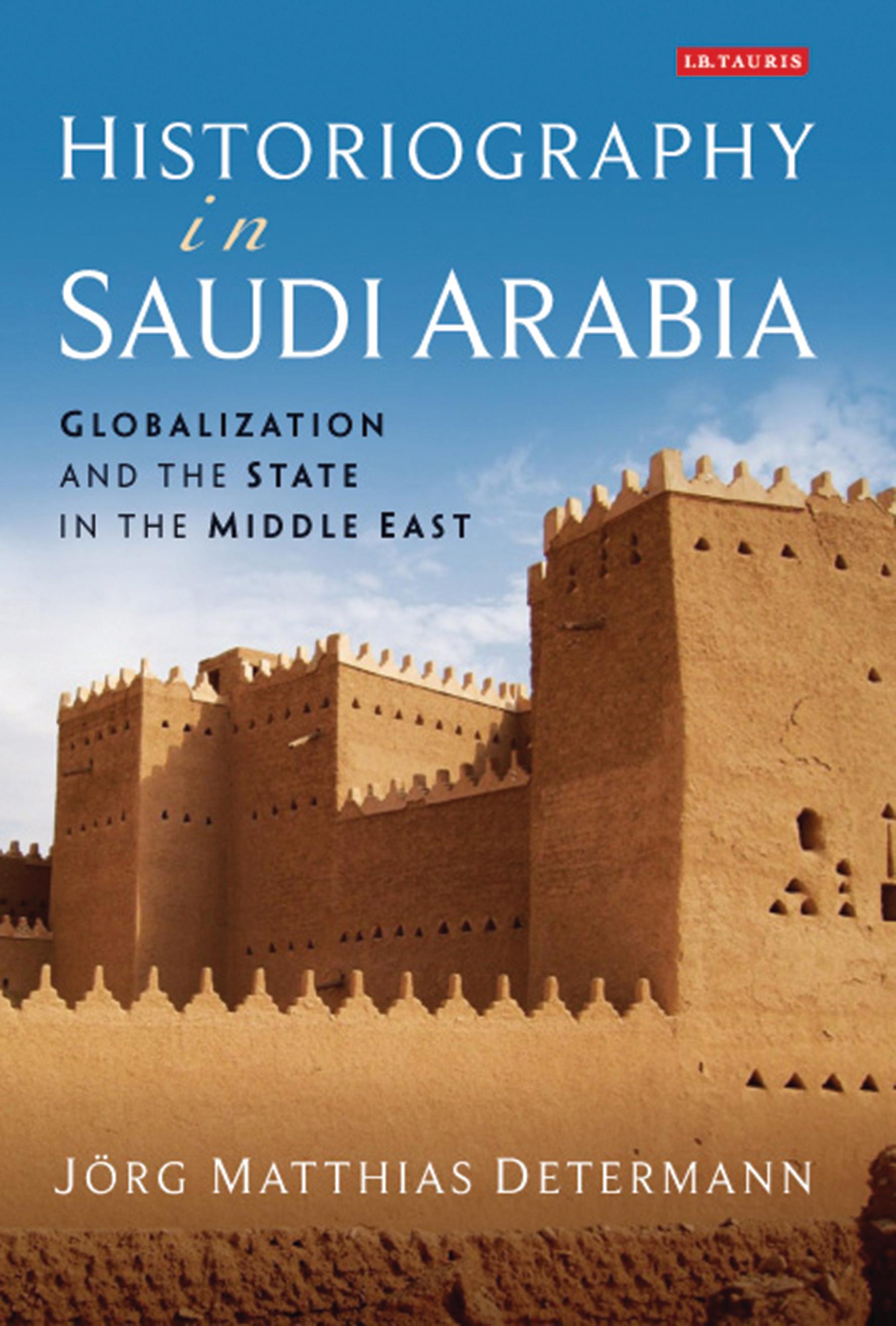
Saudi Arabia is generally and justifiably viewed as a country with the fewest democratic institutions and the weakest traditions of pluralism in the world. It is therefore surprising to learn that at least in one corner of the Saudi world, there is a plurality voices. Jörg Matthias Determann brings this element to light by analysing an important field of cultural activity in Saudi Arabia: historical writing. By exploring the emergence of a plurality of historical narratives in the absence of formal political pluralism, Determann seeks to paint a more nuanced picture of Saudi Arabia than has previously been drawn.
Since the 1920s local, tribal, Shi'i and dynastic histories have contributed to a growing plurality of narratives, diverging from and contesting the histories which focus on the royal family. Instead, they have emphasized the communities' historical independence from the House of Saud or asserting the communities' importance in Saudi national history. In addition to this, during the 1970s, distinct social and economic histories began to be developed, new narratives which have described important historical events evolving from wider social and economic factors rather than resulting from the actions of individual rulers or communities. Paradoxically, this happened because of the expansion of the Saudi state, including state-provision of mass education. A variety of previously illiterate and relatively poor sections of Saudi society, including former Bedouin, were thus empowered to produce histories which, while conformist for the most part, also provided a vehicle for dissenting voices. Furthermore, Determann argues that this proliferation of alternative histories is also due to globalizing processes, such as the spread of the internet. It is through this phenomenon that narrative plurality has been facilitated, by putting Saudi historians in contact with different ideologies, methodologies and source material from abroad.
In challenging the widely-held perception of Saudi Arabia as an irredeemably closed and monolithic society, Historiography in Saudi Arabia provides a deeper understanding of modern Arab historiography, the Saudi state, and education and scholarship in the Middle East.
Since the 1920s local, tribal, Shi'i and dynastic histories have contributed to a growing plurality of narratives, diverging from and contesting the histories which focus on the royal family. Instead, they have emphasized the communities' historical independence from the House of Saud or asserting the communities' importance in Saudi national history. In addition to this, during the 1970s, distinct social and economic histories began to be developed, new narratives which have described important historical events evolving from wider social and economic factors rather than resulting from the actions of individual rulers or communities. Paradoxically, this happened because of the expansion of the Saudi state, including state-provision of mass education. A variety of previously illiterate and relatively poor sections of Saudi society, including former Bedouin, were thus empowered to produce histories which, while conformist for the most part, also provided a vehicle for dissenting voices. Furthermore, Determann argues that this proliferation of alternative histories is also due to globalizing processes, such as the spread of the internet. It is through this phenomenon that narrative plurality has been facilitated, by putting Saudi historians in contact with different ideologies, methodologies and source material from abroad.
In challenging the widely-held perception of Saudi Arabia as an irredeemably closed and monolithic society, Historiography in Saudi Arabia provides a deeper understanding of modern Arab historiography, the Saudi state, and education and scholarship in the Middle East.
Zahle einfach mit Karte, Klarna, Apple Pay oder Google Pay. Nicht zufrieden? Du hast immer ein 14-tägiges Widerrufsrecht. Lies mehr in unseren AGB. Hast du Fragen, schreib uns eine E-Mail an hello@memmo.org.
Memmo macht das Lernen einfacher – wo auch immer du bist. Bei uns findest du deine Kursbücher und smarte Lerntools an einem Ort: Zusammenfassungen, Quizzes, Podcasts und Lernkarten. Und Ted, dein Lernbuddy, beantwortet alles, was du wissen möchtest. Über 50.000 Studierende lernen bereits hier – gemacht, damit du schneller lernst und weniger Stress hast.