
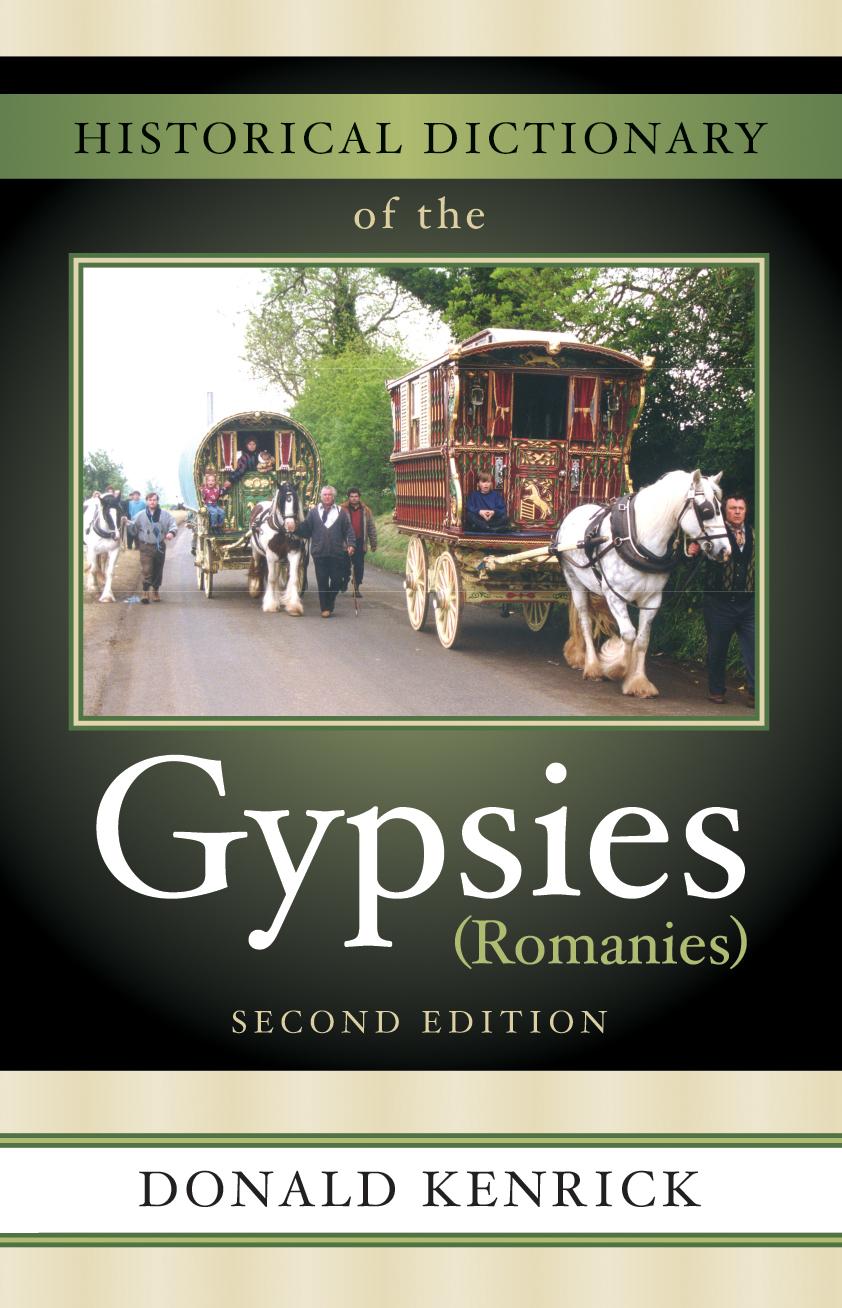
Originating in India, the Gypsies arrived in Europe around the 14th century, spreading not only across the entirety of the continent but also immigrating to the Americas. The first Gypsy migration included farmworkers, blacksmiths, and mercenary soldiers, as well as musicians, fortune-tellers, and entertainers. At first, they were generally welcome as an interesting diversion to the dull routine of that period. Soon, however, they attracted the antagonism of the governing powers, as they have continually done throughout the following centuries.
The second edition of the Historical Dictionary of the Gypsies (Romanies) seeks to end such prejudice by clarifying the facts about this nomadic people. Through a list of acronyms, a chronology, an introductory essay, a bibliography, and hundreds of cross-referenced dictionary entries on significant persons, places, events, institutions, and aspects of culture, society, economy, and politics, the history of the Gypsies and their culture is told.
The second edition of the Historical Dictionary of the Gypsies (Romanies) seeks to end such prejudice by clarifying the facts about this nomadic people. Through a list of acronyms, a chronology, an introductory essay, a bibliography, and hundreds of cross-referenced dictionary entries on significant persons, places, events, institutions, and aspects of culture, society, economy, and politics, the history of the Gypsies and their culture is told.
Zahle einfach mit Karte, Klarna, Apple Pay oder Google Pay. Nicht zufrieden? Du hast immer ein 14-tägiges Widerrufsrecht. Lies mehr in unseren AGB. Hast du Fragen, schreib uns eine E-Mail an hello@memmo.org.
Memmo macht das Lernen einfacher – wo auch immer du bist. Bei uns findest du deine Kursbücher und smarte Lerntools an einem Ort: Zusammenfassungen, Quizzes, Podcasts und Lernkarten. Und Ted, dein Lernbuddy, beantwortet alles, was du wissen möchtest. Über 50.000 Studierende lernen bereits hier – gemacht, damit du schneller lernst und weniger Stress hast.