
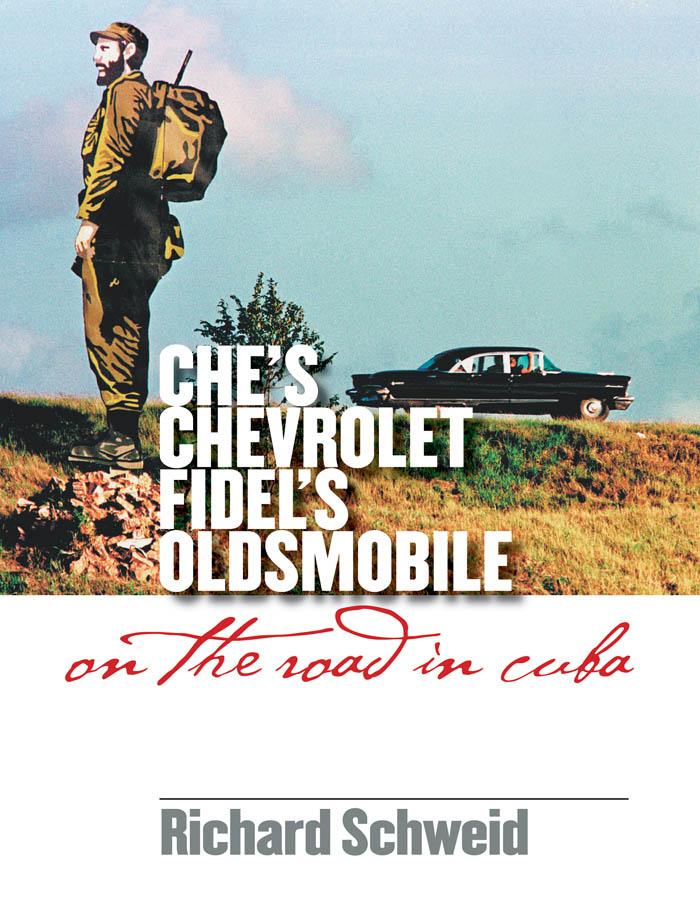
Vintage U.S.-made cars on the streets of Havana provide a common representation of Cuba. Journalist Richard Schweid, who traveled throughout the island to research the story of motor vehicles in Cuba today and yesterday, gets behind the wheel and behind the stereotype in this colorful chronicle of cars, buses, and trucks. In his captivating, sometimes gritty, voice, Schweid blends previously untapped historical sources with his personal experiences, spinning a car-centered history of life on the island over the past century.
Packard, Studebaker, Edsel, De Soto: cars long extinct in the United States can be seen at work every day on Cuba’s streets. Havana and Santiago de Cuba today are home to some 60,000 North American cars, all dating back to at least 1959, the year the Cuban Revolution prevailed. Though hardly a new part has arrived in Cuba since 1960, the cars are still on the road, held together with mechanical ingenuity and willpower.
Visiting car mechanics, tracking down records in dusty archives, and talking with car-crazy Cubans of all types, Schweid juxtaposes historic moments (Fidel Castro riding to the Bay of Pigs in an Oldsmobile) with the quotidian (a weary mother’s two-cent bus ride home after a long day) and composes a rich, engaging picture of the Cuban people and their history. The narrative is complemented by fifty-two historic black-and-white photographs and eight color photographs by contemporary Cuban photographer Adalberto Roque.
Packard, Studebaker, Edsel, De Soto: cars long extinct in the United States can be seen at work every day on Cuba’s streets. Havana and Santiago de Cuba today are home to some 60,000 North American cars, all dating back to at least 1959, the year the Cuban Revolution prevailed. Though hardly a new part has arrived in Cuba since 1960, the cars are still on the road, held together with mechanical ingenuity and willpower.
Visiting car mechanics, tracking down records in dusty archives, and talking with car-crazy Cubans of all types, Schweid juxtaposes historic moments (Fidel Castro riding to the Bay of Pigs in an Oldsmobile) with the quotidian (a weary mother’s two-cent bus ride home after a long day) and composes a rich, engaging picture of the Cuban people and their history. The narrative is complemented by fifty-two historic black-and-white photographs and eight color photographs by contemporary Cuban photographer Adalberto Roque.
Zahle einfach mit Karte, Klarna, Apple Pay oder Google Pay. Nicht zufrieden? Du hast immer ein 14-tägiges Widerrufsrecht. Lies mehr in unseren AGB. Hast du Fragen, schreib uns eine E-Mail an hello@memmo.org.
Memmo macht das Lernen einfacher – wo auch immer du bist. Bei uns findest du deine Kursbücher und smarte Lerntools an einem Ort: Zusammenfassungen, Quizzes, Podcasts und Lernkarten. Und Ted, dein Lernbuddy, beantwortet alles, was du wissen möchtest. Über 50.000 Studierende lernen bereits hier – gemacht, damit du schneller lernst und weniger Stress hast.
Das könnte dir auch gefallen
Buch kaufen0