
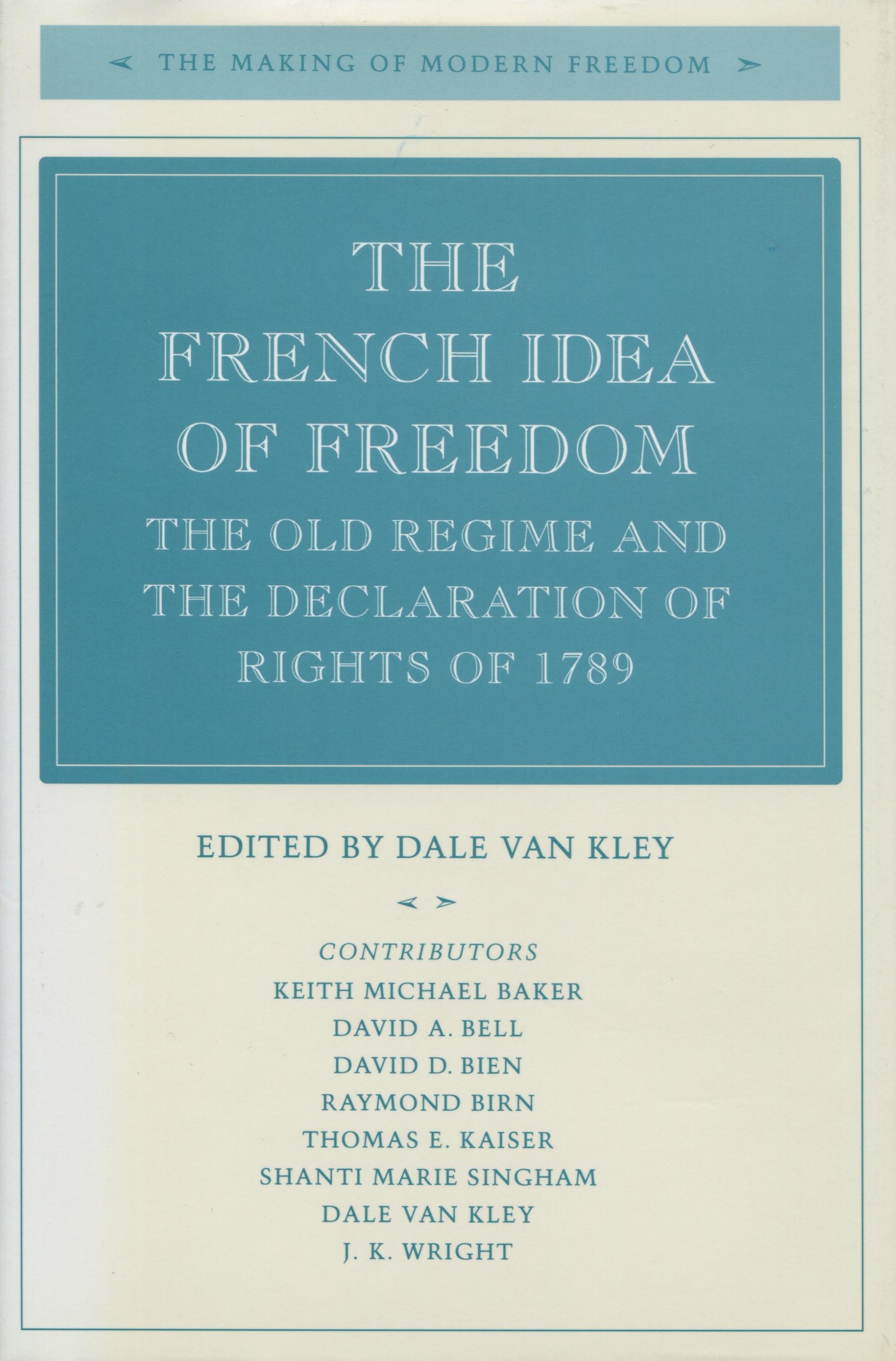
“The Declaration of the Rights of Man and the Citizen of 1789” is the French Revolution’s best known utterance. By 1789, to be sure, England looked proudly back to the Magna Carta, the Petition of Right, and a bill of rights, and even the young American Declaration of Independence and the individual states’ various declarations and bills of rights preceded the French Declaration. But the French deputies of the National Assembly tried hard, in the words of one of their number, not to receive lessons from others but rather “to give them” to the rest of the world, to proclaim not the rights of Frenchmen, but those “for all times and nations.”
The chapters in this book treat mainly the origins of the Declaration in the political thought and practice of the preceding three centuries that Tocqueville designated the “Old Regime.” Among the topics covered are privileged corporations; the events of the three months preceding the Declaration; blacks, Jews, and women; the Assembly’s debates on the Declaration; the influence of sixteenth-century notions of sovereignty and the separation of powers; the rights of the accused in legal practices and political trials from 1716 to 1789; the natural rights to freedom of religion; and the monarchy’s “feudal” exploitation of the royal domain.
Zahle einfach mit Karte, Klarna, Apple Pay oder Google Pay. Nicht zufrieden? Du hast immer ein 14-tägiges Widerrufsrecht. Lies mehr in unseren AGB. Hast du Fragen, schreib uns eine E-Mail an hello@memmo.org.
Memmo macht das Lernen einfacher – wo auch immer du bist. Bei uns findest du deine Kursbücher und smarte Lerntools an einem Ort: Zusammenfassungen, Quizzes, Podcasts und Lernkarten. Und Ted, dein Lernbuddy, beantwortet alles, was du wissen möchtest. Über 50.000 Studierende lernen bereits hier – gemacht, damit du schneller lernst und weniger Stress hast.