
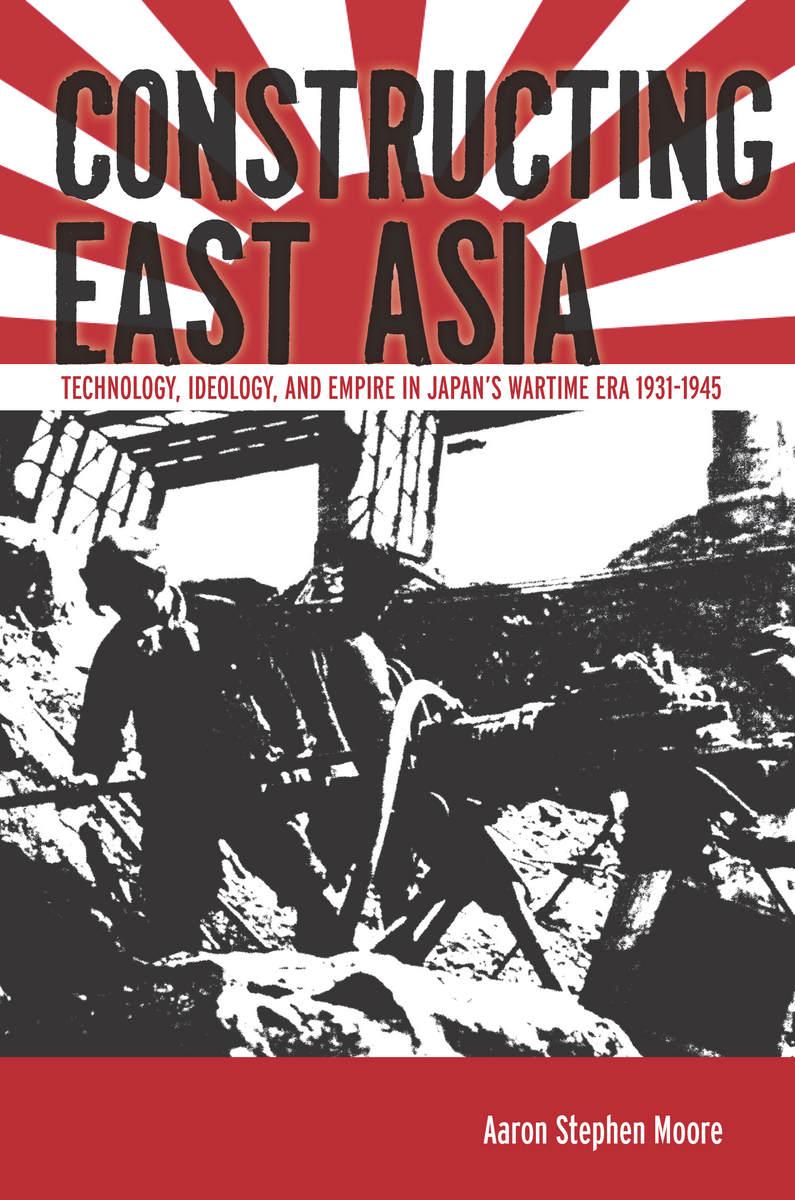
The conventional understanding of Japanese wartime ideology has for years been summed up by just a few words: anti-modern, spiritualist, and irrational. Yet such a cut-and-dried picture is not at all reflective of the principles that guided national policy from 1931–1945. Challenging the status quo, Constructing East Asia examines how Japanese intellectuals, bureaucrats, and engineers used technology as a system of power and mobilization—what historian Aaron Moore terms a "technological imaginary"—to rally people in Japan and its expanding empire. By analyzing how these different actors defined technology in public discourse, national policies, and large-scale infrastructure projects, Moore reveals wartime elites as far more calculated in thought and action than previous scholarship allows. Moreover, Moore positions the wartime origins of technology deployment as an essential part of the country's national policy and identity, upending another predominant narrative—namely, that technology did not play a modernizing role in Japan until the "economic miracle" of the postwar years.
Zahle einfach mit Karte, Klarna, Apple Pay oder Google Pay. Nicht zufrieden? Du hast immer ein 14-tägiges Widerrufsrecht. Lies mehr in unseren AGB. Hast du Fragen, schreib uns eine E-Mail an hello@memmo.org.
Memmo macht das Lernen einfacher – wo auch immer du bist. Bei uns findest du deine Kursbücher und smarte Lerntools an einem Ort: Zusammenfassungen, Quizzes, Podcasts und Lernkarten. Und Ted, dein Lernbuddy, beantwortet alles, was du wissen möchtest. Über 50.000 Studierende lernen bereits hier – gemacht, damit du schneller lernst und weniger Stress hast.