
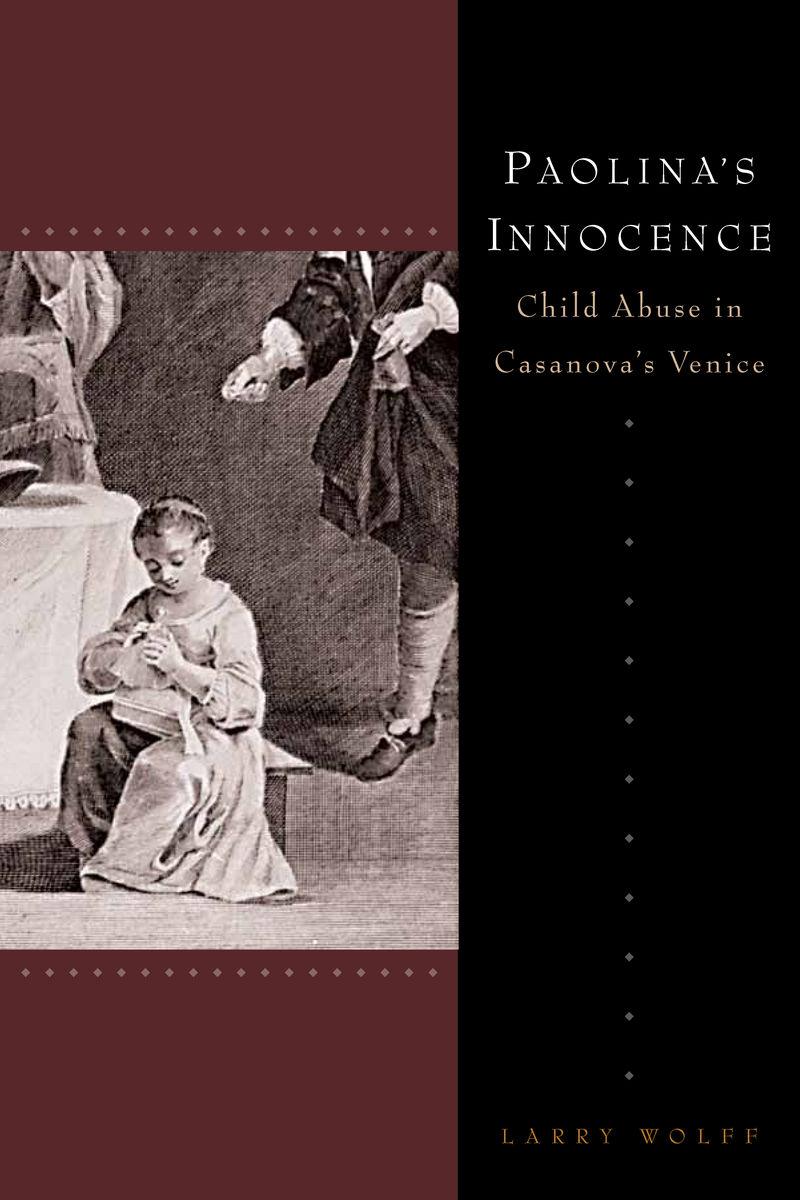
In the summer of 1785, in the city of Venice, a wealthy 60-year-old man was arrested and accused of a scandalous offense: having sexual relations with the 8-year-old daughter of an impoverished laundress. Although the sexual abuse of children was probably not uncommon in early modern Europe, it is largely undocumented, and the concept of "child abuse" did not yet exist. The case of Paolina Lozaro and Gaetano Franceschini came before Venice's unusual blasphemy tribunal, the Bestemmia, which heard testimony from an entire neighborhood—from the parish priest to the madam of the local brothel.
Paolina's Innocence considers Franceschini's conduct in the context of the libertinism of Casanova and also employs other prominent contemporaries—Jean-Jacques Rousseau, Carlo Goldoni, Lorenzo Da Ponte, Cesare Beccaria, and the Marquis de Sade—as points of reference for understanding the case and broader issues of libertinism, sexual crime, childhood, and child abuse in the 18th century.
Zahle einfach mit Karte, Klarna, Apple Pay oder Google Pay. Nicht zufrieden? Du hast immer ein 14-tägiges Widerrufsrecht. Lies mehr in unseren AGB. Hast du Fragen, schreib uns eine E-Mail an hello@memmo.org.
Memmo macht das Lernen einfacher – wo auch immer du bist. Bei uns findest du deine Kursbücher und smarte Lerntools an einem Ort: Zusammenfassungen, Quizzes, Podcasts und Lernkarten. Und Ted, dein Lernbuddy, beantwortet alles, was du wissen möchtest. Über 50.000 Studierende lernen bereits hier – gemacht, damit du schneller lernst und weniger Stress hast.