
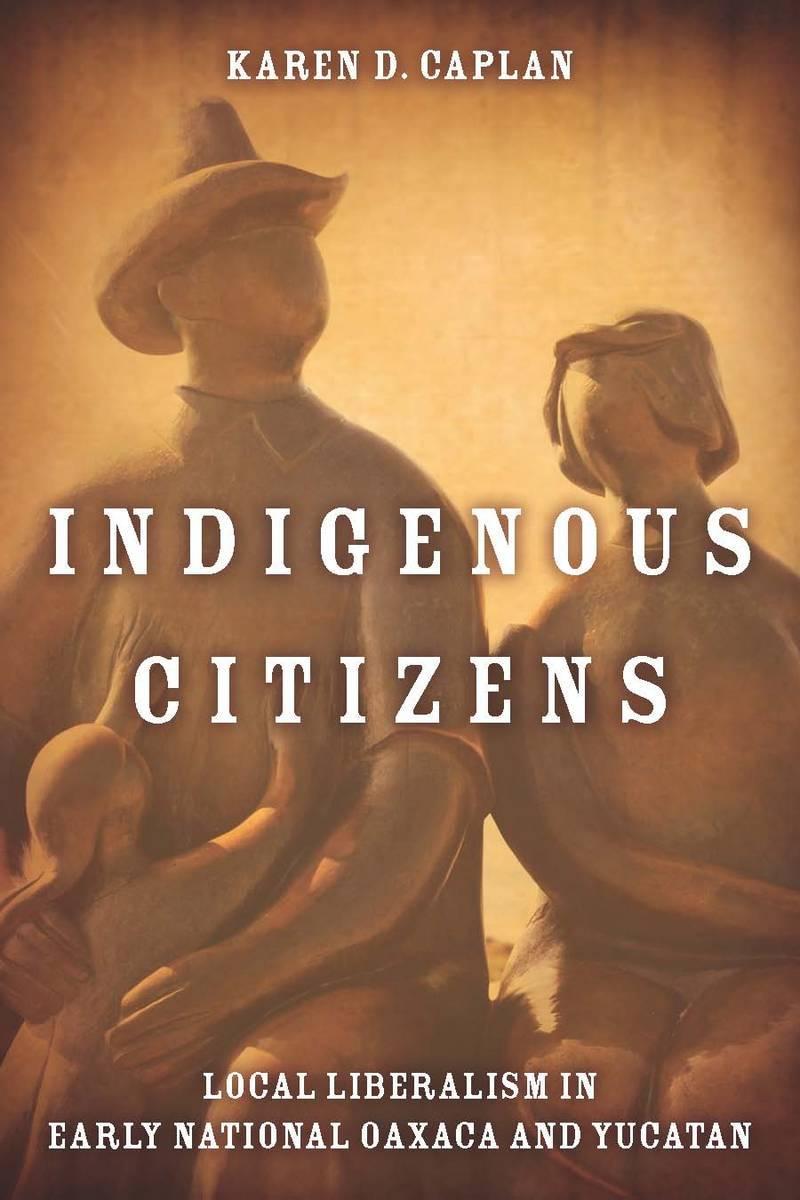
Indigenous Citizens challenges the commonly held assumption that early nineteenth-century Mexican state-building was a failure of liberalism. By comparing the experiences of two Mexican states, Oaxaca and Yucatán, Caplan shows how the institutions and ideas associated with liberalism became deeply entrenched in Mexico's regions, but only on locally acceptable terms.
Faced with the common challenge of incorporating new institutions into political life, Mexicans—be they indigenous villagers, government officials, or local elites—negotiated ways to make those institutions compatible with a range of local interests. Although Oaxaca and Yucatán both had large indigenous majorities, the local liberalisms they constructed incorporated indigenous people differently as citizens. As a result, Oaxaca experienced relative social peace throughout this era, while Yucatán exploded with indigenous rebellion beginning in 1847.
This book puts the interaction between local and national liberalisms at the center of the narrative of Mexico's nineteenth century. It suggests that "liberalism" must be understood not as an overarching system imposed on the Mexican nation but rather as a set of guiding assumptions and institutions that Mexicans put to use in locally specific ways.
Zahle einfach mit Karte, Klarna, Apple Pay oder Google Pay. Nicht zufrieden? Du hast immer ein 14-tägiges Widerrufsrecht. Lies mehr in unseren AGB. Hast du Fragen, schreib uns eine E-Mail an hello@memmo.org.
Memmo macht das Lernen einfacher – wo auch immer du bist. Bei uns findest du deine Kursbücher und smarte Lerntools an einem Ort: Zusammenfassungen, Quizzes, Podcasts und Lernkarten. Und Ted, dein Lernbuddy, beantwortet alles, was du wissen möchtest. Über 50.000 Studierende lernen bereits hier – gemacht, damit du schneller lernst und weniger Stress hast.