
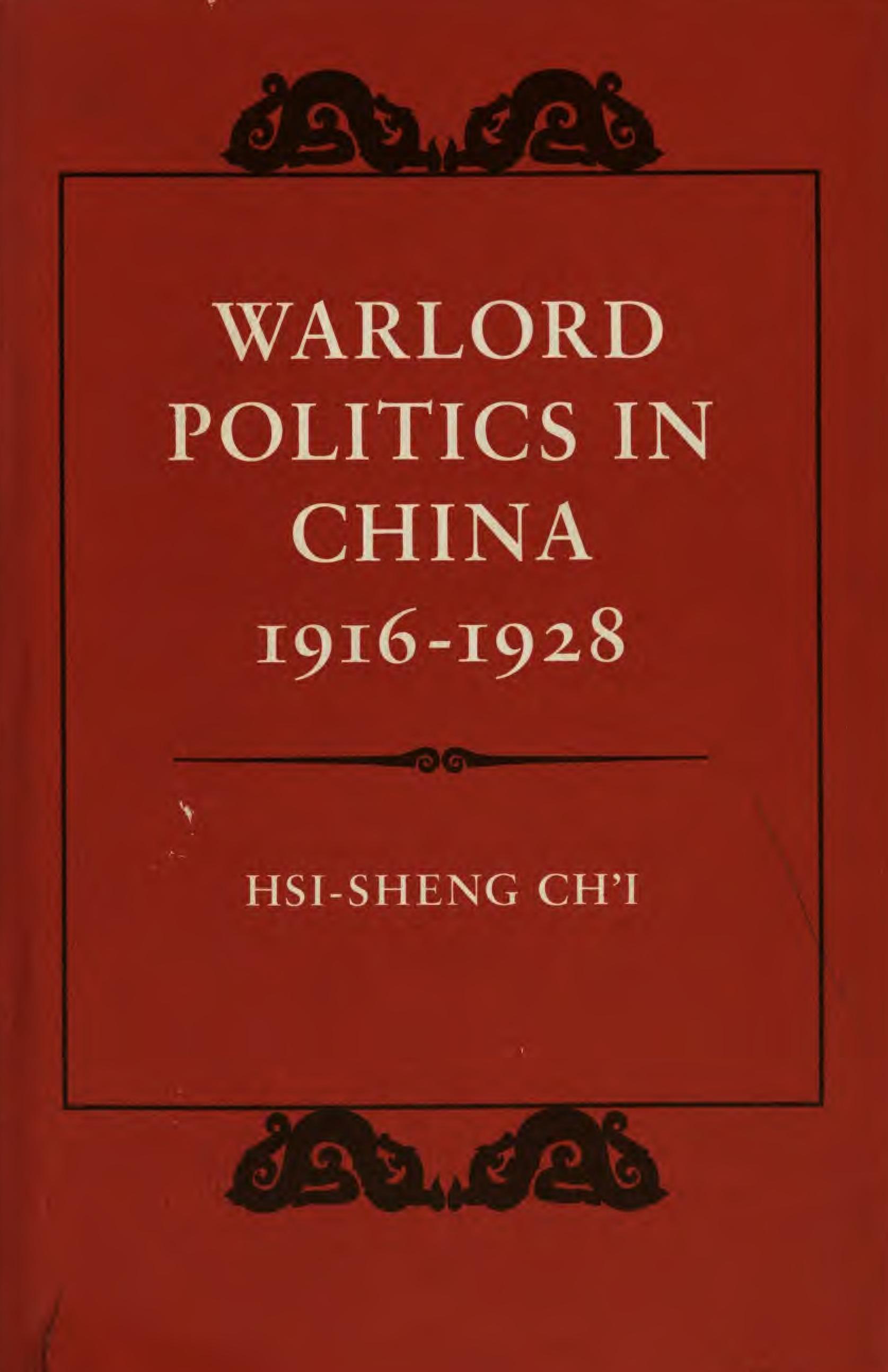
The first comprehensive analytical treatment of warlordism in twentieth-century China, this book approaches regional militarism as a generic phenomenon of Chinese politics in the most complex and chaotic era of recent Chinese history.
After describing the emergence of militarist regimes after the death of Yuan Shih-k'ai in 1916, the author analyzes their membership, goals, capabilities, and sources of cohesion, in the process presenting new information on their organization, methods of recruitment, quality of training, types of weapons, tactical and strategic concepts, and means of financing. On the strength of this information, he offers a convincing explanation I balance-of-power terms for the baffling advances, retreats, clashes, and changes of allegiance that have puzzled students of the era.
His analysis makes clear how the leading warlords viewed the state, themselves, and each other. A concluding chapter presents an explanation based on systems theory for the Kuomintang's triumph over the warlords who had sought to confine its domain to Kwangtung.
Included as appendixes are a chronology of events and lists of national leaders and provincial military authorities from 1916 to 1928.
Zahle einfach mit Karte, Klarna, Apple Pay oder Google Pay. Nicht zufrieden? Du hast immer ein 14-tägiges Widerrufsrecht. Lies mehr in unseren AGB. Hast du Fragen, schreib uns eine E-Mail an hello@memmo.org.
Memmo macht das Lernen einfacher – wo auch immer du bist. Bei uns findest du deine Kursbücher und smarte Lerntools an einem Ort: Zusammenfassungen, Quizzes, Podcasts und Lernkarten. Und Ted, dein Lernbuddy, beantwortet alles, was du wissen möchtest. Über 50.000 Studierende lernen bereits hier – gemacht, damit du schneller lernst und weniger Stress hast.
Das könnte dir auch gefallen
Buch kaufen0