
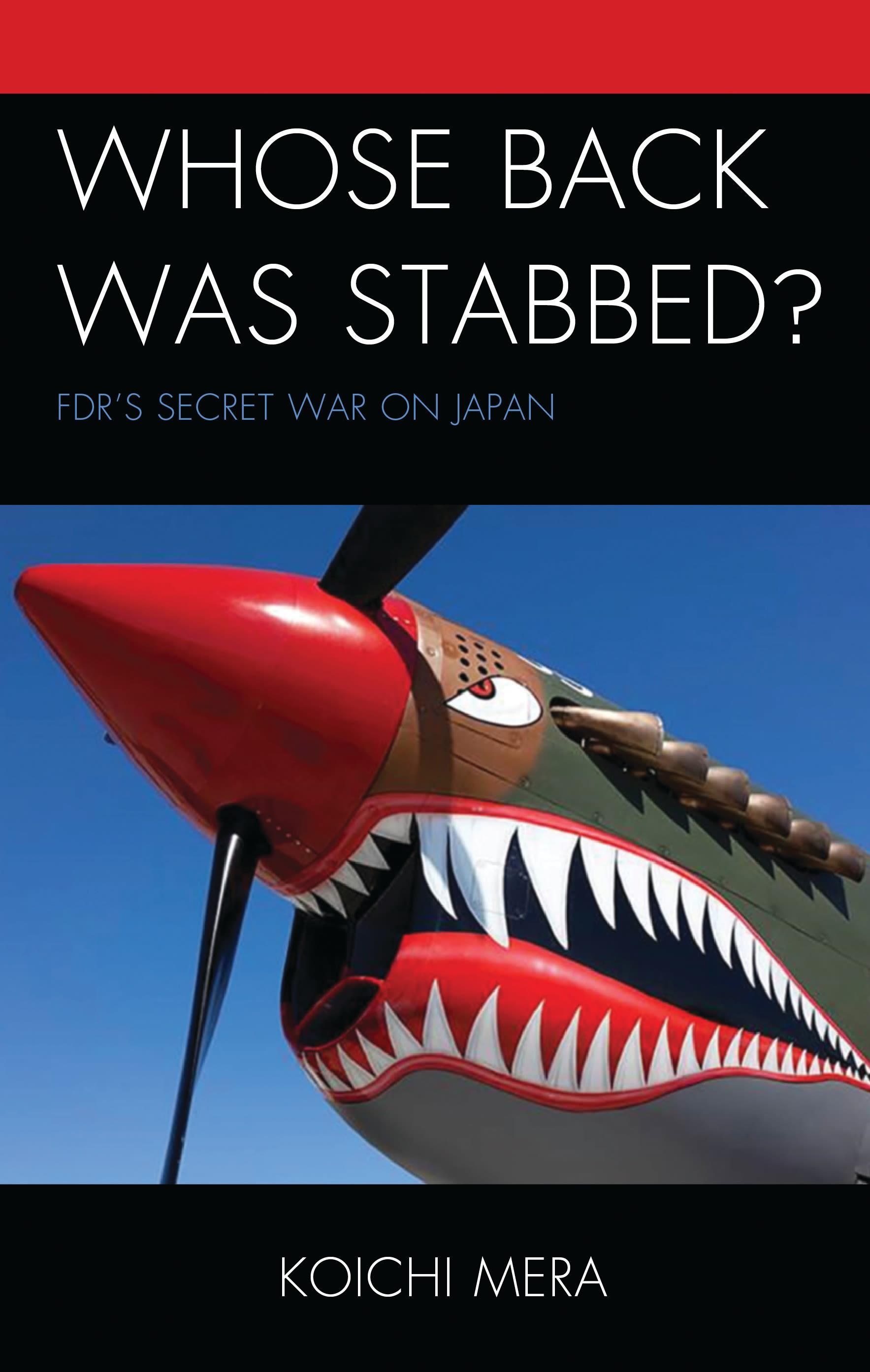
This is a book that will change the American perception of the Pacific War. One important question is: Who actually started the Pacific War? By examining recently discovered facts revealed through the declassification of official documents, the decoding of secret communications between the Soviet Union and its operatives, and findings from American and Japanese writers in recent decades, the author clarifies the role played by President Franklin D. Roosevelt and members of his cabinet in pushing Japan to the brink of war. Another notable analysis concerns the U.S. occupation of Japan immediately after the war. The author finds it as a spectacular success in politically castrating Japan. The impact is still clearly observable. Many Japanese have lost the sense of nationhood as a result.
The author examines the historical background of U.S.-Japan relations from the visit of Commodore Matthew Perry in 1853 to the present day. Utilized a wealth of Japanese as well as American materials, he presents a view of the history of the two countries. He finds that Japan was not very skillful in utilizing code-breaking or information-warfare, but tried to liberate colonies in Asia and Africa, and indeed her effort was successful and ultimately resulted in the loss of Western Colonies including India, Indonesia, Burma, and Malaysia. After reviewing nearly two hundred years of history, the author urges contemporary Japanese to be free from the self-incriminating view of history and to be confident that the nation is on a right track.
The author examines the historical background of U.S.-Japan relations from the visit of Commodore Matthew Perry in 1853 to the present day. Utilized a wealth of Japanese as well as American materials, he presents a view of the history of the two countries. He finds that Japan was not very skillful in utilizing code-breaking or information-warfare, but tried to liberate colonies in Asia and Africa, and indeed her effort was successful and ultimately resulted in the loss of Western Colonies including India, Indonesia, Burma, and Malaysia. After reviewing nearly two hundred years of history, the author urges contemporary Japanese to be free from the self-incriminating view of history and to be confident that the nation is on a right track.
Zahle einfach mit Karte, Klarna, Apple Pay oder Google Pay. Nicht zufrieden? Du hast immer ein 14-tägiges Widerrufsrecht. Lies mehr in unseren AGB. Hast du Fragen, schreib uns eine E-Mail an hello@memmo.org.
Memmo macht das Lernen einfacher – wo auch immer du bist. Bei uns findest du deine Kursbücher und smarte Lerntools an einem Ort: Zusammenfassungen, Quizzes, Podcasts und Lernkarten. Und Ted, dein Lernbuddy, beantwortet alles, was du wissen möchtest. Über 50.000 Studierende lernen bereits hier – gemacht, damit du schneller lernst und weniger Stress hast.