
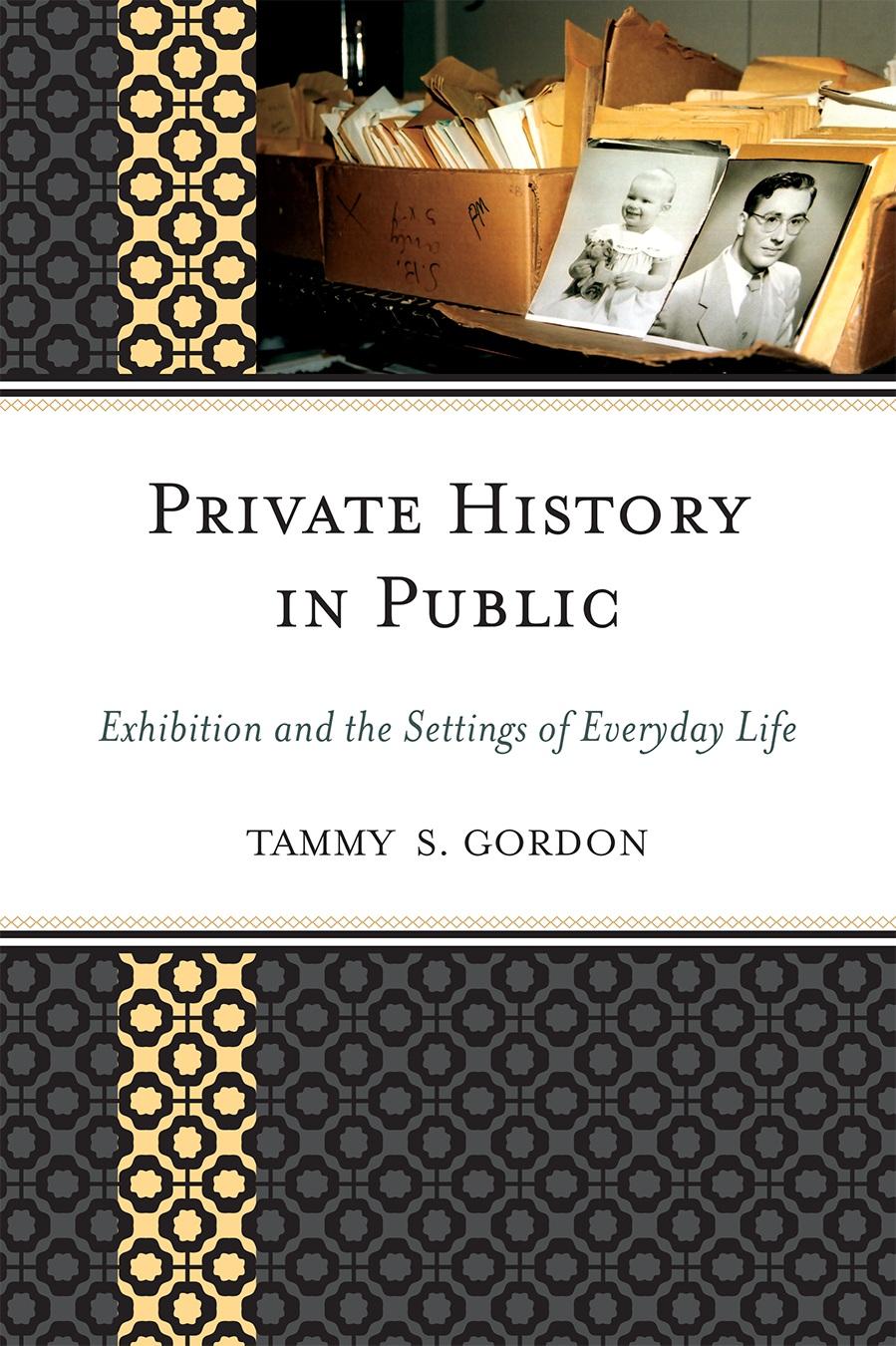
In small community museums, truck stops, restaurants, bars, barbershops, schools, and churches, people create displays to tell the histories that matter to them. Much of this history is personal: family history, community history, history of a trade, or the history of something considered less than genteel. It is often history based on the historical record, but also based on feelings, beliefs, and memory. It is neglected history.
Private History in Public is about those history exhibits that complicate the public/private dichotomy, exhibits that serve to explain communities, families, and individuals to outsiders and tie insiders together through a shared narrative of historical experience. Tammy S. Gordon looks beyond the large professionalized museum exhibits that have dominated scholarship in museum studies and public history and offers a new way of understanding the broad spectrum of exhibition types in the United States.
Private History in Public is about those history exhibits that complicate the public/private dichotomy, exhibits that serve to explain communities, families, and individuals to outsiders and tie insiders together through a shared narrative of historical experience. Tammy S. Gordon looks beyond the large professionalized museum exhibits that have dominated scholarship in museum studies and public history and offers a new way of understanding the broad spectrum of exhibition types in the United States.
Zahle einfach mit Karte, Klarna, Apple Pay oder Google Pay. Nicht zufrieden? Du hast immer ein 14-tägiges Widerrufsrecht. Lies mehr in unseren AGB. Hast du Fragen, schreib uns eine E-Mail an hello@memmo.org.
Memmo macht das Lernen einfacher – wo auch immer du bist. Bei uns findest du deine Kursbücher und smarte Lerntools an einem Ort: Zusammenfassungen, Quizzes, Podcasts und Lernkarten. Und Ted, dein Lernbuddy, beantwortet alles, was du wissen möchtest. Über 50.000 Studierende lernen bereits hier – gemacht, damit du schneller lernst und weniger Stress hast.