
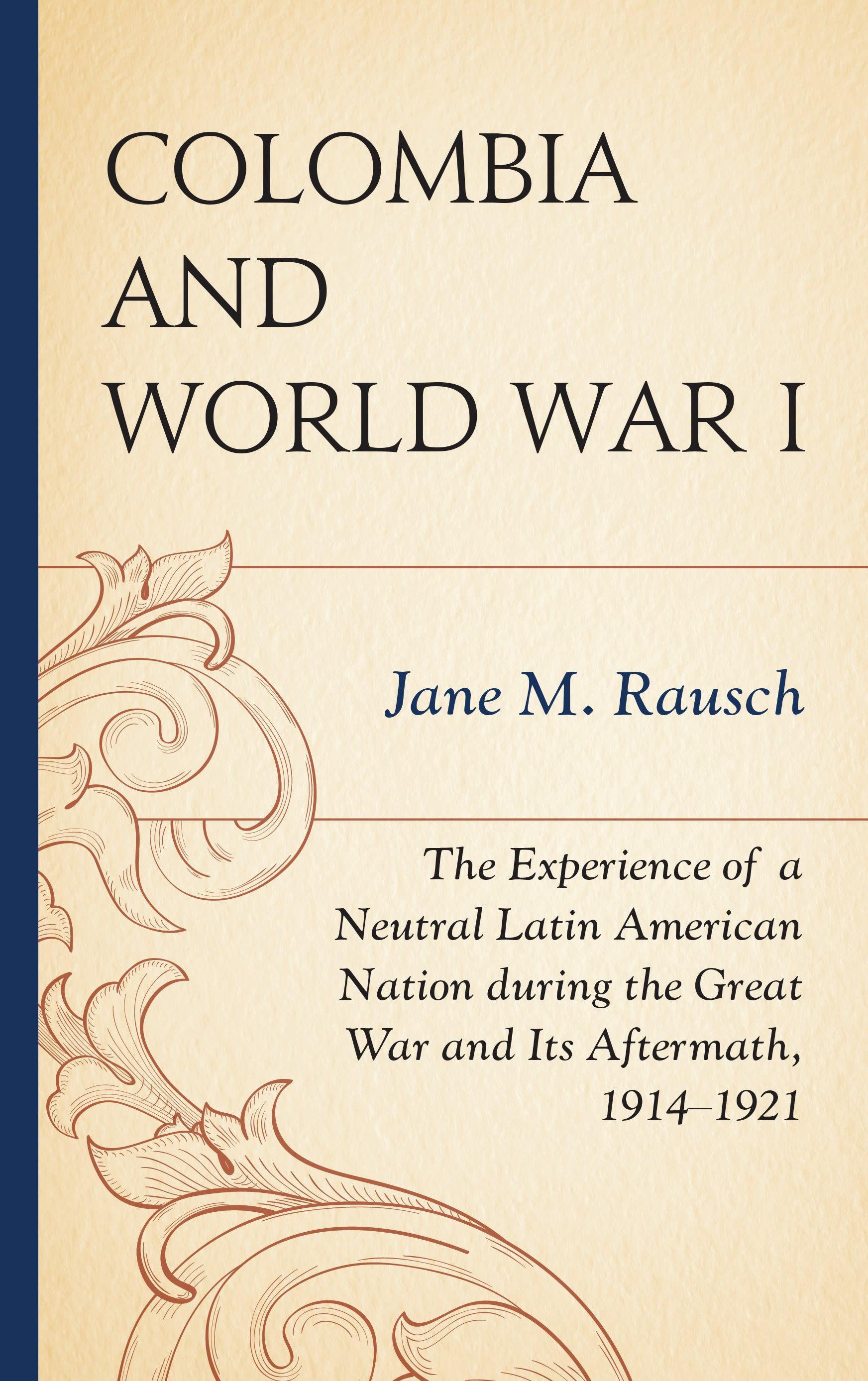
In the horrific conflict of 1914–1918 known first as “The Great War” and later as World War I, Latin American nations were peripheral players. Only after the U.S. entered the fighting in 1917 did eight of the twenty republics declare war. Five others broke diplomatic relations with Germany, while seven maintained strict neutrality. These diplomatic stances, even those of the two actual belligerents—Brazil and Cuba—did little to tip the balance of victory in favor of the allies, and perhaps that explains why historians have paid scant attention to events in Latin America related to the war. Nevertheless, it is still remarkable that Percy Alvin Martin’s classic account, Latin American and the War, first published in 1925, remains the standard text on the topic.
This book attempts to redress this gap by taking a fresh look at developments between 1914 and 1921 in one of the neutral nations—Colombia. This period, which coincides with the presidency of José Vicente Concha (1914–1918) and his successor, Marco Fidel Suárez (1918–1921), is filled with momentous developments not only in foreign policy, when Colombian diplomats pressured by German, British and U.S. propaganda struggled to maintain strict neutrality, but also on the domestic scene as the newly installed Conservative regime faced political and economic crises that sparked numerous and violent protests. Rausch's examination of the administrations of Concha and Suárez supports Martin’s assertion that even those countries neutral in the Great War were not immune from its effects.
This book attempts to redress this gap by taking a fresh look at developments between 1914 and 1921 in one of the neutral nations—Colombia. This period, which coincides with the presidency of José Vicente Concha (1914–1918) and his successor, Marco Fidel Suárez (1918–1921), is filled with momentous developments not only in foreign policy, when Colombian diplomats pressured by German, British and U.S. propaganda struggled to maintain strict neutrality, but also on the domestic scene as the newly installed Conservative regime faced political and economic crises that sparked numerous and violent protests. Rausch's examination of the administrations of Concha and Suárez supports Martin’s assertion that even those countries neutral in the Great War were not immune from its effects.
Zahle einfach mit Karte, Klarna, Apple Pay oder Google Pay. Nicht zufrieden? Du hast immer ein 14-tägiges Widerrufsrecht. Lies mehr in unseren AGB. Hast du Fragen, schreib uns eine E-Mail an hello@memmo.org.
Memmo macht das Lernen einfacher – wo auch immer du bist. Bei uns findest du deine Kursbücher und smarte Lerntools an einem Ort: Zusammenfassungen, Quizzes, Podcasts und Lernkarten. Und Ted, dein Lernbuddy, beantwortet alles, was du wissen möchtest. Über 50.000 Studierende lernen bereits hier – gemacht, damit du schneller lernst und weniger Stress hast.