
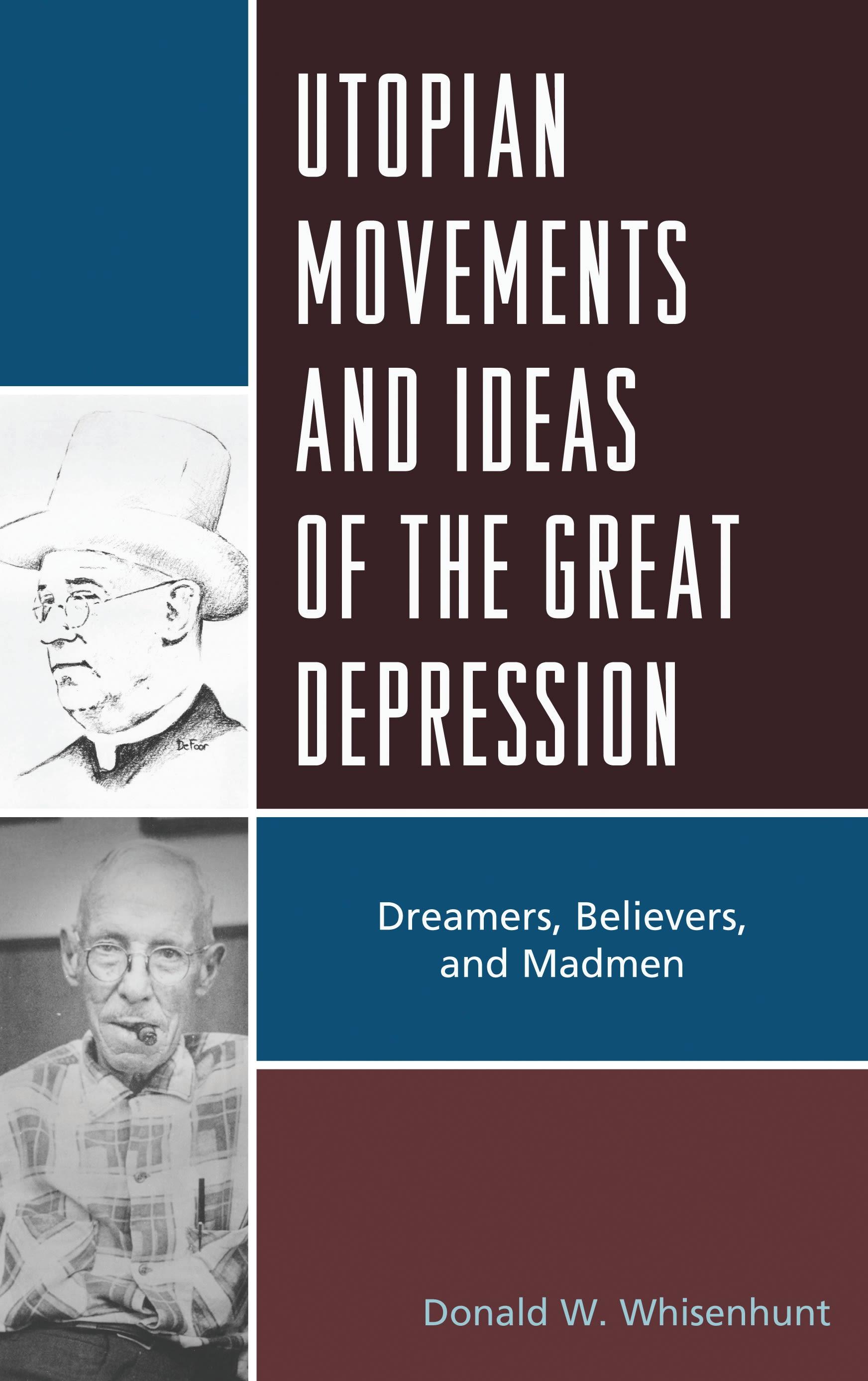
In the 1930s, the United States was beset with an economic crisis so serious that it threatened the future of the nation. On the national level, Franklin Roosevelt initiated and developed a variety of reforms and experiments as part of the New Deal. Some Americans looking for change believed Roosevelt was going in the wrong direction, while others believed he was too timid in his reforms. Still others thought he had not broken free of the restraints placed on him by the financial interests of the country. Many Americans had their own ideas about how to address the financial crisis and took matters into their own hands.
In Utopian Movements and Ideas of the Great Depression, Donald W. Whisenhunt explores several lesser-known movements for change and reform in the Great Depression Era including communal societies, proposals for reform, and analyses of several books that propose solutions to the nation's economic ills. Arguably, America has been a Utopian experiment from its beginning; the movements and ideas of the 1930s were simply the latest manifestations of that experiment.
Though not well known, the people and events studied represent the thinking of some of the most articulate and driven Americans during the economic crisis. Despite their lack of obvious success, they represent an important American idea—that an average person can devise solutions to society's problems. These movements and ideas embody the American belief in progress and the power of the individual.
In Utopian Movements and Ideas of the Great Depression, Donald W. Whisenhunt explores several lesser-known movements for change and reform in the Great Depression Era including communal societies, proposals for reform, and analyses of several books that propose solutions to the nation's economic ills. Arguably, America has been a Utopian experiment from its beginning; the movements and ideas of the 1930s were simply the latest manifestations of that experiment.
Though not well known, the people and events studied represent the thinking of some of the most articulate and driven Americans during the economic crisis. Despite their lack of obvious success, they represent an important American idea—that an average person can devise solutions to society's problems. These movements and ideas embody the American belief in progress and the power of the individual.
Zahle einfach mit Karte, Klarna, Apple Pay oder Google Pay. Nicht zufrieden? Du hast immer ein 14-tägiges Widerrufsrecht. Lies mehr in unseren AGB. Hast du Fragen, schreib uns eine E-Mail an hello@memmo.org.
Memmo macht das Lernen einfacher – wo auch immer du bist. Bei uns findest du deine Kursbücher und smarte Lerntools an einem Ort: Zusammenfassungen, Quizzes, Podcasts und Lernkarten. Und Ted, dein Lernbuddy, beantwortet alles, was du wissen möchtest. Über 50.000 Studierende lernen bereits hier – gemacht, damit du schneller lernst und weniger Stress hast.