
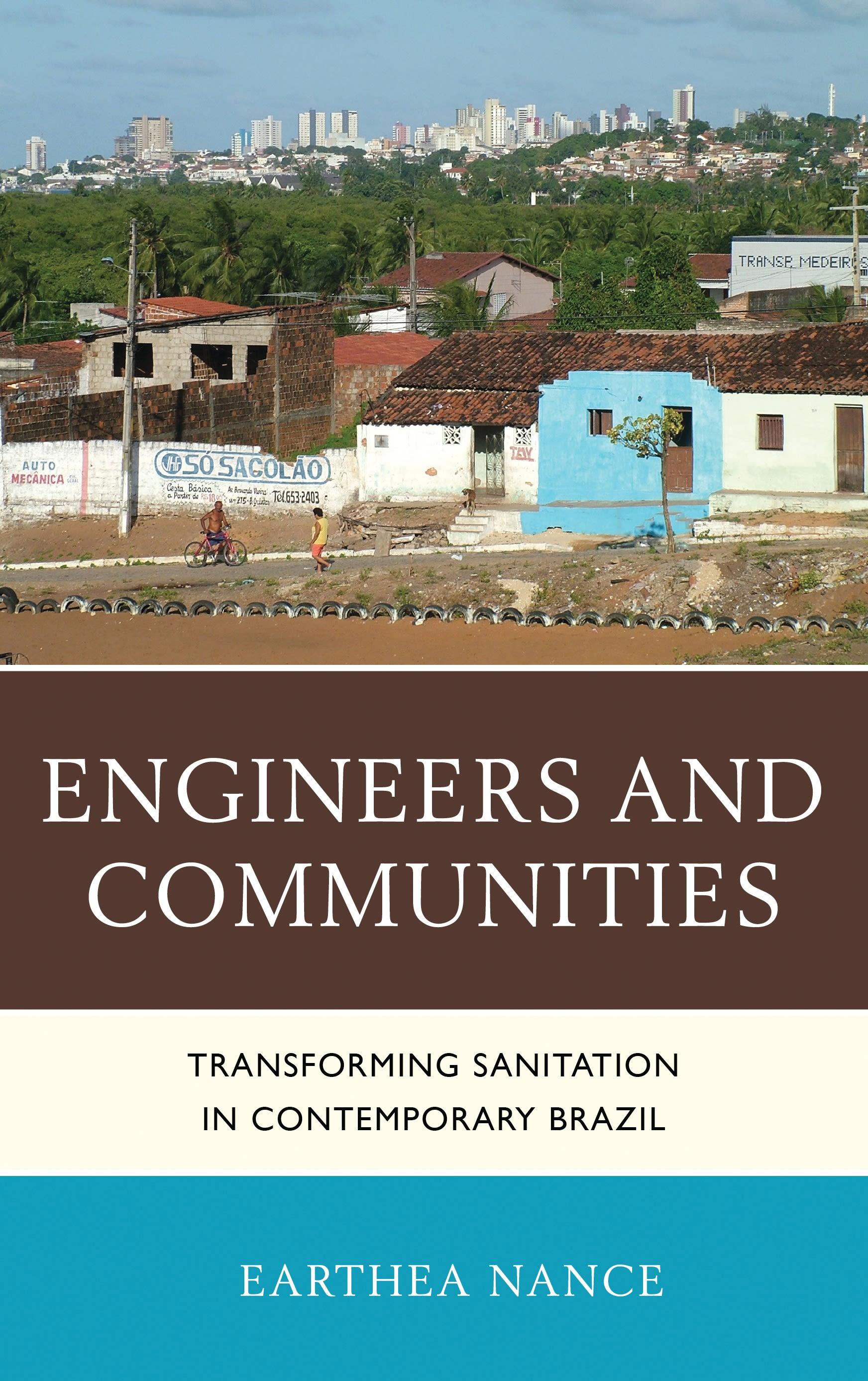
Access to water and sanitation service in industrialized countries is nearly taken for granted, but in many developing countries less than half of the population has access to such services. Decades of effort on a global scale have been invested to solve this problem. One such effort—Brazil’s participatory approach to water and sanitation—is Nance’s subject in Engineers and Communities. In the early 1980s, Brazilian engineers created participatory sanitation (known locally as condominial sewerage) to make basic sanitation service more inclusive. Fiercely contested at first, the technology’s success hinged on the formation of strong and stable coalitions of diverse actors and on the promotion of both real participation and a participation narrative. The innovations described in the book contributed to the now indispensable concepts of community participation and locally appropriate technology. Today the technology has spread across Brazil- it has been legally incorporated into sewer design norms and codes, it is counted in the national census, and the model is being transferred to other countries by The World Bank and others who are trying to make basic urban services more inclusive of the poor. Engineers and Communities sheds light on what is essential in the broader discourse of international development.
Zahle einfach mit Karte, Klarna, Apple Pay oder Google Pay. Nicht zufrieden? Du hast immer ein 14-tägiges Widerrufsrecht. Lies mehr in unseren AGB. Hast du Fragen, schreib uns eine E-Mail an hello@memmo.org.
Memmo macht das Lernen einfacher – wo auch immer du bist. Bei uns findest du deine Kursbücher und smarte Lerntools an einem Ort: Zusammenfassungen, Quizzes, Podcasts und Lernkarten. Und Ted, dein Lernbuddy, beantwortet alles, was du wissen möchtest. Über 50.000 Studierende lernen bereits hier – gemacht, damit du schneller lernst und weniger Stress hast.