
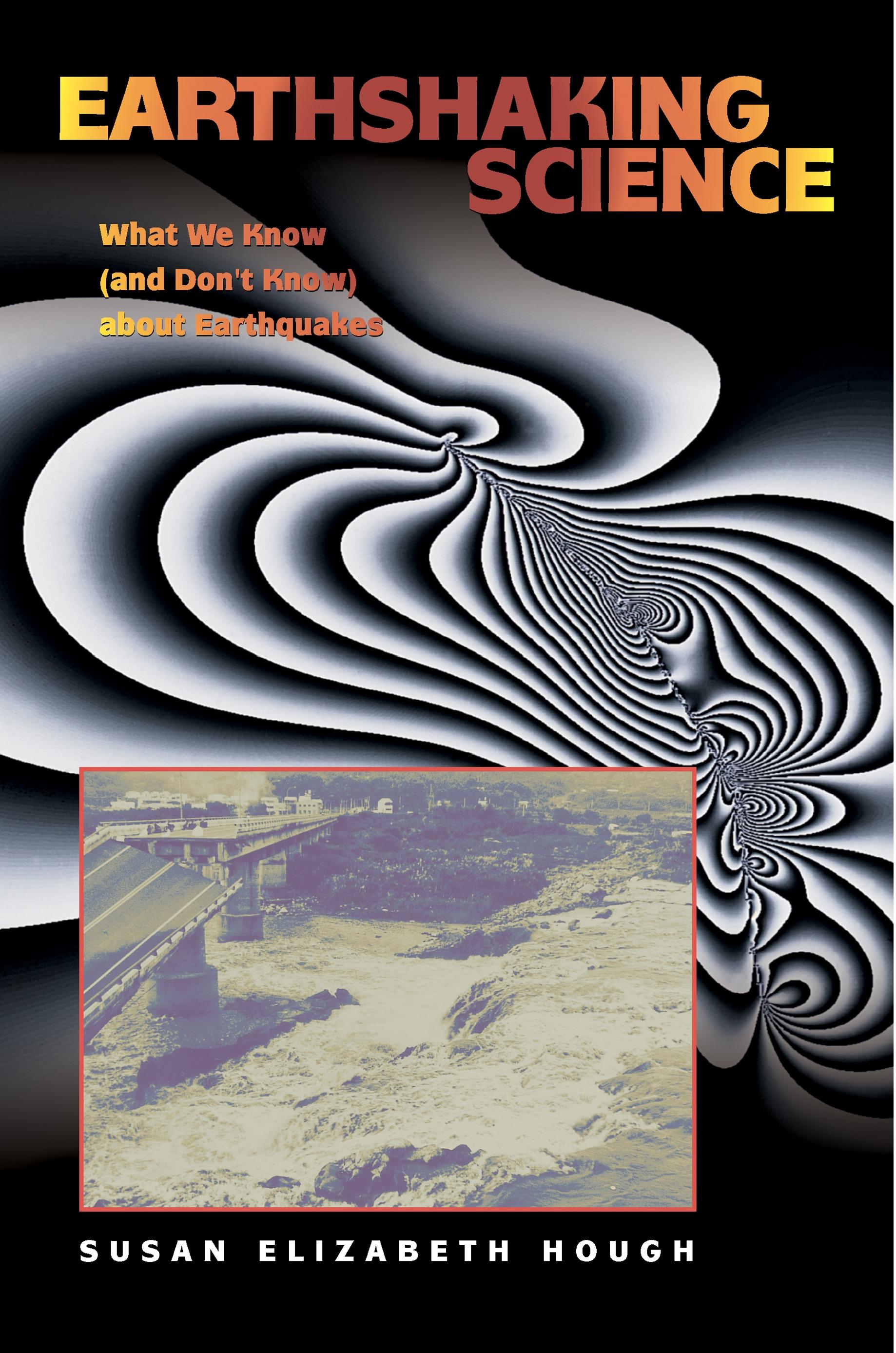
This is the first book to really make sense of the dizzying array of information that has emerged in recent decades about earthquakes. Susan Hough, a research seismologist in one of North America's most active earthquake zones and an expert at communicating this complex science to the public, separates fact from fiction. She fills in many of the blanks that remained after plate tectonics theory, in the 1960s, first gave us a rough idea of just what earthquakes are about. How do earthquakes start? How do they stop? Do earthquakes occur at regular intervals on faults? If not, why not? Are earthquakes predictable? How hard will the ground shake following an earthquake of a given magnitude? How does one quantify future seismic hazard?
As Hough recounts in brisk, jargon-free prose, improvements in earthquake recording capability in the 1960s and 1970s set the stage for a period of rapid development in earthquake science. Although some formidable enigmas have remained, much has been learned on critical issues such as earthquake prediction, seismic hazard assessment, and ground motion prediction. This book addresses those issues.
Because earthquake science is so new, it has rarely been presented outside of technical journals that are all but opaque to nonspecialists. Earthshaking Science changes all this. It tackles the issues at the forefront of modern seismology in a way most readers can understand. In it, an expert conveys not only the facts, but the passion and excitement associated with research at the frontiers of this fascinating field. Hough proves, beyond a doubt, that this passion and excitement is more accessible than one might think.
Zahle einfach mit Karte, Klarna, Apple Pay oder Google Pay. Nicht zufrieden? Du hast immer ein 14-tägiges Widerrufsrecht. Lies mehr in unseren AGB. Hast du Fragen, schreib uns eine E-Mail an hello@memmo.org.
Memmo macht das Lernen einfacher – wo auch immer du bist. Bei uns findest du deine Kursbücher und smarte Lerntools an einem Ort: Zusammenfassungen, Quizzes, Podcasts und Lernkarten. Und Ted, dein Lernbuddy, beantwortet alles, was du wissen möchtest. Über 50.000 Studierende lernen bereits hier – gemacht, damit du schneller lernst und weniger Stress hast.