
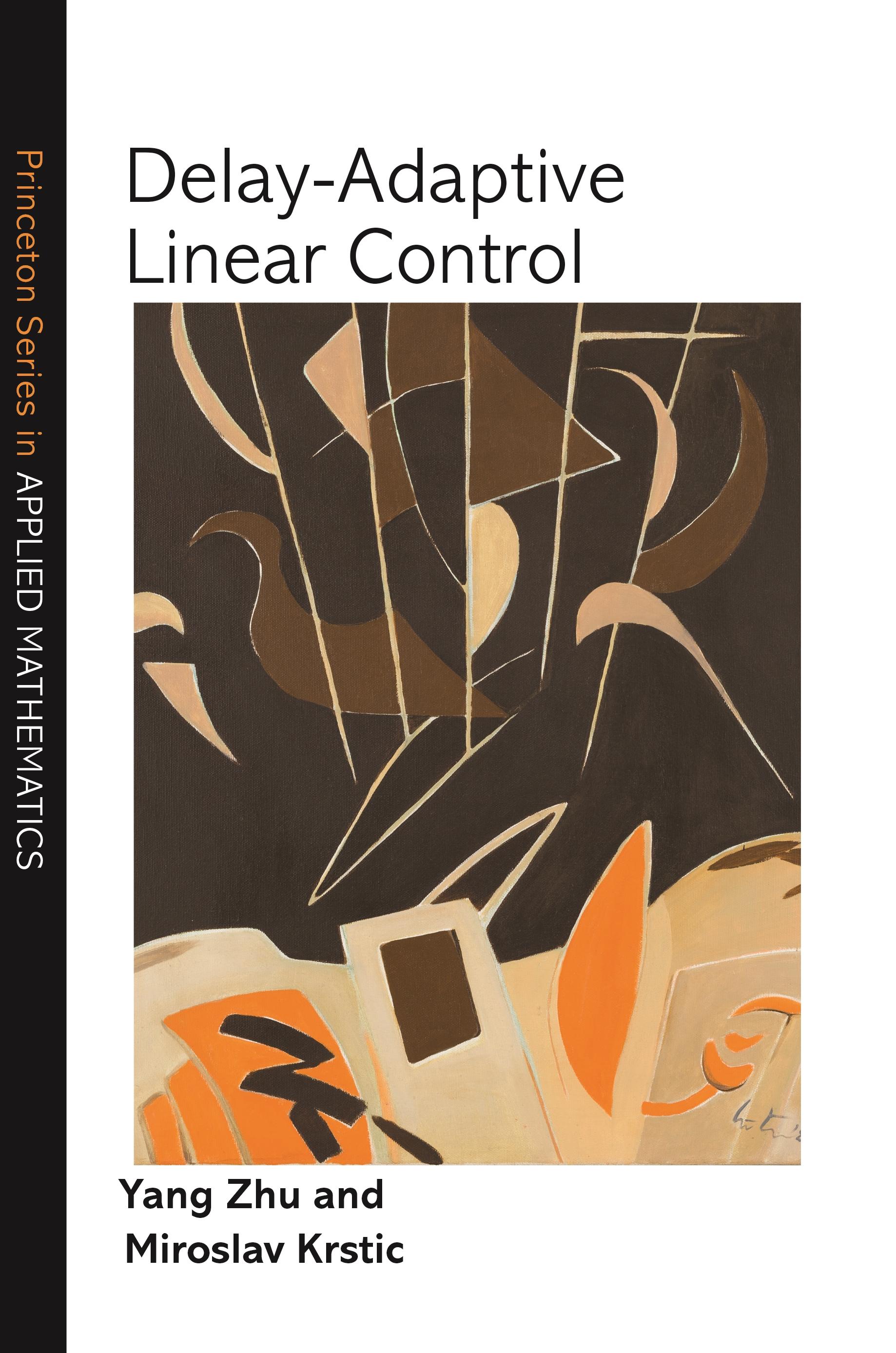
Actuator and sensor delays are among the most common dynamic phenomena in engineering practice, and when disregarded, they render controlled systems unstable. Over the past sixty years, predictor feedback has been a key tool for compensating such delays, but conventional predictor feedback algorithms assume that the delays and other parameters of a given system are known. When incorrect parameter values are used in the predictor, the resulting controller may be as destabilizing as without the delay compensation.
Delay-Adaptive Linear Control develops adaptive predictor feedback algorithms equipped with online estimators of unknown delays and other parameters. Such estimators are designed as nonlinear differential equations, which dynamically adjust the parameters of the predictor. The design and analysis of the adaptive predictors involves a Lyapunov stability study of systems whose dimension is infinite, because of the delays, and nonlinear, because of the parameter estimators. This comprehensive book solves adaptive delay compensation problems for systems with single and multiple inputs/outputs, unknown and distinct delays in different input channels, unknown delay kernels, unknown plant parameters, unmeasurable finite-dimensional plant states, and unmeasurable infinite-dimensional actuator states.
Presenting breakthroughs in adaptive control and control of delay systems, Delay-Adaptive Linear Control offers powerful new tools for the control engineer and the mathematician.
Zahle einfach mit Karte, Klarna, Apple Pay oder Google Pay. Nicht zufrieden? Du hast immer ein 14-tägiges Widerrufsrecht. Lies mehr in unseren AGB. Hast du Fragen, schreib uns eine E-Mail an hello@memmo.org.
Memmo macht das Lernen einfacher – wo auch immer du bist. Bei uns findest du deine Kursbücher und smarte Lerntools an einem Ort: Zusammenfassungen, Quizzes, Podcasts und Lernkarten. Und Ted, dein Lernbuddy, beantwortet alles, was du wissen möchtest. Über 50.000 Studierende lernen bereits hier – gemacht, damit du schneller lernst und weniger Stress hast.