
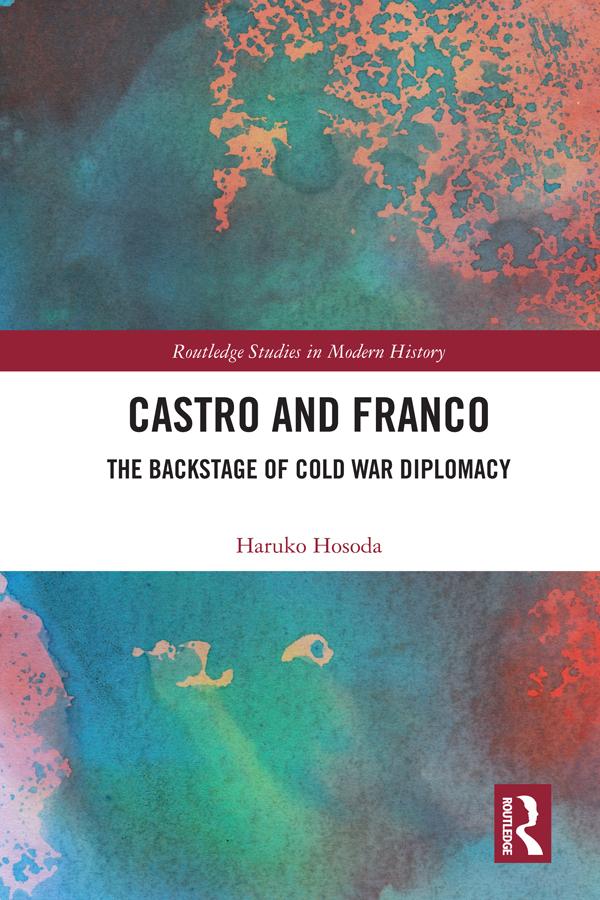
Cuba’s Fidel Castro and Spain’s Francisco Franco were two men with very similar backgrounds but very different political ideologies. Both received a Catholic education and had strong connections to the Galicia region of Spain. Both were familiar with guerrilla tactics and came to power through fighting civil wars. However, Franco had support from fascists, who fought a vicious campaign against communist guerrillas, whereas Cuba was strategically aligned with the USSR after the revolution. The two countries nevertheless maintained strong relations, notably keeping a formal diplomatic relationship after the 1959 Cuban revolution despite the United States' severing of ties to Cuba. This relationship, Hosoda argues, would remain a vital back channel for communication between Cuba and the West.
Using a mixture of primary and secondary sources, derived from Cuban, American and Spanish archives, Hosoda analyses the nature and wider role of diplomatic relations between Cuba and Spain during the Cold War. Addressing both the question of how this relationship was forged – whether through the personal strange "amity" of their leaders, mutual animosity toward the U.S., or the alignment of national interests – and the importance of the role that it played. Considering also the role of the Vatican, this book offers a fascinating insight into a rarely studied aspect of the Cold War, one that transcends the usual East-West binaries.
Zahle einfach mit Karte, Klarna, Apple Pay oder Google Pay. Nicht zufrieden? Du hast immer ein 14-tägiges Widerrufsrecht. Lies mehr in unseren AGB. Hast du Fragen, schreib uns eine E-Mail an hello@memmo.org.
Memmo macht das Lernen einfacher – wo auch immer du bist. Bei uns findest du deine Kursbücher und smarte Lerntools an einem Ort: Zusammenfassungen, Quizzes, Podcasts und Lernkarten. Und Ted, dein Lernbuddy, beantwortet alles, was du wissen möchtest. Über 50.000 Studierende lernen bereits hier – gemacht, damit du schneller lernst und weniger Stress hast.