
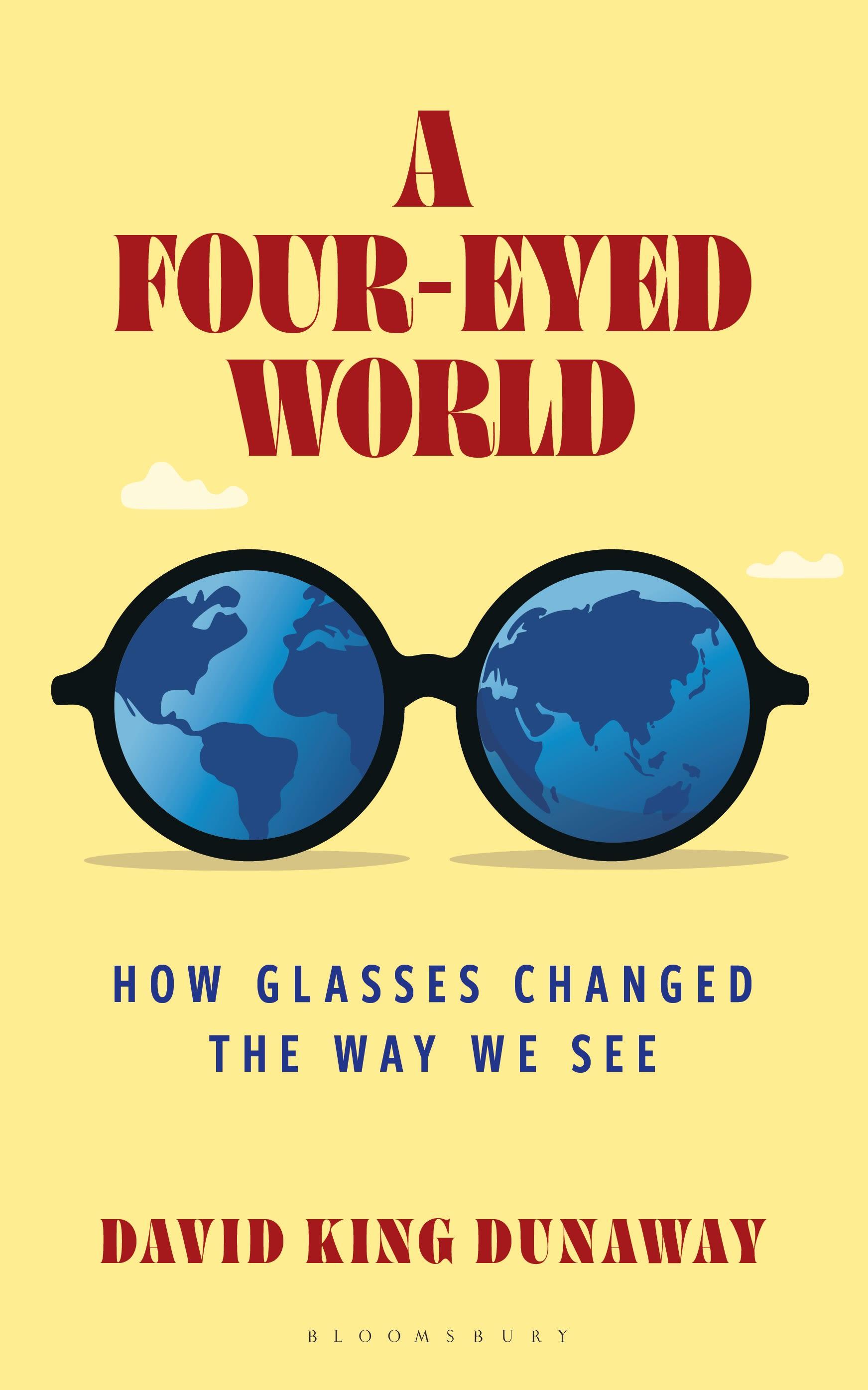
An engaging and informative cultural history of glasses that explores their origins, stigmas, future in technology, and more.
Eyeglasses have become so commonplace we hardly think about them-unless we can't find them. Yet glasses have been controversial throughout history. Roger Bacon pioneered using lenses to see and then spent a decade in a medieval prison for advocating that he could “fix” God's creations by improving our eyesight. Even today, people take off their glasses before having their picture taken, despite how necessary they are.
A Four-Eyed World: How Glasses Changed the Way We See is the first book to investigate the experience of wearing glasses and contacts and their role in culture. David King Dunaway encourages readers to take a look at how they literally see the world through what they wear. He explores everything from the history of deficient eyesight and how glasses are made to portrayals of those who wear glasses in media, the stigma surrounding them, and the future of augmented and virtual reality glasses, highlighting how glasses have shaped, and continue to shape, who we are. Interwoven is Dunaway's own experience of spending a week without his glasses, which he has used since childhood, to see the world around him and his newfound appreciation for his visual aids.
This is the story of how we see the world and how our ability to see things has evolved, ultimately asking: How have two cloudy, quarter-sized discs of crystal or glass originally riveted together become so essential to human existence? Shakespeare famously said eyes are windows to the soul, but what about people who see only by covering theirs with glasses? Readers will find out together through this fascinating and insightful cultural history of one of humanity's greatest inventions.
Eyeglasses have become so commonplace we hardly think about them-unless we can't find them. Yet glasses have been controversial throughout history. Roger Bacon pioneered using lenses to see and then spent a decade in a medieval prison for advocating that he could “fix” God's creations by improving our eyesight. Even today, people take off their glasses before having their picture taken, despite how necessary they are.
A Four-Eyed World: How Glasses Changed the Way We See is the first book to investigate the experience of wearing glasses and contacts and their role in culture. David King Dunaway encourages readers to take a look at how they literally see the world through what they wear. He explores everything from the history of deficient eyesight and how glasses are made to portrayals of those who wear glasses in media, the stigma surrounding them, and the future of augmented and virtual reality glasses, highlighting how glasses have shaped, and continue to shape, who we are. Interwoven is Dunaway's own experience of spending a week without his glasses, which he has used since childhood, to see the world around him and his newfound appreciation for his visual aids.
This is the story of how we see the world and how our ability to see things has evolved, ultimately asking: How have two cloudy, quarter-sized discs of crystal or glass originally riveted together become so essential to human existence? Shakespeare famously said eyes are windows to the soul, but what about people who see only by covering theirs with glasses? Readers will find out together through this fascinating and insightful cultural history of one of humanity's greatest inventions.
Strony: 296
Kategoria: Film- & Medievetenskap
e-ISBN: 9798881804831
Waga przesyłki: 1.2 kg
Wysyłka w ciągu: 1-2 dni
Płać wygodnie kartą, Klarną, Apple Pay lub Google Pay. Nie jesteś zadowolony? Zawsze masz 14-dniową gwarancję zwrotu pieniędzy. Więcej przeczytasz w naszych warunkach. Masz pytania? Napisz do nas na hello@memmo.org.
Memmo ułatwia naukę – gdziekolwiek jesteś na świecie. U nas znajdziesz podręczniki i sprytne narzędzia do nauki w jednym miejscu: streszczenia, quizy, podcasty i fiszki. A do tego Ted, Twój kumpel do nauki, który odpowie na wszystko, co Cię nurtuje. Ponad 50 000 studentów już tu się uczy – stworzone, byś uczył się szybciej i mniej stresował.