
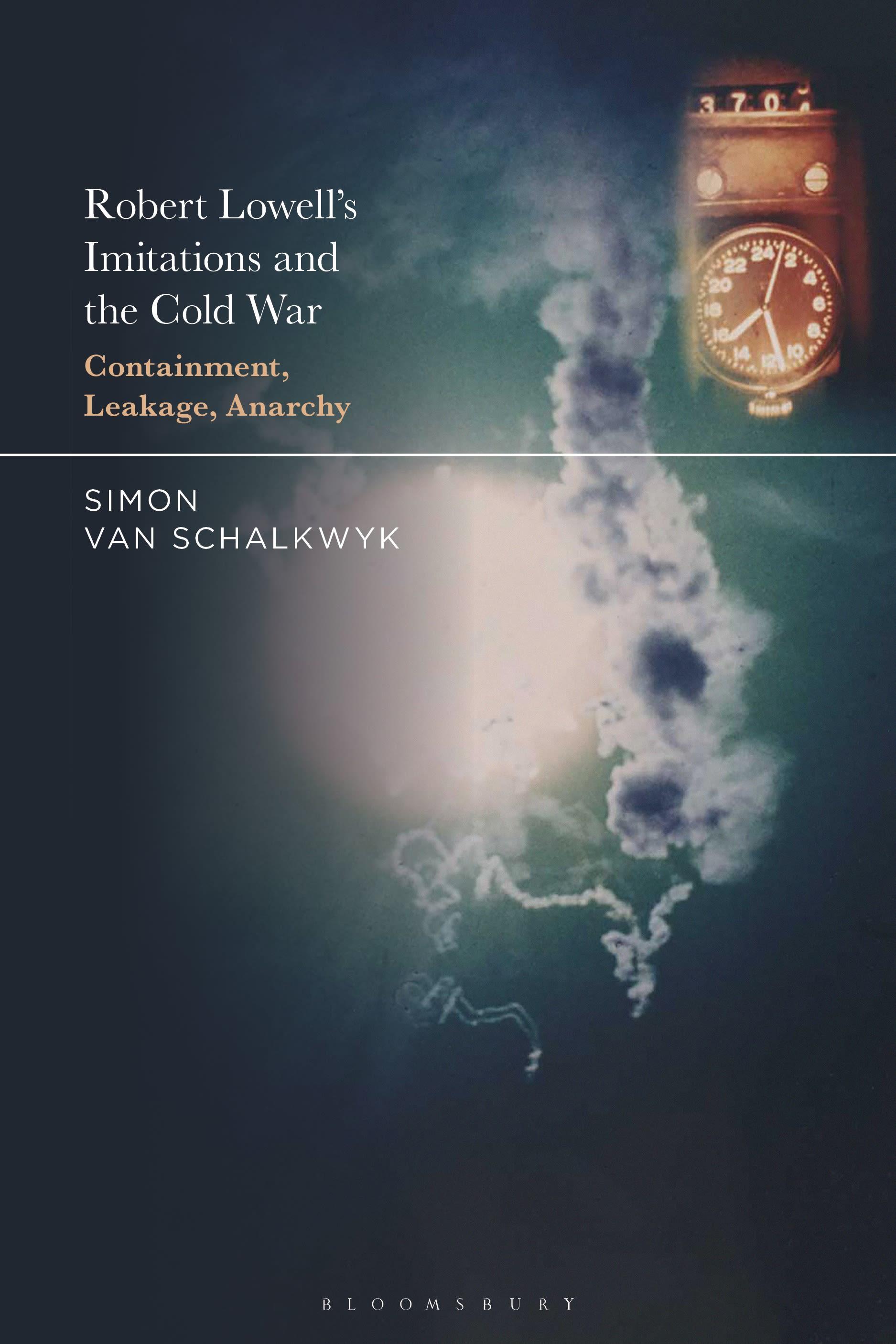
The first book-length study focusing on Robert Lowell's career-long preoccupation with the liberal mode of translational adaptation known as imitation.
Robert Lowell's Imitations and the Cold War argues that Lowell's imitations are simultaneously symptomatic of and critically responsive to familiar nodes of Cold War ideology such as containment and contamination, secrecy and security, post-imperial U.S. expansion and Empire. It departs from studies focused solely on Imitations (1961), Lowell's book-length collection of translational adaptations, by demonstrating how imitation shadows Lowell's work from his earliest collections, Land of Unlikeness (1944) and Lord Weary's Castle (1946), through his celebrated mid-career collections, Life Studies (1959) and For the Union Dead (1964), and to later works such as Near the Ocean (1969) and his contributions of adaptations from the Russian of Anna Akhmatova and Osip Mandelstam collected in Olga Carlisle's anthology, Poets on Street Corners (1967).
Simon van Schalkwyk excavates the imitational substrate undergirding and informing Lowell's compositional method and poetic imagination throughout the course of his career. In so doing, he shows how imitation enacts, at the level of form, Lowell's restless investment in Cold War geopolitics and literary networks in ways that inform, develop, and complicate his more conventional canonization as an unquestionably 'American' poet preoccupied solely and simplistically with personal or autobiographical modes of poetic 'confession'.
As literary sites at which containment's dualities, porosities, leakages, and contaminants are most clearly displayed, Lowell's imitations simultaneously challenge and develop our understanding of confession's presumably strict preoccupation with the personal, regional and national frameworks through which Lowell has commonly been understood.
Robert Lowell's Imitations and the Cold War argues that Lowell's imitations are simultaneously symptomatic of and critically responsive to familiar nodes of Cold War ideology such as containment and contamination, secrecy and security, post-imperial U.S. expansion and Empire. It departs from studies focused solely on Imitations (1961), Lowell's book-length collection of translational adaptations, by demonstrating how imitation shadows Lowell's work from his earliest collections, Land of Unlikeness (1944) and Lord Weary's Castle (1946), through his celebrated mid-career collections, Life Studies (1959) and For the Union Dead (1964), and to later works such as Near the Ocean (1969) and his contributions of adaptations from the Russian of Anna Akhmatova and Osip Mandelstam collected in Olga Carlisle's anthology, Poets on Street Corners (1967).
Simon van Schalkwyk excavates the imitational substrate undergirding and informing Lowell's compositional method and poetic imagination throughout the course of his career. In so doing, he shows how imitation enacts, at the level of form, Lowell's restless investment in Cold War geopolitics and literary networks in ways that inform, develop, and complicate his more conventional canonization as an unquestionably 'American' poet preoccupied solely and simplistically with personal or autobiographical modes of poetic 'confession'.
As literary sites at which containment's dualities, porosities, leakages, and contaminants are most clearly displayed, Lowell's imitations simultaneously challenge and develop our understanding of confession's presumably strict preoccupation with the personal, regional and national frameworks through which Lowell has commonly been understood.
Strony: 224
Kategoria: Litteraturvetenskap & Teori
e-ISBN: 9798765132562
Waga przesyłki: 1.2 kg
Wysyłka w ciągu: 1-2 dni
Płać wygodnie kartą, Klarną, Apple Pay lub Google Pay. Nie jesteś zadowolony? Zawsze masz 14-dniową gwarancję zwrotu pieniędzy. Więcej przeczytasz w naszych warunkach. Masz pytania? Napisz do nas na hello@memmo.org.
Memmo ułatwia naukę – gdziekolwiek jesteś na świecie. U nas znajdziesz podręczniki i sprytne narzędzia do nauki w jednym miejscu: streszczenia, quizy, podcasty i fiszki. A do tego Ted, Twój kumpel do nauki, który odpowie na wszystko, co Cię nurtuje. Ponad 50 000 studentów już tu się uczy – stworzone, byś uczył się szybciej i mniej stresował.