
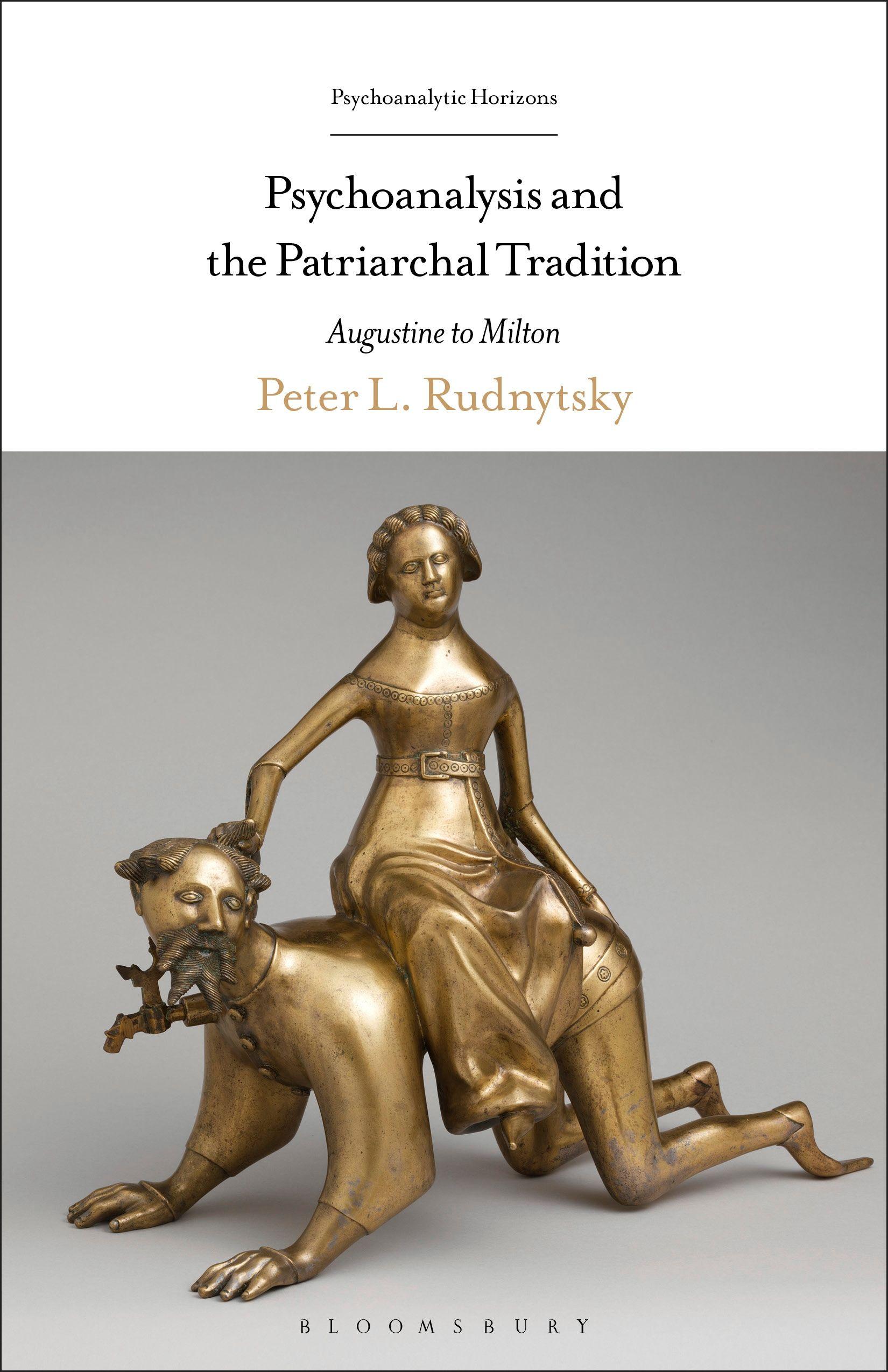
A work of feminist psychoanalytic literary criticism that offers original readings of early canonical works of the Western tradition.
In cogently argued and brilliant readings of texts ranging from St. Augustine's Confessions to Milton's Paradise Lost, Paradise Regained and Samson Agonistes, Psychoanalysis and the Patriarchal Tradition shows the ongoing cultural value of psychoanalytic approaches-flexibly and critically applied-to the interpretation of major literary works. Peter L. Rudnytsky makes a persuasive and striking case for tracing significant connections between the Judeo-Christian story of the Fall and the Greek myth of Oedipus: Proposing that the Oedipus complex can be viewed as the “latent content” of the Fall, Rudnytsky at once respects the explanatory power of these master-myths while he interrogates their claims to universality.
Drawing above all on Freud, Klein, Winnicott, and Lacan, Rudnytsky integrates a range of psychoanalytic perspectives with deconstruction, new historicism, and psychobiography to highlight issues of gender and sexuality not only in Augustine and Milton but also in Gottfried's Tristan, Sir Gawain and the Green Knight, More's History of King Richard III, Shakespeare's Othello and King Lear, as well the poetry of Marvell and other 17th-century writers who exhibit the “dissociation of sensibility” Rudnytsky links to the execution of King Charles I.
Through synthesis of psychoanalysis, feminism, and literary criticism, Psychoanalysis and the Patriarchal Tradition sheds new light on old masterpieces even as it reveals the contours of an entire tradition.
In cogently argued and brilliant readings of texts ranging from St. Augustine's Confessions to Milton's Paradise Lost, Paradise Regained and Samson Agonistes, Psychoanalysis and the Patriarchal Tradition shows the ongoing cultural value of psychoanalytic approaches-flexibly and critically applied-to the interpretation of major literary works. Peter L. Rudnytsky makes a persuasive and striking case for tracing significant connections between the Judeo-Christian story of the Fall and the Greek myth of Oedipus: Proposing that the Oedipus complex can be viewed as the “latent content” of the Fall, Rudnytsky at once respects the explanatory power of these master-myths while he interrogates their claims to universality.
Drawing above all on Freud, Klein, Winnicott, and Lacan, Rudnytsky integrates a range of psychoanalytic perspectives with deconstruction, new historicism, and psychobiography to highlight issues of gender and sexuality not only in Augustine and Milton but also in Gottfried's Tristan, Sir Gawain and the Green Knight, More's History of King Richard III, Shakespeare's Othello and King Lear, as well the poetry of Marvell and other 17th-century writers who exhibit the “dissociation of sensibility” Rudnytsky links to the execution of King Charles I.
Through synthesis of psychoanalysis, feminism, and literary criticism, Psychoanalysis and the Patriarchal Tradition sheds new light on old masterpieces even as it reveals the contours of an entire tradition.
Płać wygodnie kartą, Klarną, Apple Pay lub Google Pay. Nie jesteś zadowolony? Zawsze masz 14-dniową gwarancję zwrotu pieniędzy. Więcej przeczytasz w naszych warunkach. Masz pytania? Napisz do nas na hello@memmo.org.
Memmo ułatwia naukę – gdziekolwiek jesteś na świecie. U nas znajdziesz podręczniki i sprytne narzędzia do nauki w jednym miejscu: streszczenia, quizy, podcasty i fiszki. A do tego Ted, Twój kumpel do nauki, który odpowie na wszystko, co Cię nurtuje. Ponad 50 000 studentów już tu się uczy – stworzone, byś uczył się szybciej i mniej stresował.