
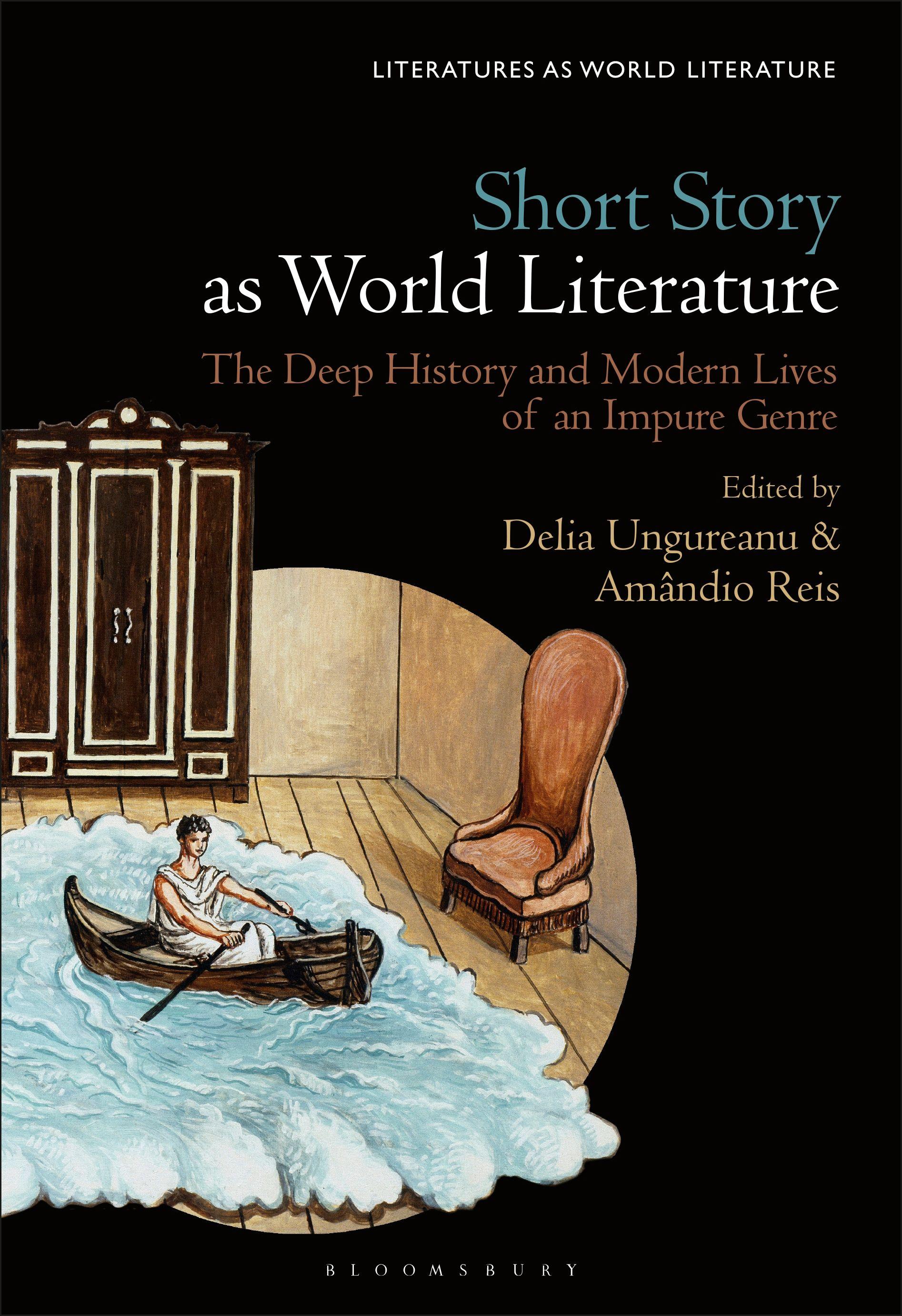
Global in scope, this volume uncovers the deep history of the short story as an "impure" genre by challenging the commonplace understanding in contemporary literary studies that the short story is primarily a product of Western modernity.
Genres do not have rigid, timeless, once-and-for-all definitions, and the short story is no exception. Short Story as World Literature invites the reader to reflect on the historical becoming of this impure genre, analyzing various forms of the short story throughout its deep history. It also challenges established ideas about the genre that limit its history to the prose form practiced by Edgar Allan Poe and canonized in Western Europe following Charles Baudelaire's influential translation.
The story of the short story presented here goes into a much deeper history throughout time and space: its earliest forms include dreams and visions in ancient religious texts, parables, poems, maxims, but also more recently poem-objects and films. The authors examine how the short story evolves, sometimes almost beyond recognition, across different forms of art, genres, and media, as well as through translation and circulation – with effects on institutions, educational politics, and the construction of a moral system of values.
An international team of established and emerging scholars in the fields of comparative and world literature – including David Damrosch, Paulo Horta, Dominique Jullien, and Mads Rosendahl Thomsen, as well as Maria Dabija, Sophus Helle, and Michael Makarovsky – untangle this complex and complicated (hi)story.
Genres do not have rigid, timeless, once-and-for-all definitions, and the short story is no exception. Short Story as World Literature invites the reader to reflect on the historical becoming of this impure genre, analyzing various forms of the short story throughout its deep history. It also challenges established ideas about the genre that limit its history to the prose form practiced by Edgar Allan Poe and canonized in Western Europe following Charles Baudelaire's influential translation.
The story of the short story presented here goes into a much deeper history throughout time and space: its earliest forms include dreams and visions in ancient religious texts, parables, poems, maxims, but also more recently poem-objects and films. The authors examine how the short story evolves, sometimes almost beyond recognition, across different forms of art, genres, and media, as well as through translation and circulation – with effects on institutions, educational politics, and the construction of a moral system of values.
An international team of established and emerging scholars in the fields of comparative and world literature – including David Damrosch, Paulo Horta, Dominique Jullien, and Mads Rosendahl Thomsen, as well as Maria Dabija, Sophus Helle, and Michael Makarovsky – untangle this complex and complicated (hi)story.
Strony: 288
Kategoria: Litteraturvetenskap & Teori
e-ISBN: 9798765126745
Waga przesyłki: 1.2 kg
Wysyłka w ciągu: 1-2 dni
Płać wygodnie kartą, Klarną, Apple Pay lub Google Pay. Nie jesteś zadowolony? Zawsze masz 14-dniową gwarancję zwrotu pieniędzy. Więcej przeczytasz w naszych warunkach. Masz pytania? Napisz do nas na hello@memmo.org.
Memmo ułatwia naukę – gdziekolwiek jesteś na świecie. U nas znajdziesz podręczniki i sprytne narzędzia do nauki w jednym miejscu: streszczenia, quizy, podcasty i fiszki. A do tego Ted, Twój kumpel do nauki, który odpowie na wszystko, co Cię nurtuje. Ponad 50 000 studentów już tu się uczy – stworzone, byś uczył się szybciej i mniej stresował.