
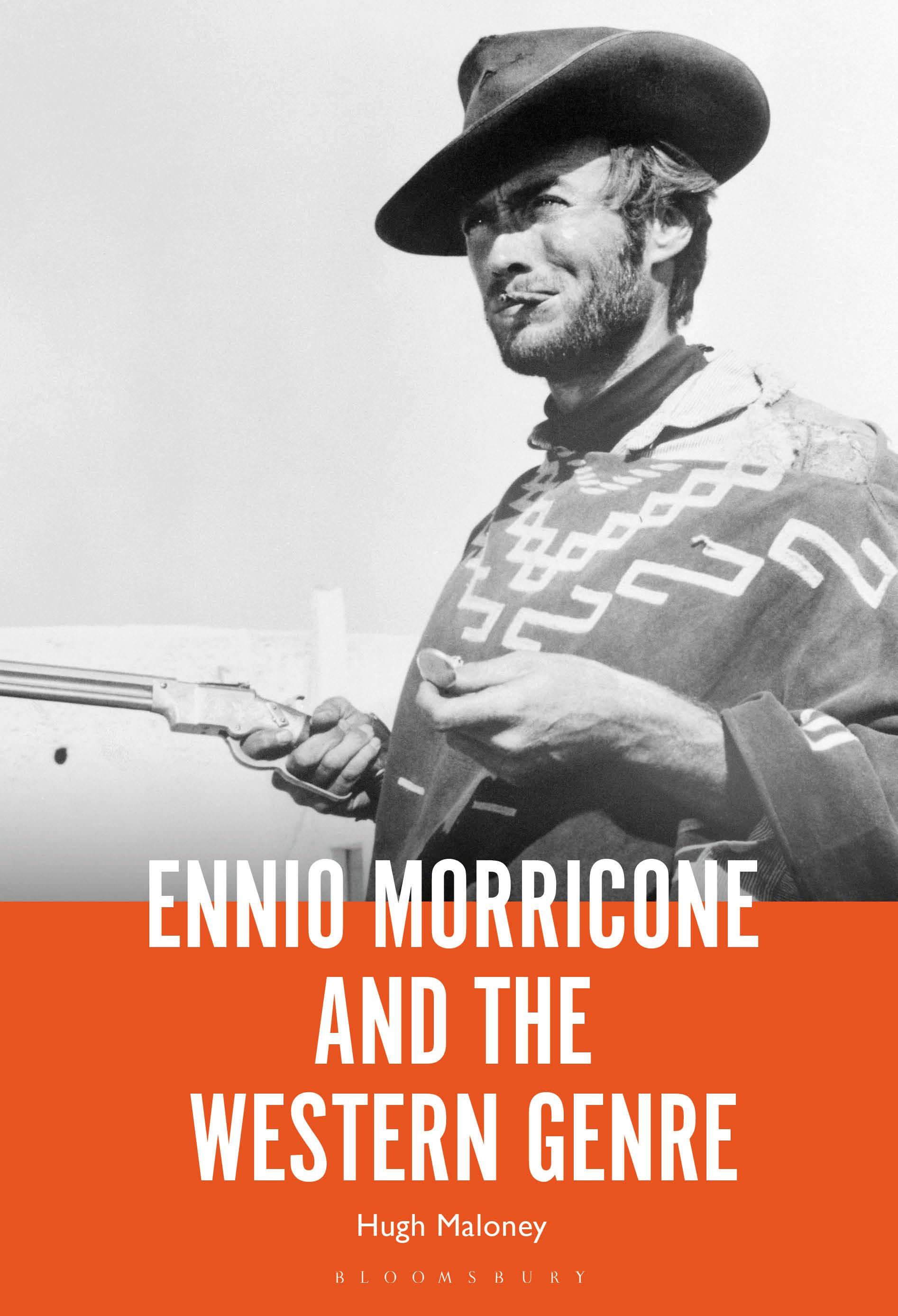
A study of Italian composer Ennio Morricone's creative engagement with the western film genre, surveying his original film scores in their generic, historical, industrial, and cultural contexts.
Ennio Morricone composed 34 scores for films released between 1963 and 2015; the success and impact of a small handful of these films in popular culture has caused the distinctive soundworld that he cultivated for the genre known as the Italian western (or the spaghetti western) to become a musical byword for the frontier, and the name Morricone itself to be virtually synonymous with the notion of western film music. And indeed, some of these definitive scores are ranked among the most canonic works in the history of film music generally.
Hugh Maloney's study ascertains the fundamental compositional characteristics of this output, while drawing out its salience in various contexts: western-genre film-scoring, Italian cinema, Morricone's creative practice and technical questions of film composition. Its most essential aim is to apprehend the composer's relationship with the western genre; although this is a notion often alluded to in discussions of the films of Sergio Leone, the composer's best-known collaborator, Maloney's book expands the discourse beyond this limited filmography to include the entirety of Morricone's experience composing for westerns, putting his practice front and centre. As he argues, this relationship is characterized by tensions, between innovation and tradition, acclaim and exasperation, and, for the composer himself, the forces of commerce and those of artistic integrity.
Ennio Morricone composed 34 scores for films released between 1963 and 2015; the success and impact of a small handful of these films in popular culture has caused the distinctive soundworld that he cultivated for the genre known as the Italian western (or the spaghetti western) to become a musical byword for the frontier, and the name Morricone itself to be virtually synonymous with the notion of western film music. And indeed, some of these definitive scores are ranked among the most canonic works in the history of film music generally.
Hugh Maloney's study ascertains the fundamental compositional characteristics of this output, while drawing out its salience in various contexts: western-genre film-scoring, Italian cinema, Morricone's creative practice and technical questions of film composition. Its most essential aim is to apprehend the composer's relationship with the western genre; although this is a notion often alluded to in discussions of the films of Sergio Leone, the composer's best-known collaborator, Maloney's book expands the discourse beyond this limited filmography to include the entirety of Morricone's experience composing for westerns, putting his practice front and centre. As he argues, this relationship is characterized by tensions, between innovation and tradition, acclaim and exasperation, and, for the composer himself, the forces of commerce and those of artistic integrity.
Strony: 280
Kategoria: Musikvetenskap
e-ISBN: 9798765126585
Waga przesyłki: 1.2 kg
Wysyłka w ciągu: 1-2 dni
Płać wygodnie kartą, Klarną, Apple Pay lub Google Pay. Nie jesteś zadowolony? Zawsze masz 14-dniową gwarancję zwrotu pieniędzy. Więcej przeczytasz w naszych warunkach. Masz pytania? Napisz do nas na hello@memmo.org.
Memmo ułatwia naukę – gdziekolwiek jesteś na świecie. U nas znajdziesz podręczniki i sprytne narzędzia do nauki w jednym miejscu: streszczenia, quizy, podcasty i fiszki. A do tego Ted, Twój kumpel do nauki, który odpowie na wszystko, co Cię nurtuje. Ponad 50 000 studentów już tu się uczy – stworzone, byś uczył się szybciej i mniej stresował.