
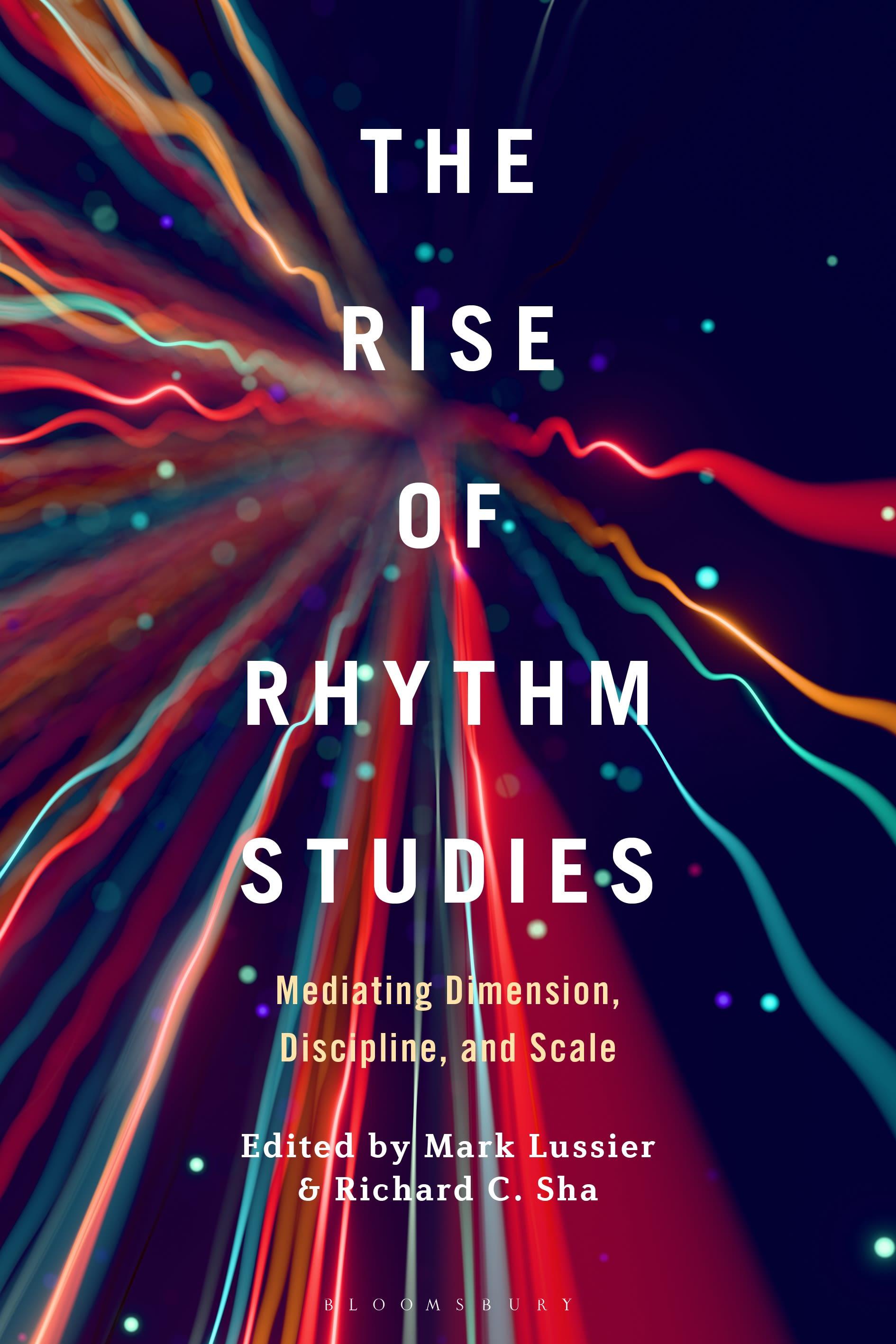
Rhythm is everywhere. Its ability to focus and unify interdisciplinary conversation begs the questions: What is rhythm and can different disciplines agree on its definition?
Rhythm studies have emerged as a key background form traversing cultural, natural, and social forms like cognition, communication, and even cosmology. An added boon: this background can seem unifying. Those who explore such entangled phenomena study the throbbing presence of rhythmic, oscillatory, and vibratory potentials: Neuroscientists turn to rhythm for novel explanations of why our cognitive capacities are so limited; physicists use it to cross time and space; scholars in various fields turn to it to rethink materialism and affect theory.
This lively collection considers why rhythm currently functions as a form of mediation between disciplines, across widely different scales and dimensions. The Rise of Rhythm Studies tests what rhythm can do through theoretical examinations and in case studies ranging from European literature to topology and media studies to Chinese visual art. Established scholars, such as Nina Kraus, Anna Gibbs, and Caroline Levine, alongside rising scholars in the field, marshal transdisciplinary perspectives in order to understand rhythm as a boundary condition for living in and working through and with the world.
Rhythm studies have emerged as a key background form traversing cultural, natural, and social forms like cognition, communication, and even cosmology. An added boon: this background can seem unifying. Those who explore such entangled phenomena study the throbbing presence of rhythmic, oscillatory, and vibratory potentials: Neuroscientists turn to rhythm for novel explanations of why our cognitive capacities are so limited; physicists use it to cross time and space; scholars in various fields turn to it to rethink materialism and affect theory.
This lively collection considers why rhythm currently functions as a form of mediation between disciplines, across widely different scales and dimensions. The Rise of Rhythm Studies tests what rhythm can do through theoretical examinations and in case studies ranging from European literature to topology and media studies to Chinese visual art. Established scholars, such as Nina Kraus, Anna Gibbs, and Caroline Levine, alongside rising scholars in the field, marshal transdisciplinary perspectives in order to understand rhythm as a boundary condition for living in and working through and with the world.
Strony: 272
Kategoria: Litteraturvetenskap & Teori
e-ISBN: 9798765125304
Waga przesyłki: 1.2 kg
Wysyłka w ciągu: 1-2 dni
Płać wygodnie kartą, Klarną, Apple Pay lub Google Pay. Nie jesteś zadowolony? Zawsze masz 14-dniową gwarancję zwrotu pieniędzy. Więcej przeczytasz w naszych warunkach. Masz pytania? Napisz do nas na hello@memmo.org.
Memmo ułatwia naukę – gdziekolwiek jesteś na świecie. U nas znajdziesz podręczniki i sprytne narzędzia do nauki w jednym miejscu: streszczenia, quizy, podcasty i fiszki. A do tego Ted, Twój kumpel do nauki, który odpowie na wszystko, co Cię nurtuje. Ponad 50 000 studentów już tu się uczy – stworzone, byś uczył się szybciej i mniej stresował.