
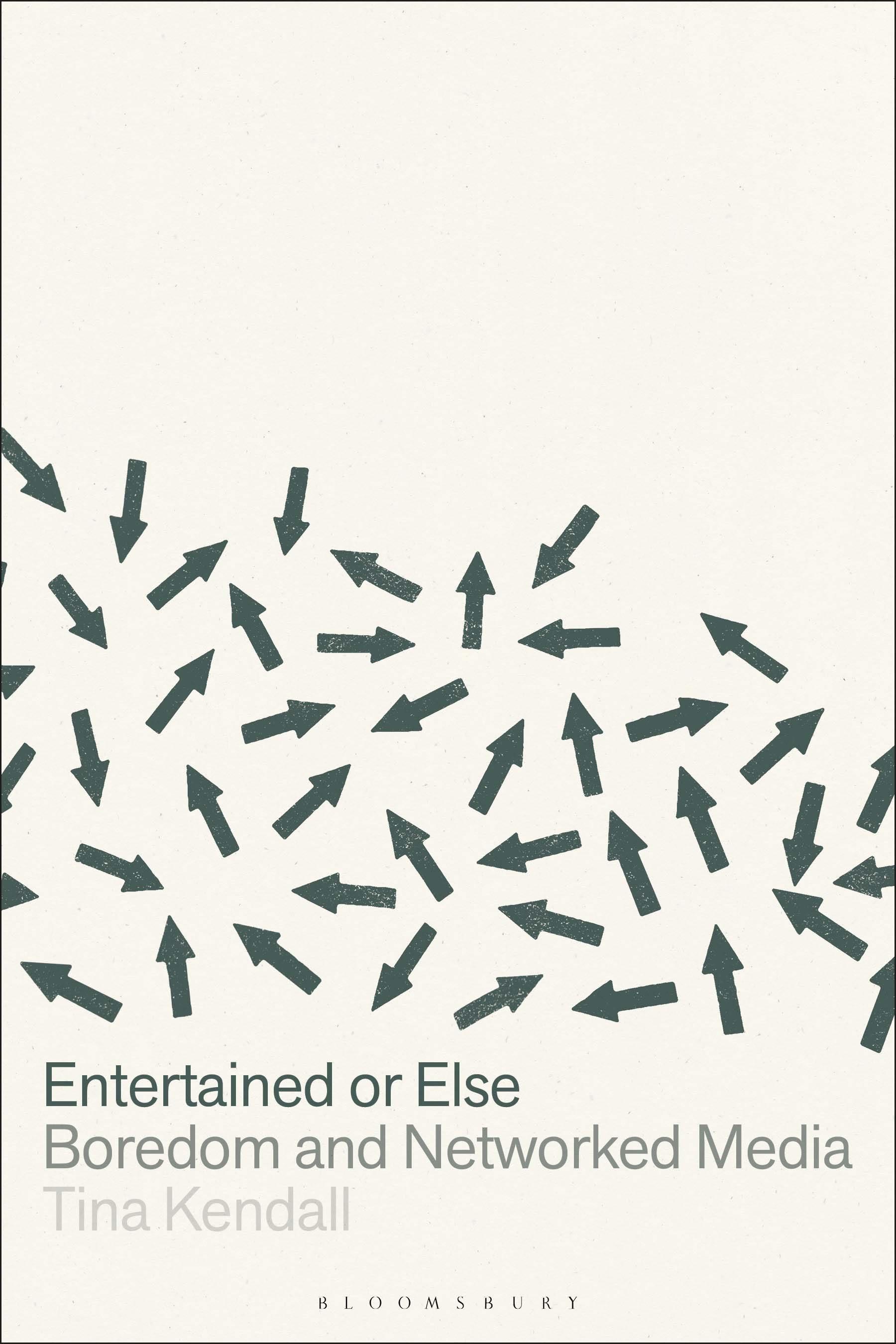
This book considers the complex and often contradictory relations that are forged between boredom and everyday media use in the twenty-first century and demonstrates how networked media have developed new technical means of capitalizing on boredom's state of suspension to make it into a source of value creation.
Focusing on the discursive, technological, and affective structures that encourage users to be entertaining and to remain entertained, the book analyses how boredom has been increasingly instrumentalized as both an individual mood and a wider structure of feeling that drives participation across media networks. It identifies the range of cultural techniques for codifying, classifying, sensing, and pre-empting boredom, as well as those that teach users, counter-intuitively, to embrace boring media as a means of coping with the intensities of always-on existence.
However, if boredom is positioned in a digital network culture as a feeling that keeps driving us back to our social media feeds, it is important to ask how else it might operate. While the technological affordances of computational media have put pressure on our ability to conceive of boredom as a radical challenge to digital capitalism, this book attempts to think about the potential that might still be embedded in boredom's capacity to temporarily suspend or to neutralize dominant structures of attention and affect. Building on the work of Giorgio Agamben, Byung-Chul Han, Roland Barthes, and from historical accounts of boredom and entertainment, the book provides a new understanding of boredom in the context of networked media.
Focusing on the discursive, technological, and affective structures that encourage users to be entertaining and to remain entertained, the book analyses how boredom has been increasingly instrumentalized as both an individual mood and a wider structure of feeling that drives participation across media networks. It identifies the range of cultural techniques for codifying, classifying, sensing, and pre-empting boredom, as well as those that teach users, counter-intuitively, to embrace boring media as a means of coping with the intensities of always-on existence.
However, if boredom is positioned in a digital network culture as a feeling that keeps driving us back to our social media feeds, it is important to ask how else it might operate. While the technological affordances of computational media have put pressure on our ability to conceive of boredom as a radical challenge to digital capitalism, this book attempts to think about the potential that might still be embedded in boredom's capacity to temporarily suspend or to neutralize dominant structures of attention and affect. Building on the work of Giorgio Agamben, Byung-Chul Han, Roland Barthes, and from historical accounts of boredom and entertainment, the book provides a new understanding of boredom in the context of networked media.
Płać wygodnie kartą, Klarną, Apple Pay lub Google Pay. Nie jesteś zadowolony? Zawsze masz 14-dniową gwarancję zwrotu pieniędzy. Więcej przeczytasz w naszych warunkach. Masz pytania? Napisz do nas na hello@memmo.org.
Memmo ułatwia naukę – gdziekolwiek jesteś na świecie. U nas znajdziesz podręczniki i sprytne narzędzia do nauki w jednym miejscu: streszczenia, quizy, podcasty i fiszki. A do tego Ted, Twój kumpel do nauki, który odpowie na wszystko, co Cię nurtuje. Ponad 50 000 studentów już tu się uczy – stworzone, byś uczył się szybciej i mniej stresował.