
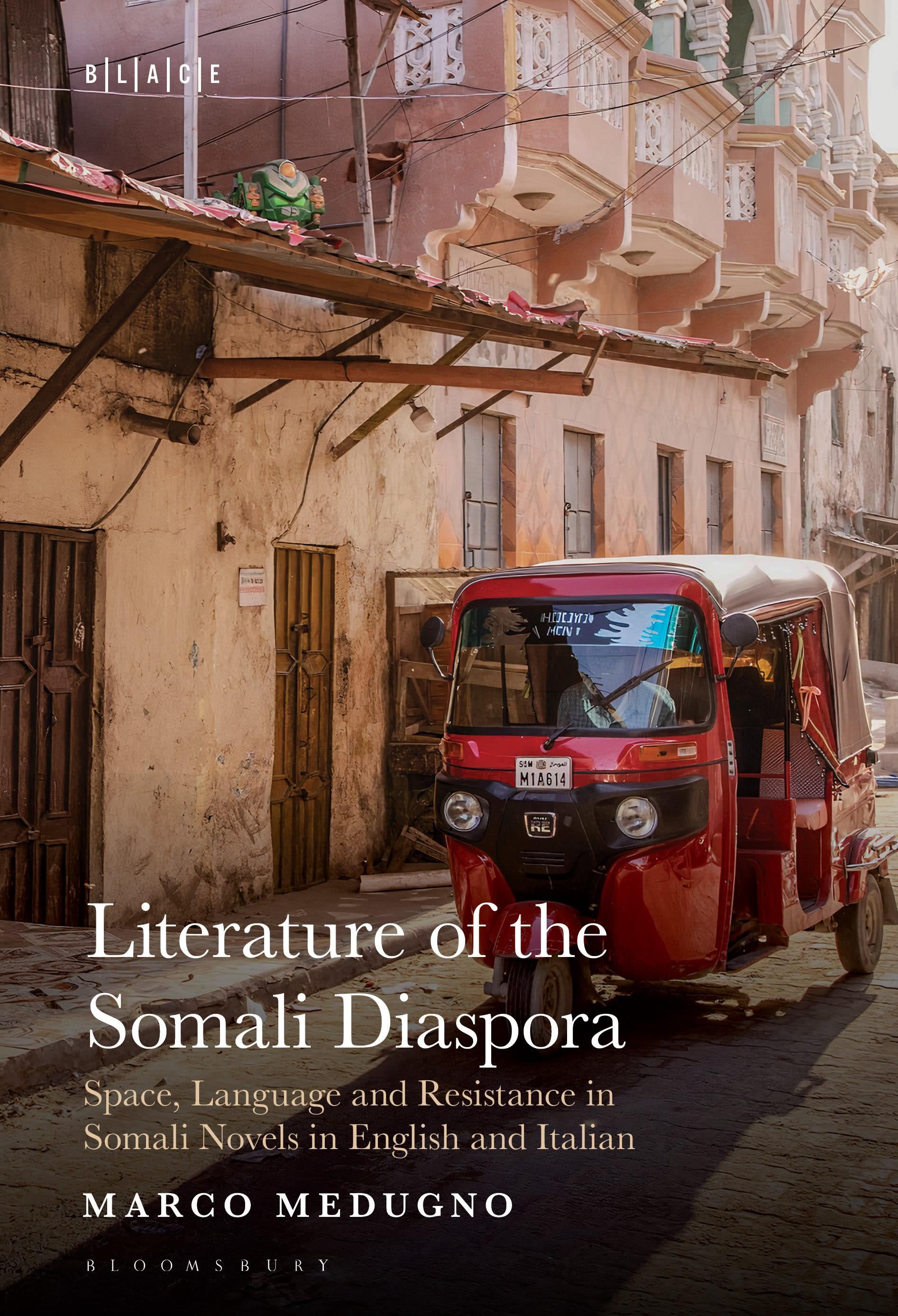
The first study of Anglophone and Italian novels by Somali diasporic authors, offering a new critical framework for multilingual and transnational analysis of Somali literature.
Building on the latest scholarship about multilingual contexts, diaspora studies and the rapidly expanding field of Italian postcolonial studies, Marco Medugno examines Somali diasporic literature with a comparative perspective. Considering works written in English and Italian, he argues that Somali diasporic authors share similar themes and aesthetics, thus creating an interliterary community within the diaspora space.
By using multilingualism as a starting point, Medugno provides significant insights into how Somali national and individual identities are constructed in diasporic, global contexts through geography, style, form, language and the re-writing of national histories emerging out of colonization and independence. Analysing acclaimed Somali novels such as Nuruddin Farah's Links and Crossbones, Igiaba Scego's Adua and Cristina Ali Farah's Little Mother, he questions any definition of 'local' as 'provincial', instead considering it a site for interrogating global concerns.
Literature of the Somali Diaspora is organized around three themes: spatiality, language and resistance help to contextualize authors, forced by the decades-long Somali Civil War, to write outside Somalia and in different languages – including Somali, Italian, English, German, Dutch and Arabic – within global literary circuits. Their work thus creates a literature not confined within national borders but an interliterary global community, a transnational and multilingual space in which they share world aesthetic ideologies, challenge and engage with literary traditions in different languages and show an interplay between diverse cultures.
Building on the latest scholarship about multilingual contexts, diaspora studies and the rapidly expanding field of Italian postcolonial studies, Marco Medugno examines Somali diasporic literature with a comparative perspective. Considering works written in English and Italian, he argues that Somali diasporic authors share similar themes and aesthetics, thus creating an interliterary community within the diaspora space.
By using multilingualism as a starting point, Medugno provides significant insights into how Somali national and individual identities are constructed in diasporic, global contexts through geography, style, form, language and the re-writing of national histories emerging out of colonization and independence. Analysing acclaimed Somali novels such as Nuruddin Farah's Links and Crossbones, Igiaba Scego's Adua and Cristina Ali Farah's Little Mother, he questions any definition of 'local' as 'provincial', instead considering it a site for interrogating global concerns.
Literature of the Somali Diaspora is organized around three themes: spatiality, language and resistance help to contextualize authors, forced by the decades-long Somali Civil War, to write outside Somalia and in different languages – including Somali, Italian, English, German, Dutch and Arabic – within global literary circuits. Their work thus creates a literature not confined within national borders but an interliterary global community, a transnational and multilingual space in which they share world aesthetic ideologies, challenge and engage with literary traditions in different languages and show an interplay between diverse cultures.
Strony: 248
Kategoria: Litteraturvetenskap & Teori
e-ISBN: 9798765107508
Waga przesyłki: 1.2 kg
Wysyłka w ciągu: 1-2 dni
Płać wygodnie kartą, Klarną, Apple Pay lub Google Pay. Nie jesteś zadowolony? Zawsze masz 14-dniową gwarancję zwrotu pieniędzy. Więcej przeczytasz w naszych warunkach. Masz pytania? Napisz do nas na hello@memmo.org.
Memmo ułatwia naukę – gdziekolwiek jesteś na świecie. U nas znajdziesz podręczniki i sprytne narzędzia do nauki w jednym miejscu: streszczenia, quizy, podcasty i fiszki. A do tego Ted, Twój kumpel do nauki, który odpowie na wszystko, co Cię nurtuje. Ponad 50 000 studentów już tu się uczy – stworzone, byś uczył się szybciej i mniej stresował.