
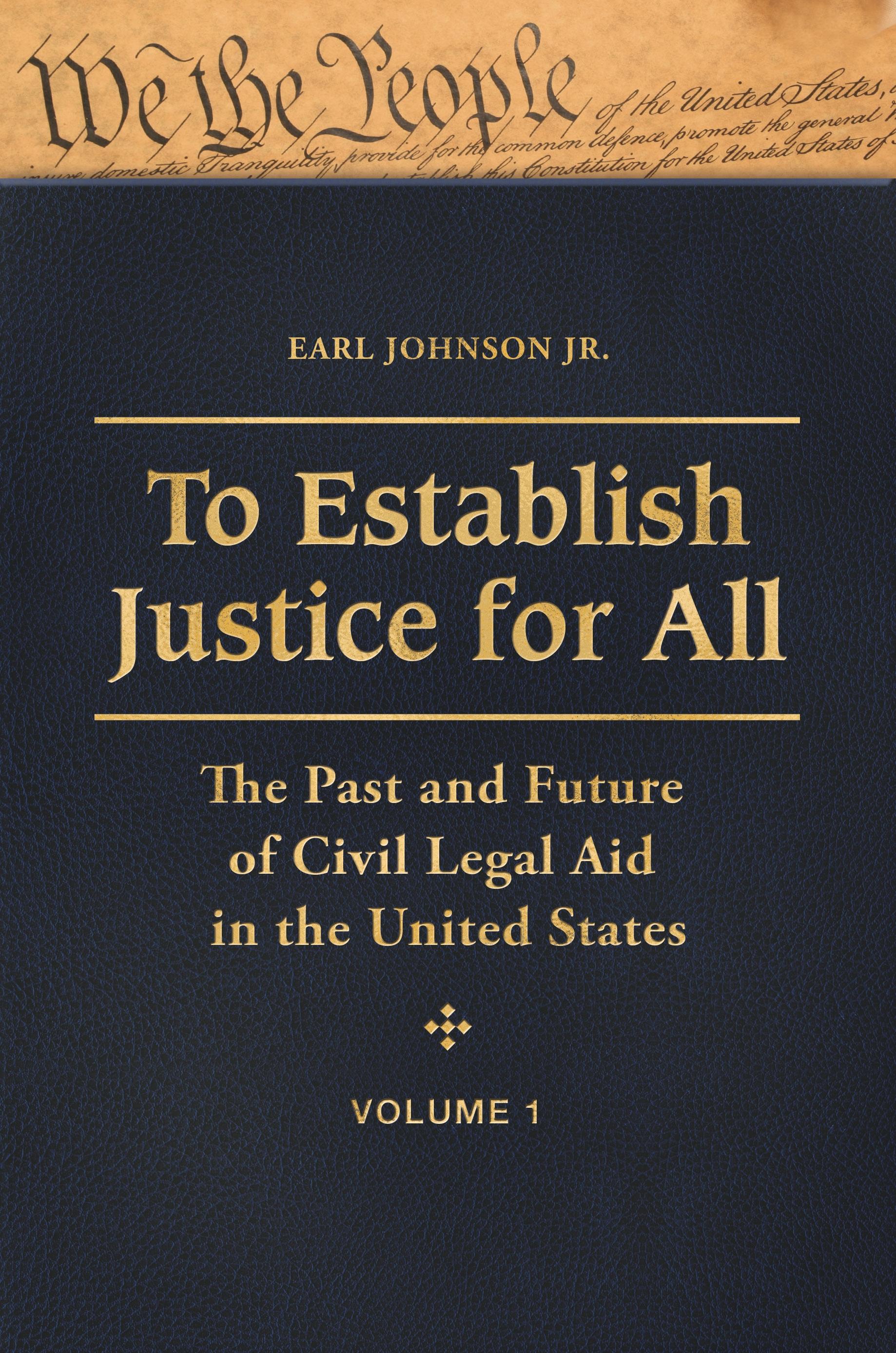
For over a century, many have struggled to turn the Constitution's prime goal "to establish Justice" into reality for Americans who cannot afford lawyers through civil legal aid. This book explains how and why.
American statesman Sargent Shriver called the Legal Services Program the "most important" of all the War on Poverty programs he started; American Bar Association president Edward Kuhn said its creation was the most important development in the history of the legal profession. Earl Johnson Jr., a former director of the War on Poverty's Legal Services Program, provides a vivid account of the entire history of civil legal aid from its inception in 1876 to the current day. The first to capture the full story of the dramatic, ongoing struggle to bring equal justice to those unable to afford a lawyer, this monumental three-volume work covers the personalities and events leading to a national legal aid movement—and decades later, the federal government's entry into the field, and its creation of a unique institution, an independent Legal Services Corporation, to run the program. The narrative also covers the landmark court victories the attorneys won and the political controversies those cases generated, along with the heated congressional battles over the shape and survival of the Legal Services Corporation. In the final chapters, the author assesses the current state of civil legal aid and its future prospects in the United States.
American statesman Sargent Shriver called the Legal Services Program the "most important" of all the War on Poverty programs he started; American Bar Association president Edward Kuhn said its creation was the most important development in the history of the legal profession. Earl Johnson Jr., a former director of the War on Poverty's Legal Services Program, provides a vivid account of the entire history of civil legal aid from its inception in 1876 to the current day. The first to capture the full story of the dramatic, ongoing struggle to bring equal justice to those unable to afford a lawyer, this monumental three-volume work covers the personalities and events leading to a national legal aid movement—and decades later, the federal government's entry into the field, and its creation of a unique institution, an independent Legal Services Corporation, to run the program. The narrative also covers the landmark court victories the attorneys won and the political controversies those cases generated, along with the heated congressional battles over the shape and survival of the Legal Services Corporation. In the final chapters, the author assesses the current state of civil legal aid and its future prospects in the United States.
Płać wygodnie kartą, Klarną, Apple Pay lub Google Pay. Nie jesteś zadowolony? Zawsze masz 14-dniową gwarancję zwrotu pieniędzy. Więcej przeczytasz w naszych warunkach. Masz pytania? Napisz do nas na hello@memmo.org.
Memmo ułatwia naukę – gdziekolwiek jesteś na świecie. U nas znajdziesz podręczniki i sprytne narzędzia do nauki w jednym miejscu: streszczenia, quizy, podcasty i fiszki. A do tego Ted, Twój kumpel do nauki, który odpowie na wszystko, co Cię nurtuje. Ponad 50 000 studentów już tu się uczy – stworzone, byś uczył się szybciej i mniej stresował.