
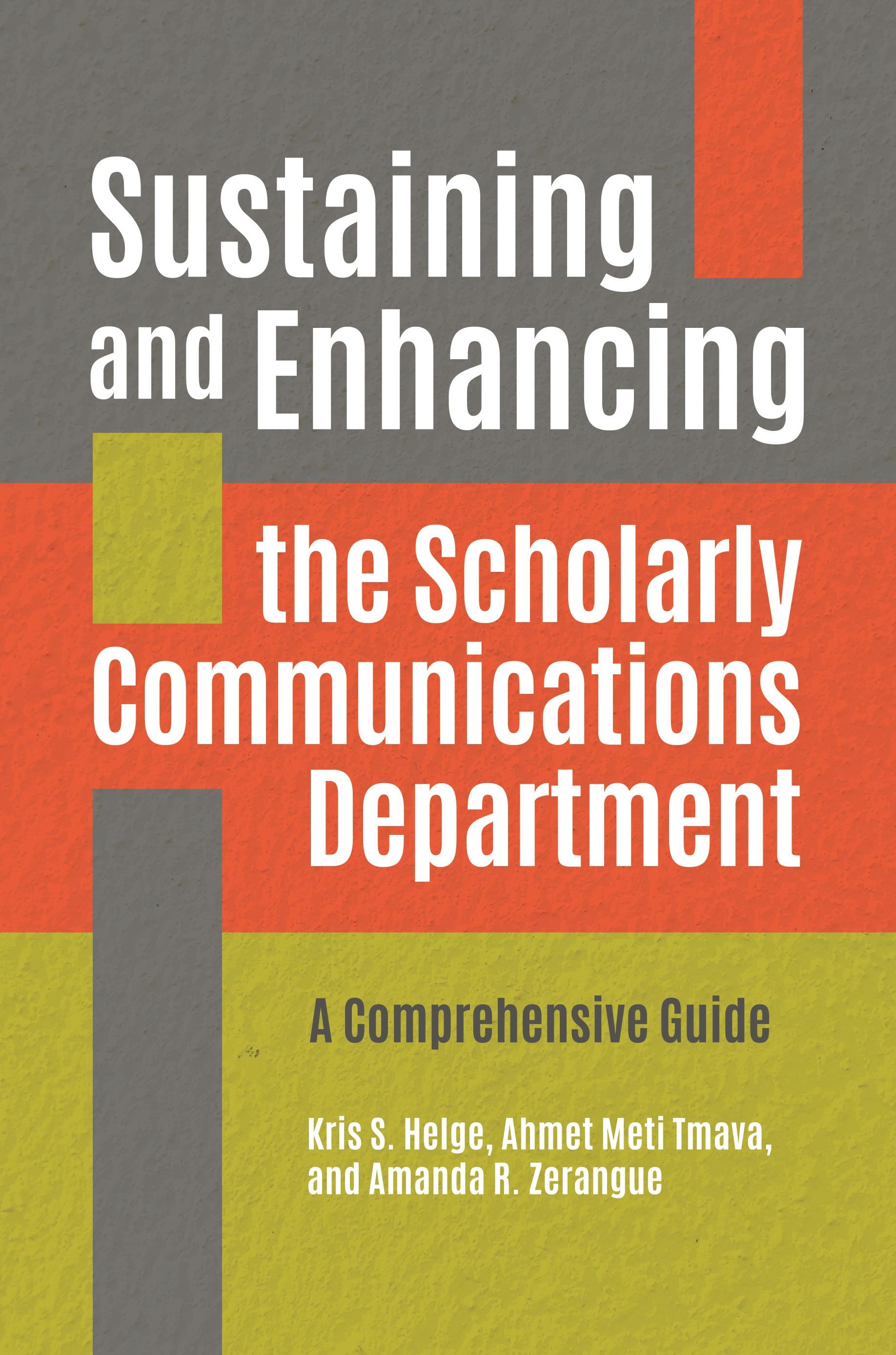
Learn how to develop, manage, and maintain a scholarly communications department.
More and more academic libraries are being asked to provide scholarly communications services to their campuses, ranging from general information about copyright law to instruction for creating and hosting digital repositories and publishing services. To support academic librarians and information specialists in starting their own scholarly communications departments, Sustaining and Enhancing the Scholarly Communications Department begins by introducing key scholarly communications concepts, including copyright, Creative Commons licenses, author rights, open access, open educational resources, open-access e-journals, and institutional repositories.
Authors Helge, Tmava, and Zerangue explain how to develop, manage, market, and maintain a scholarly communications department. They define specific tasks and tools for which many scholarly communications departments are responsible, including intellectual property, licensing issues, promoting open access, data management, and plagiarism conundrums. They also discuss strategies for collaborating with key campus stakeholders and convey which academic degrees benefit and may be necessary for personnel in a scholarly communications department. Finally, the authors offer managerial and leadership techniques to increase employee productivity, efficiency, retention, motivation, and happiness within the scholarly communications department.
More and more academic libraries are being asked to provide scholarly communications services to their campuses, ranging from general information about copyright law to instruction for creating and hosting digital repositories and publishing services. To support academic librarians and information specialists in starting their own scholarly communications departments, Sustaining and Enhancing the Scholarly Communications Department begins by introducing key scholarly communications concepts, including copyright, Creative Commons licenses, author rights, open access, open educational resources, open-access e-journals, and institutional repositories.
Authors Helge, Tmava, and Zerangue explain how to develop, manage, market, and maintain a scholarly communications department. They define specific tasks and tools for which many scholarly communications departments are responsible, including intellectual property, licensing issues, promoting open access, data management, and plagiarism conundrums. They also discuss strategies for collaborating with key campus stakeholders and convey which academic degrees benefit and may be necessary for personnel in a scholarly communications department. Finally, the authors offer managerial and leadership techniques to increase employee productivity, efficiency, retention, motivation, and happiness within the scholarly communications department.
Płać wygodnie kartą, Klarną, Apple Pay lub Google Pay. Nie jesteś zadowolony? Zawsze masz 14-dniową gwarancję zwrotu pieniędzy. Więcej przeczytasz w naszych warunkach. Masz pytania? Napisz do nas na hello@memmo.org.
Memmo ułatwia naukę – gdziekolwiek jesteś na świecie. U nas znajdziesz podręczniki i sprytne narzędzia do nauki w jednym miejscu: streszczenia, quizy, podcasty i fiszki. A do tego Ted, Twój kumpel do nauki, który odpowie na wszystko, co Cię nurtuje. Ponad 50 000 studentów już tu się uczy – stworzone, byś uczył się szybciej i mniej stresował.