
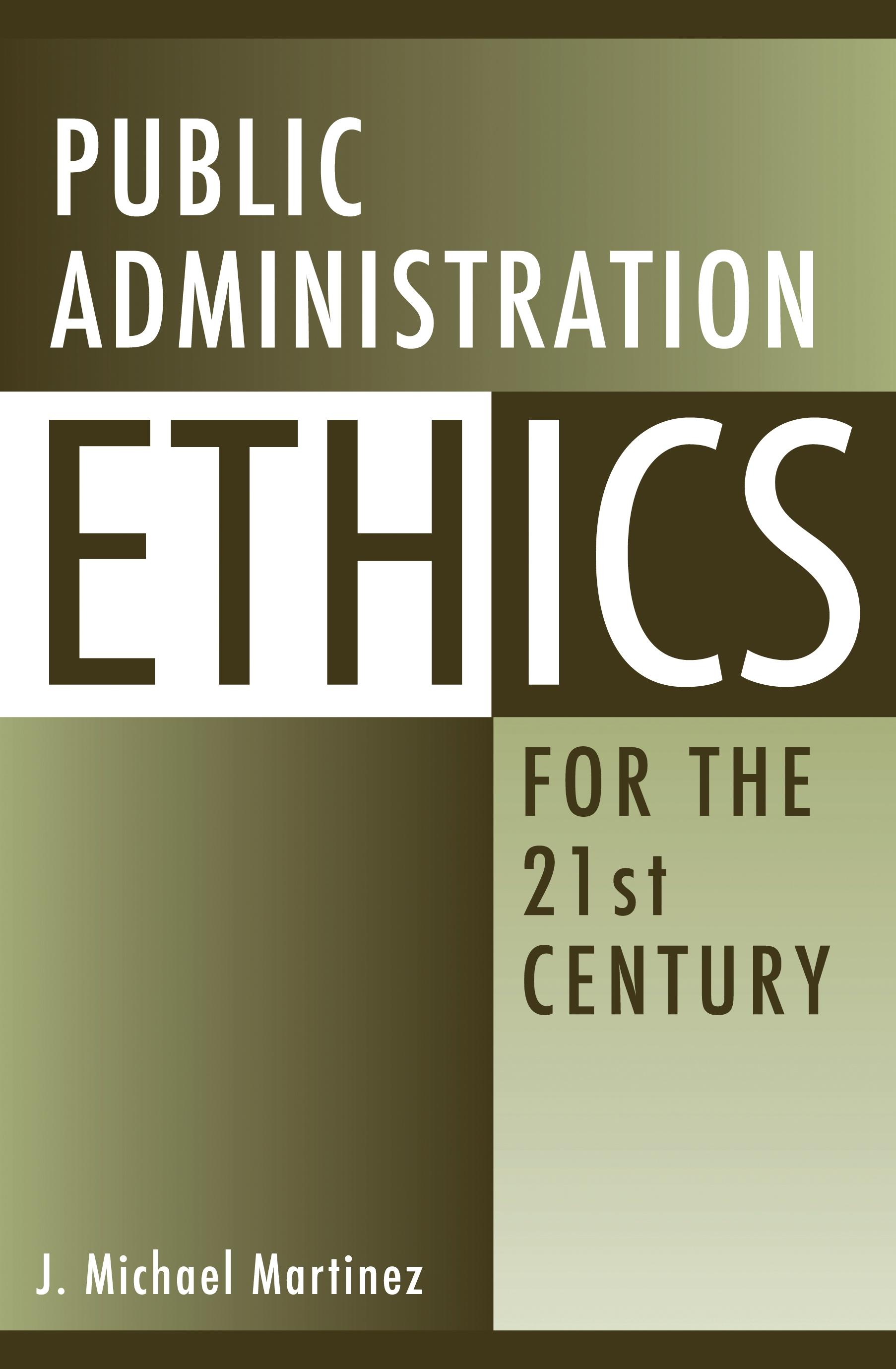
This volume establishes a foundation for a uniform code of professional ethics for public administrators in the United States.
Public Administration Ethics for the 21st Century lays the ethical foundations for a uniform professional code of ethics for public administrators, civil servants, and non-profit administrators in the US. Martinez synthesizes five disparate schools of ethical thought as to how public administrators can come to know the good and behave in ways that advance the values of citizenship, equity, and public interest within their respective organizations. Using case studies, he teaches American administrators how to combine the approaches of all five schools to evaluate and resolve complex ethical dilemmas within the constraints of the U.S. democratic values set.
Martinez enunciates the common ethical principles that guide public administrators in their practice within the specific ethical parameters and organizational cultures of a myriad entities at the federal, state, and local levels of government in the United States, as well as in non-profit organizations. Along the way, Martinez addresses a number of crucial issues, including personal gain, conflict of interest, transparency, democratic impartiality, hiring, hierarchical discipline, media relations, partisan pressure, appointments by elected officials, and whistle-blowing. The striking, high-profile case studies—Nathan Bedford Forrest, Adolph Eichmann, Lieutenant William Calley, and Mary Ann Wright—illustrate ethical dilemmas where, for better or worse, the individual was at odds with the organization.
Public Administration Ethics for the 21st Century lays the ethical foundations for a uniform professional code of ethics for public administrators, civil servants, and non-profit administrators in the US. Martinez synthesizes five disparate schools of ethical thought as to how public administrators can come to know the good and behave in ways that advance the values of citizenship, equity, and public interest within their respective organizations. Using case studies, he teaches American administrators how to combine the approaches of all five schools to evaluate and resolve complex ethical dilemmas within the constraints of the U.S. democratic values set.
Martinez enunciates the common ethical principles that guide public administrators in their practice within the specific ethical parameters and organizational cultures of a myriad entities at the federal, state, and local levels of government in the United States, as well as in non-profit organizations. Along the way, Martinez addresses a number of crucial issues, including personal gain, conflict of interest, transparency, democratic impartiality, hiring, hierarchical discipline, media relations, partisan pressure, appointments by elected officials, and whistle-blowing. The striking, high-profile case studies—Nathan Bedford Forrest, Adolph Eichmann, Lieutenant William Calley, and Mary Ann Wright—illustrate ethical dilemmas where, for better or worse, the individual was at odds with the organization.
Strony: 216
Kategoria: Statsvetenskap & Politik
e-ISBN: 9798216134039
Waga przesyłki: 1.2 kg
Wysyłka w ciągu: 1-2 dni
Płać wygodnie kartą, Klarną, Apple Pay lub Google Pay. Nie jesteś zadowolony? Zawsze masz 14-dniową gwarancję zwrotu pieniędzy. Więcej przeczytasz w naszych warunkach. Masz pytania? Napisz do nas na hello@memmo.org.
Memmo ułatwia naukę – gdziekolwiek jesteś na świecie. U nas znajdziesz podręczniki i sprytne narzędzia do nauki w jednym miejscu: streszczenia, quizy, podcasty i fiszki. A do tego Ted, Twój kumpel do nauki, który odpowie na wszystko, co Cię nurtuje. Ponad 50 000 studentów już tu się uczy – stworzone, byś uczył się szybciej i mniej stresował.