
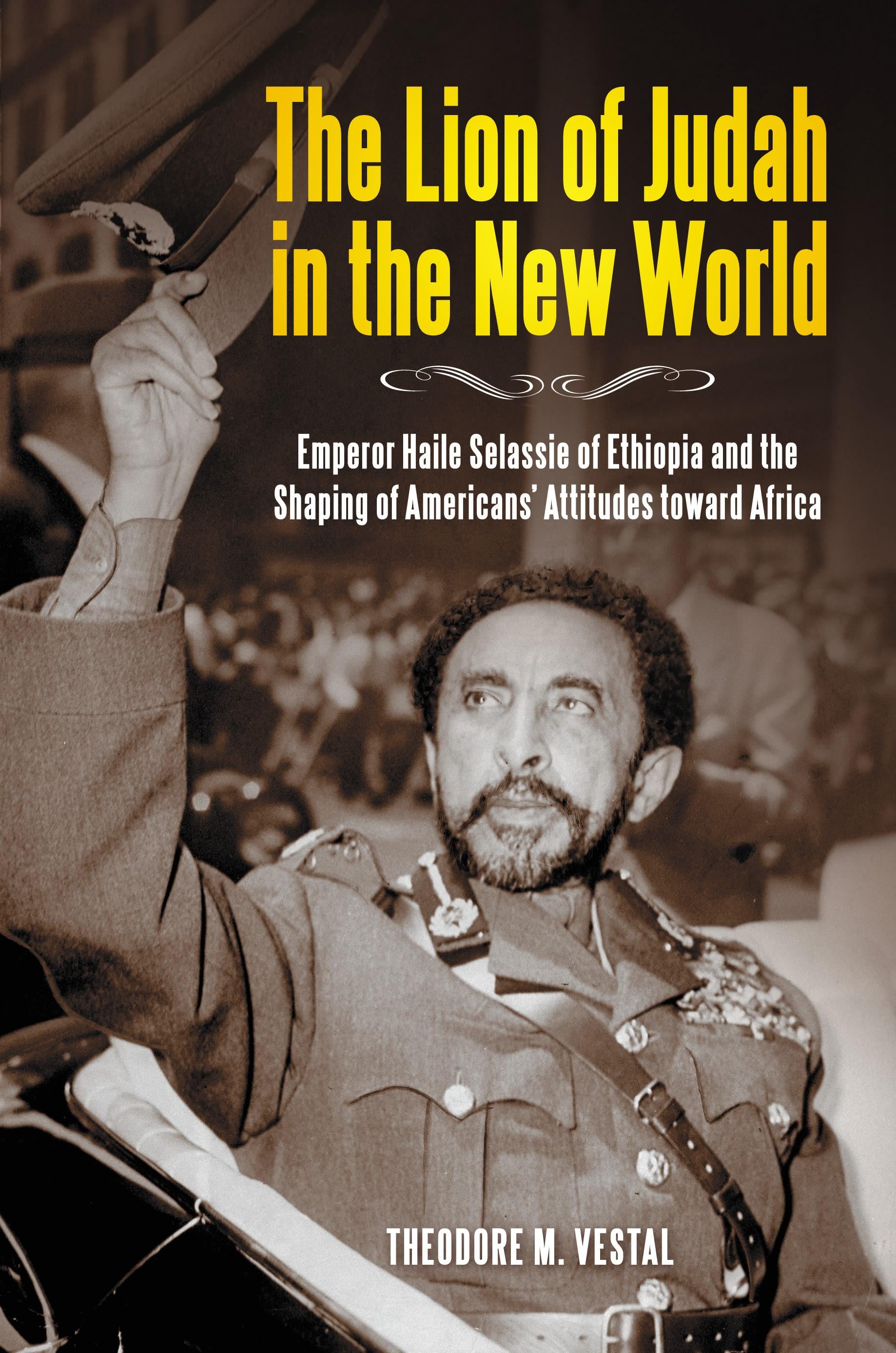
This insightful book relates how Emperor Haile Selassie helped shape America's image of Africa and how that image continues to evolve in the United States today.
The Lion of Judah in the New World: Emperor Haile Selassie of Ethiopia and the Shaping of Americans' Attitudes toward Africa tells the story of a dynamic ruler who influenced the perception of an entire continent. Documenting the Emperor's state visits to North America, the book explores U.S. foreign policy towards Ethiopia and Africa over two decades. At the same time, it seeks to understand why Haile Selassie enjoyed such celebrity in the United States and how he became so important in determining U.S. attitudes toward Africa.
The book includes a brief biography of the Emperor and also explores the geography and long, colorful history of Ethiopia. The tensions and contradictions that marked Haile Selassie's life are highlighted in significant episodes that underscore his astute use of public relations and personal diplomacy. His leadership of postcolonial Africa during the Cold War is examined, as is his ultimate rejection by the United States in 1973 that marked the end of the monarchy and ushered in the tragic fratricide of Ethiopian civil war.
The Lion of Judah in the New World: Emperor Haile Selassie of Ethiopia and the Shaping of Americans' Attitudes toward Africa tells the story of a dynamic ruler who influenced the perception of an entire continent. Documenting the Emperor's state visits to North America, the book explores U.S. foreign policy towards Ethiopia and Africa over two decades. At the same time, it seeks to understand why Haile Selassie enjoyed such celebrity in the United States and how he became so important in determining U.S. attitudes toward Africa.
The book includes a brief biography of the Emperor and also explores the geography and long, colorful history of Ethiopia. The tensions and contradictions that marked Haile Selassie's life are highlighted in significant episodes that underscore his astute use of public relations and personal diplomacy. His leadership of postcolonial Africa during the Cold War is examined, as is his ultimate rejection by the United States in 1973 that marked the end of the monarchy and ushered in the tragic fratricide of Ethiopian civil war.
Płać wygodnie kartą, Klarną, Apple Pay lub Google Pay. Nie jesteś zadowolony? Zawsze masz 14-dniową gwarancję zwrotu pieniędzy. Więcej przeczytasz w naszych warunkach. Masz pytania? Napisz do nas na hello@memmo.org.
Memmo ułatwia naukę – gdziekolwiek jesteś na świecie. U nas znajdziesz podręczniki i sprytne narzędzia do nauki w jednym miejscu: streszczenia, quizy, podcasty i fiszki. A do tego Ted, Twój kumpel do nauki, który odpowie na wszystko, co Cię nurtuje. Ponad 50 000 studentów już tu się uczy – stworzone, byś uczył się szybciej i mniej stresował.