
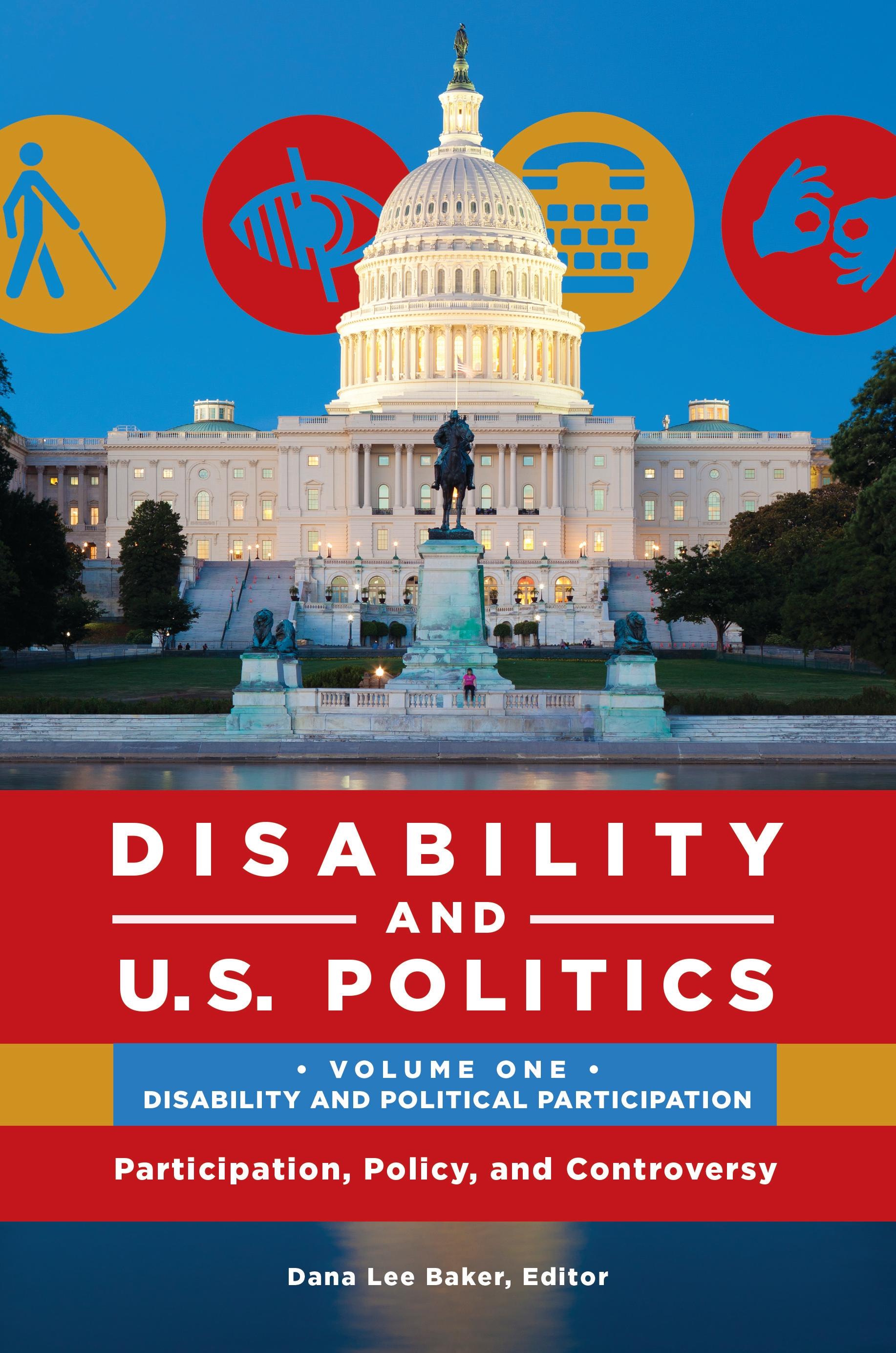
More than 1 billion people worldwide have a disability, and they are all affected by politics. This two-volume work explores key topics at the heart of disability policy, such as voting, race, gender, age, health care, social security, transportation, abuse, and the environment.
Disability policy is no longer an area that can be adequately addressed within major areas of public policy such as welfare, health, labor, and education. Disability has become widely acknowledged in recent decades, partly because of the increasing number of disabled citizens across all demographic populations. Advocates argue that diversity of all kinds deserves recognition and accommodation. This set examines policies targeting disability to provide a multifaceted description of the political participation of people with disabilities as well as disability policy development in the United States. The first volume focuses on political participation and voting issues, and the second volume covers disability public policy.
In these two volumes, numerous scholars and experts in the social sciences and humanities explore timely topics that are key to disability policy questions, including activism, voting, race, gender, age, health care, social security, civil rights, abuse, the environment, and even death. Readers will better understand the challenges that policymakers face in grappling with controversies over issues of social engineering and public policy, often attempting to reconcile majority experience with minority rights. The chapters analyze the history of disability politics, describe the disability policy infrastructure as it currently exists in the United States, and provide insight into current disability-related controversies.
Disability policy is no longer an area that can be adequately addressed within major areas of public policy such as welfare, health, labor, and education. Disability has become widely acknowledged in recent decades, partly because of the increasing number of disabled citizens across all demographic populations. Advocates argue that diversity of all kinds deserves recognition and accommodation. This set examines policies targeting disability to provide a multifaceted description of the political participation of people with disabilities as well as disability policy development in the United States. The first volume focuses on political participation and voting issues, and the second volume covers disability public policy.
In these two volumes, numerous scholars and experts in the social sciences and humanities explore timely topics that are key to disability policy questions, including activism, voting, race, gender, age, health care, social security, civil rights, abuse, the environment, and even death. Readers will better understand the challenges that policymakers face in grappling with controversies over issues of social engineering and public policy, often attempting to reconcile majority experience with minority rights. The chapters analyze the history of disability politics, describe the disability policy infrastructure as it currently exists in the United States, and provide insight into current disability-related controversies.
Płać wygodnie kartą, Klarną, Apple Pay lub Google Pay. Nie jesteś zadowolony? Zawsze masz 14-dniową gwarancję zwrotu pieniędzy. Więcej przeczytasz w naszych warunkach. Masz pytania? Napisz do nas na hello@memmo.org.
Memmo ułatwia naukę – gdziekolwiek jesteś na świecie. U nas znajdziesz podręczniki i sprytne narzędzia do nauki w jednym miejscu: streszczenia, quizy, podcasty i fiszki. A do tego Ted, Twój kumpel do nauki, który odpowie na wszystko, co Cię nurtuje. Ponad 50 000 studentów już tu się uczy – stworzone, byś uczył się szybciej i mniej stresował.