
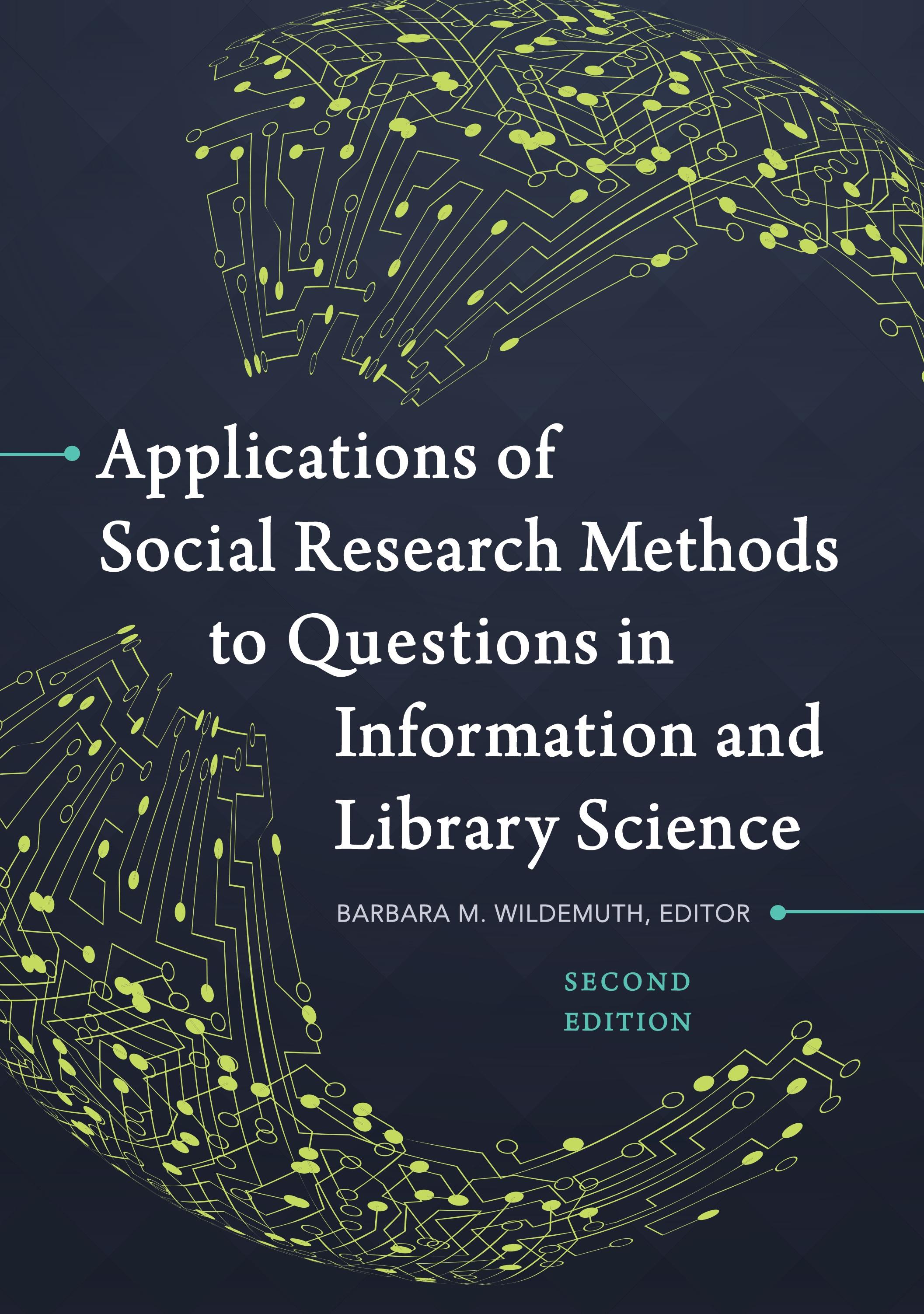
The second edition of this innovative textbook illustrates research methods for library and information science, describing the most appropriate approaches to a question—and showing you what makes research successful.
Written for the serious practicing librarian researcher and the LIS student, this volume fills the need for a guide focused specifically on information and library science research methods. By critically assessing existing studies from within library and information science, this book helps you acquire a deeper understanding of research methods so you will be able to design more effective studies yourself.
Section one considers research questions most often asked in information and library science and explains how they arise from practice or theory. Section two covers a variety of research designs and the sampling issues associated with them, while sections three and four look at methods for collecting and analyzing data. Each chapter introduces a particular research method, points out its relative strengths and weaknesses, and provides a critique of two or more exemplary studies.
For this second edition, three new chapters have been added, covering mixed methods, visual data collection methods, and social network analysis. The chapters on research diaries and transaction log analysis have been updated, and updated examples are provided in more than a dozen other chapters as well.
Written for the serious practicing librarian researcher and the LIS student, this volume fills the need for a guide focused specifically on information and library science research methods. By critically assessing existing studies from within library and information science, this book helps you acquire a deeper understanding of research methods so you will be able to design more effective studies yourself.
Section one considers research questions most often asked in information and library science and explains how they arise from practice or theory. Section two covers a variety of research designs and the sampling issues associated with them, while sections three and four look at methods for collecting and analyzing data. Each chapter introduces a particular research method, points out its relative strengths and weaknesses, and provides a critique of two or more exemplary studies.
For this second edition, three new chapters have been added, covering mixed methods, visual data collection methods, and social network analysis. The chapters on research diaries and transaction log analysis have been updated, and updated examples are provided in more than a dozen other chapters as well.
Płać wygodnie kartą, Klarną, Apple Pay lub Google Pay. Nie jesteś zadowolony? Zawsze masz 14-dniową gwarancję zwrotu pieniędzy. Więcej przeczytasz w naszych warunkach. Masz pytania? Napisz do nas na hello@memmo.org.
Memmo ułatwia naukę – gdziekolwiek jesteś na świecie. U nas znajdziesz podręczniki i sprytne narzędzia do nauki w jednym miejscu: streszczenia, quizy, podcasty i fiszki. A do tego Ted, Twój kumpel do nauki, który odpowie na wszystko, co Cię nurtuje. Ponad 50 000 studentów już tu się uczy – stworzone, byś uczył się szybciej i mniej stresował.