
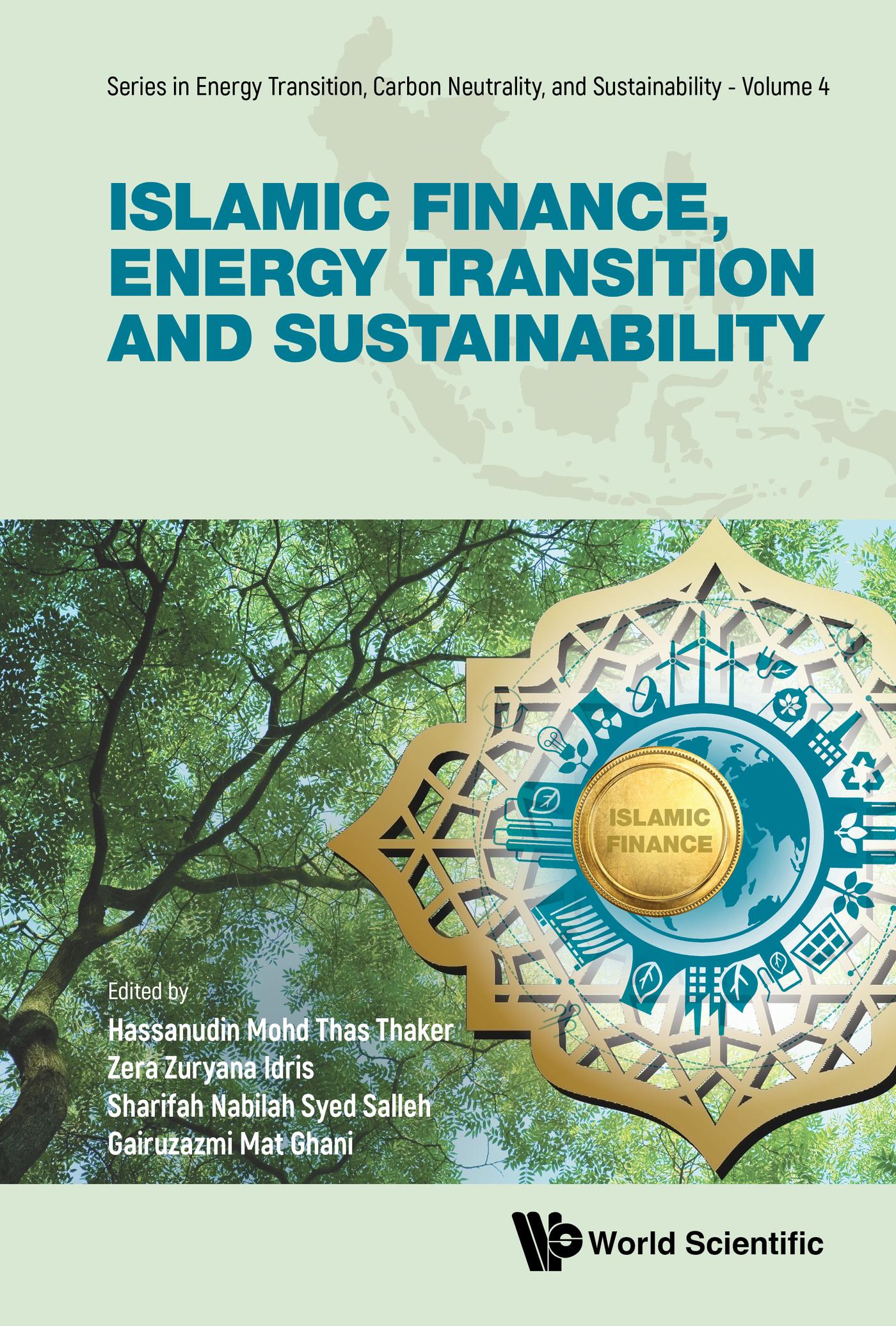
This book tackles the worldwide issue of climate change and energy security. It aims to offer inventive answers for a more environmentally friendly and fair future by examining the convergence of Islamic finance and sustainability.
Islamic finance prioritises ethical investing, risk-sharing, and social justice; it offers a distinct advantage in promoting sustainable development goals (SDGs). Thus, this book focuses on the theoretical discourse about Islamic finance and sustainability, the global perspective on energy transition, the use of Islamic financial instruments such as sukuk and green bonds, to finance renewable energy projects and other sustainable initiatives. It presents successful case studies and emerging trends in the Islamic finance that encouraged policymakers, financial professionals, and investors to explore products of Islamic finance and incorporate these concepts into their plans and operations.
Furthermore, this book aims to assist in closing the knowledge disparity in this expanding domain, functioning as a significant asset for scholars, learners, and professionals. It exemplifies the notion that finance has the potential to positively impact the world by promoting sustainability and creating a better planet and future for everyone in the country.
Contents:
- Islamic Perspectives on Climate Change and Energy Transition:
- Climate Change Policy: How Islam Deals with It — The Malaysian Case Study (Shahrul Azman bin Abd Razak)
- Bridging Quranic Guidance and Public Economics for Climate Solutions (Muhammad Irwan Ariffin)
- Islamic Framework for Transition Towards Sustainable Energy: Qur'anic Sources, Legal Maxims, and Contemporary Practices (Mohamed Aslam Akbar, Mustafa Omar Mohammed, Anaztasia Natasha Muhamad Ramlan Mohamed Asmy Mohd Thas Thaker, Ahmad Khaliq and Anwar Allah Pitchay)
- Renewable Energy Production and Sustainable Development in OIC Countries: The Role Of Islamic Financial Development and Institutional Quality (Rafiqa Murdipi and Norazuwana Shaari)
- Financing Energy Transition with Islamic Instruments:
- Funding Energy Transition with Islamic Finance in Muslim-Majority Countries: Evidence from ASEAN, Central Asia, and Maghreb Region (Maya Puspa Rahman, Khairunnisa Musari Nurcan Kilinc-Ata and Nun Maziyyah Mahsyar)
- Optimizing Green Sukuk for Renewable Energy Sustainability: An Integrated BOCR-Based Strategic Framework (Abrista Devi, Aam Slamet Rusydiana and Irman Firmansyah)
- Renewable Energy Transition (RET) Sukuk to Reduce Fossil Fuel Dependency (Hazik Mohamed)
- Harnessing Islamic Blended Finance for Renewable Energy Development in Indonesia: A Case for Green Sukuk Implementation (Evania Herindar, Fauziah Chairiyati, Abdullah Haidar, and Nur Hendrasto)
- Innovations in Islamic Finance for Sustainability:
- Religiosity and Pro-Environmental Behavior in Malaysia (Gairuzazmi Mat Ghani)
- Value-Based Intermediation and the Energy Transition: The Role of Islamic Finance for a Sustainable Future (Shahida Shahimi and Siti Aisyah Zahari)
- Toward Ethical and Sustainable Peer-to-Peer Energy Trading: Insights from Islamic Finance Principles (Muhammad Irwan Ariffin and Noor Hazrin Hany Mohamad Hanif)
- Islamic Social Finance and Energy Transition:
- Waqf as an Islamic Social Finance Instrument for Supporting Sustainability and Energy Transition (Mushaddad Hasbullah, Mohamad Zaharuddin Zakaria, Ahmad Zaki Salleh and Hakimah Hamir)
- Evaluating the Sustainable Waqf–Retakaful Model in Malaysia: Enhancing Risk Management for Energy Transition (Ahmad Khaliq, Mohamed Asmy Mohd Thas Thaker, Marhanum Che Salleh and Mohd Owais)
- A Proposed Model of Demand Drivers for Residential Green Houses in Malaysia (Hassanudin Mohd Thas Thaker, Sharifah Nabilah Syed Salleh, Jarita Duasa, Mohamed Asmy Mohd Thas Thaker, Dolhadi Zainudin, Zera Zuryana Idris and Gairuzazmi Mat Ghani)
Readership: Academics, higher degree students, researchers, and policymakers around the world interested in exploring discussions about the convergence of Islamic finance, energy transition and sustainability, environmental science, and public policy. Can be used as a recommended reference for undergraduate and postgraduate-level Economics and Finance courses, or for interdisciplinary research or curriculum development; Bankers, sukuk issuers, and investment managers looking to align portfolios with ESG and maqasid al-shariah.
Płać wygodnie kartą, Klarną, Apple Pay lub Google Pay. Nie jesteś zadowolony? Zawsze masz 14-dniową gwarancję zwrotu pieniędzy. Więcej przeczytasz w naszych warunkach. Masz pytania? Napisz do nas na hello@memmo.org.
Memmo ułatwia naukę – gdziekolwiek jesteś na świecie. U nas znajdziesz podręczniki i sprytne narzędzia do nauki w jednym miejscu: streszczenia, quizy, podcasty i fiszki. A do tego Ted, Twój kumpel do nauki, który odpowie na wszystko, co Cię nurtuje. Ponad 50 000 studentów już tu się uczy – stworzone, byś uczył się szybciej i mniej stresował.