
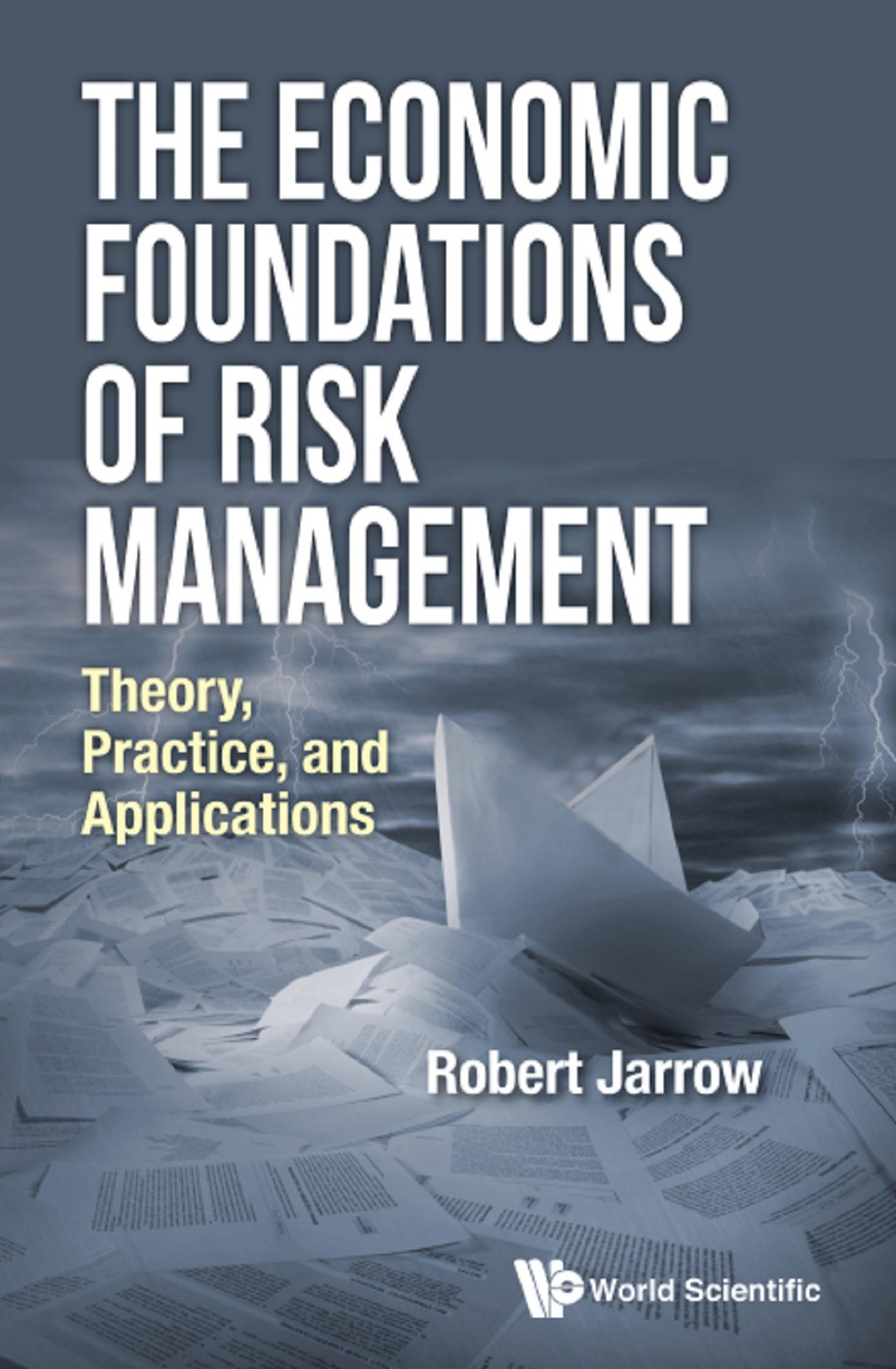
'The book is an ideal complement to existing monographs on financial risk management. The reader will benefit from a standard background in no-arbitrage pricing. A tour of risk types and risk management principles is presented in a terse, no-fuss manner. Plenty of pointers to additional literature are given, allowing the interested reader to go deeper into any of the topics presented.'
Newsletter of the Bachelier Finance Society
The Economic Foundations of Risk Management presents the theory, the practice, and applies this knowledge to provide a forensic analysis of some well-known risk management failures. By doing so, this book introduces a unified framework for understanding how to manage the risk of an individual's or corporation's or financial institution's assets and liabilities. The book is divided into five parts. The first part studies the markets and the assets and liabilities that trade therein. Markets are differentiated based on whether they are competitive or not, frictionless or not (and the type of friction), and actively traded or not. Assets are divided into two types: primary assets and financial derivatives. The second part studies models for determining the risks of the traded assets. Models provided include the Black-Scholes-Merton, the Heath-Jarrow-Morton, and the reduced form model for credit risk. Liquidity risk, operational risk, and trading constraint models are also contained therein. The third part studies the conceptual solution to an individual's, firm's, and bank's risk management problem. This formulation involves solving a complex dynamic programming problem that cannot be applied in practice. Consequently, Part IV investigates how risk management is actually done in practice via the use of diversification, static hedging, and dynamic hedging. Finally, Part V applies these collective insights to six case studies, which are famous risk management failures. These are Penn Square Bank, Metallgesellschaft, Orange County, Barings Bank, Long Term Capital Management, and Washington Mutual. The credit crisis is also discussed to understand how risk management failed for many institutions and why.Strony: 208
Kategoria: Redovisning, Finans & Investering
e-ISBN: 9789813147539
Waga przesyłki: 1.2 kg
Wysyłka w ciągu: 1-2 dni
Płać wygodnie kartą, Klarną, Apple Pay lub Google Pay. Nie jesteś zadowolony? Zawsze masz 14-dniową gwarancję zwrotu pieniędzy. Więcej przeczytasz w naszych warunkach. Masz pytania? Napisz do nas na hello@memmo.org.
Memmo ułatwia naukę – gdziekolwiek jesteś na świecie. U nas znajdziesz podręczniki i sprytne narzędzia do nauki w jednym miejscu: streszczenia, quizy, podcasty i fiszki. A do tego Ted, Twój kumpel do nauki, który odpowie na wszystko, co Cię nurtuje. Ponad 50 000 studentów już tu się uczy – stworzone, byś uczył się szybciej i mniej stresował.
Może Ci się spodobać
Kup książkę0