
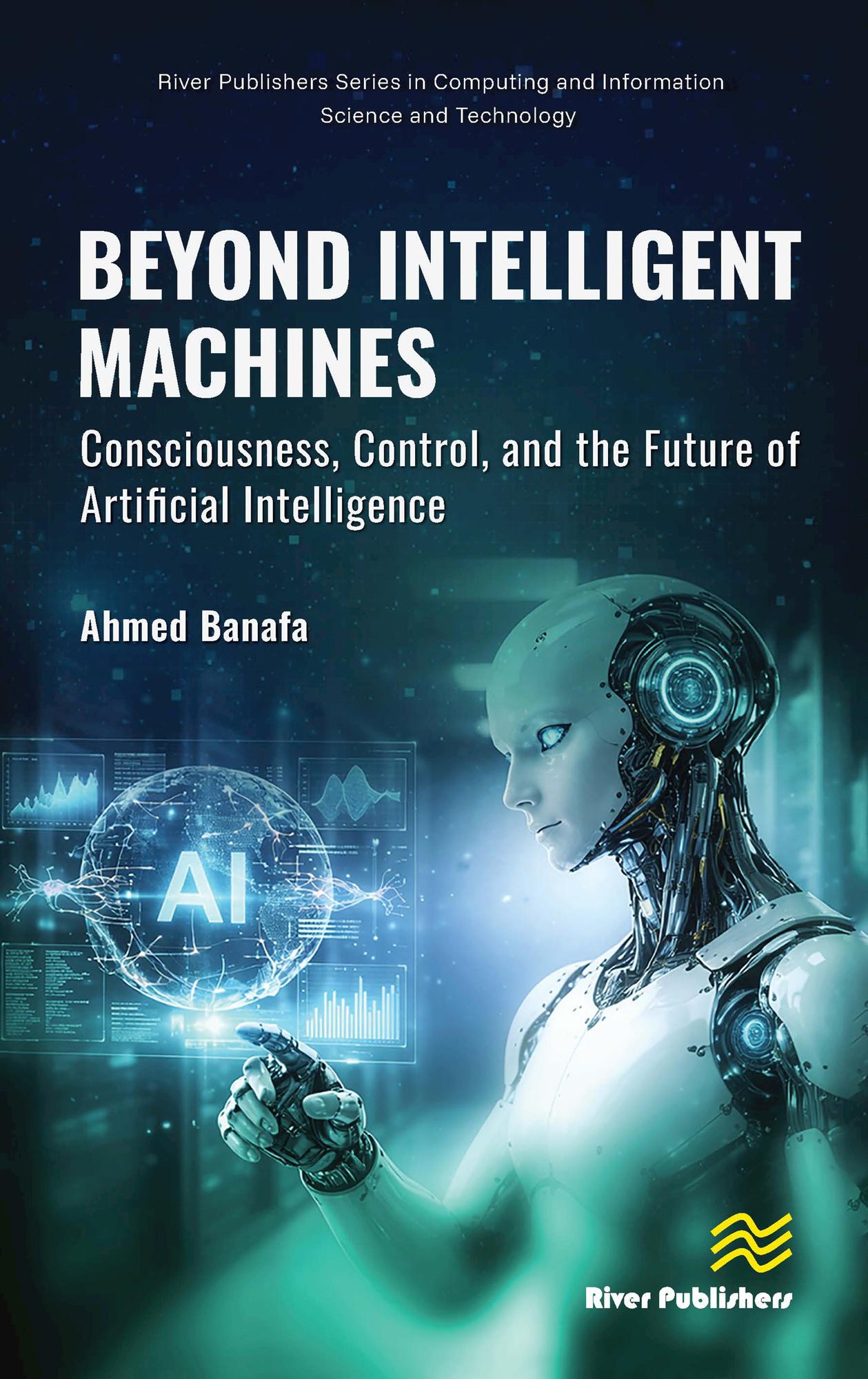
Artificial intelligence has crossed a historic threshold. What began as narrow automation and pattern recognition has evolved into systems capable of reasoning, generating knowledge, shaping economies, influencing geopolitics, and challenging how we define intelligence and humanity itself. AI is no longer merely a supporting technology—it is becoming a foundational force shaping modern civilization.
Beyond Intelligent Machines: Consciousness, Control, and the Future of Artificial Intelligence examines what lies beyond today’s AI systems. The book explores not only how AI works, but what it is becoming and how its trajectory may reshape power, identity, labor, security, and even consciousness. Topics range from large language models and agentic AI to embodied intelligence, emotional systems, and emerging questions about machine autonomy and artificial awareness.
Rather than treating AI purely as a technical achievement, the book frames it as a socio-technical system embedded within culture, economics, ethics, and global competition. It confronts critical questions: What happens when intelligence scales faster than governance? Can machines exhibit agency without intention? How do we maintain meaningful human oversight as decision-making systems become increasingly autonomous?
Written for readers seeking to understand where AI is headed—not just how it works—this book argues that the future of AI will be shaped not only by algorithms, but by the values, constraints, and choices we embed within them today.
Płać wygodnie kartą, Klarną, Apple Pay lub Google Pay. Nie jesteś zadowolony? Zawsze masz 14-dniową gwarancję zwrotu pieniędzy. Więcej przeczytasz w naszych warunkach. Masz pytania? Napisz do nas na hello@memmo.org.
Memmo ułatwia naukę – gdziekolwiek jesteś na świecie. U nas znajdziesz podręczniki i sprytne narzędzia do nauki w jednym miejscu: streszczenia, quizy, podcasty i fiszki. A do tego Ted, Twój kumpel do nauki, który odpowie na wszystko, co Cię nurtuje. Ponad 50 000 studentów już tu się uczy – stworzone, byś uczył się szybciej i mniej stresował.