
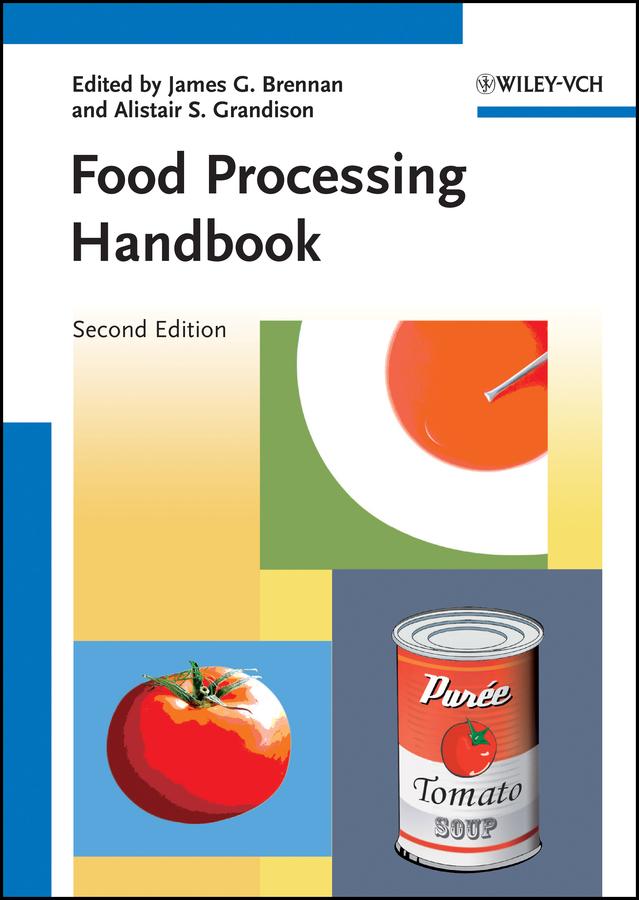
The second edition of the Food Processing Handbook presents a comprehensive review of technologies, procedures and innovations in food
processing, stressing topics vital to the food industry today and pinpointing the trends in future research and development.
Focusing on the technology involved, this handbook describes the principles and the equipment used as well as the changes - physical,
chemical, microbiological and organoleptic - that occur during food preservation. In so doing, the text covers in detail such techniques as
post-harvest handling, thermal processing, evaporation and dehydration, freezing, irradiation, high-pressure processing, emerging technologies and packaging. Separation and conversion operations widely used in the food industry are also covered as are the processes of baking, extrusion and frying. In addition, it addresses current concerns about the safety of processed foods (including HACCP systems, traceability and hygienic design of plant) and control of food processes, as well as the impact of processing on the environment, water and waste treatment, lean manufacturing and the roles of nanotechnology and fermentation in food processing.
This two-volume set is a must-have for scientists and engineers involved in food manufacture, research and development in both industry
and academia, as well as students of food-related topics at undergraduate and postgraduate levels.
From Reviews on the First Edition:
"This work should become a standard text for students of food technology, and is worthy of a place on the bookshelf of anybody involved in the production of foods."
Journal of Dairy Technology, August 2008
"This work will serve well as an excellent course resource or reference as it has well-written explanations for those new to the field and detailed equations for those needing greater depth."
CHOICE, September 2006
processing, stressing topics vital to the food industry today and pinpointing the trends in future research and development.
Focusing on the technology involved, this handbook describes the principles and the equipment used as well as the changes - physical,
chemical, microbiological and organoleptic - that occur during food preservation. In so doing, the text covers in detail such techniques as
post-harvest handling, thermal processing, evaporation and dehydration, freezing, irradiation, high-pressure processing, emerging technologies and packaging. Separation and conversion operations widely used in the food industry are also covered as are the processes of baking, extrusion and frying. In addition, it addresses current concerns about the safety of processed foods (including HACCP systems, traceability and hygienic design of plant) and control of food processes, as well as the impact of processing on the environment, water and waste treatment, lean manufacturing and the roles of nanotechnology and fermentation in food processing.
This two-volume set is a must-have for scientists and engineers involved in food manufacture, research and development in both industry
and academia, as well as students of food-related topics at undergraduate and postgraduate levels.
From Reviews on the First Edition:
"This work should become a standard text for students of food technology, and is worthy of a place on the bookshelf of anybody involved in the production of foods."
Journal of Dairy Technology, August 2008
"This work will serve well as an excellent course resource or reference as it has well-written explanations for those new to the field and detailed equations for those needing greater depth."
CHOICE, September 2006
Strony: 826
Kategoria: Ingenjörsvetenskap
e-ISBN: 9783527634378
Waga przesyłki: 1.2 kg
Wysyłka w ciągu: 1-2 dni
Płać wygodnie kartą, Klarną, Apple Pay lub Google Pay. Nie jesteś zadowolony? Zawsze masz 14-dniową gwarancję zwrotu pieniędzy. Więcej przeczytasz w naszych warunkach. Masz pytania? Napisz do nas na hello@memmo.org.
Memmo ułatwia naukę – gdziekolwiek jesteś na świecie. U nas znajdziesz podręczniki i sprytne narzędzia do nauki w jednym miejscu: streszczenia, quizy, podcasty i fiszki. A do tego Ted, Twój kumpel do nauki, który odpowie na wszystko, co Cię nurtuje. Ponad 50 000 studentów już tu się uczy – stworzone, byś uczył się szybciej i mniej stresował.