
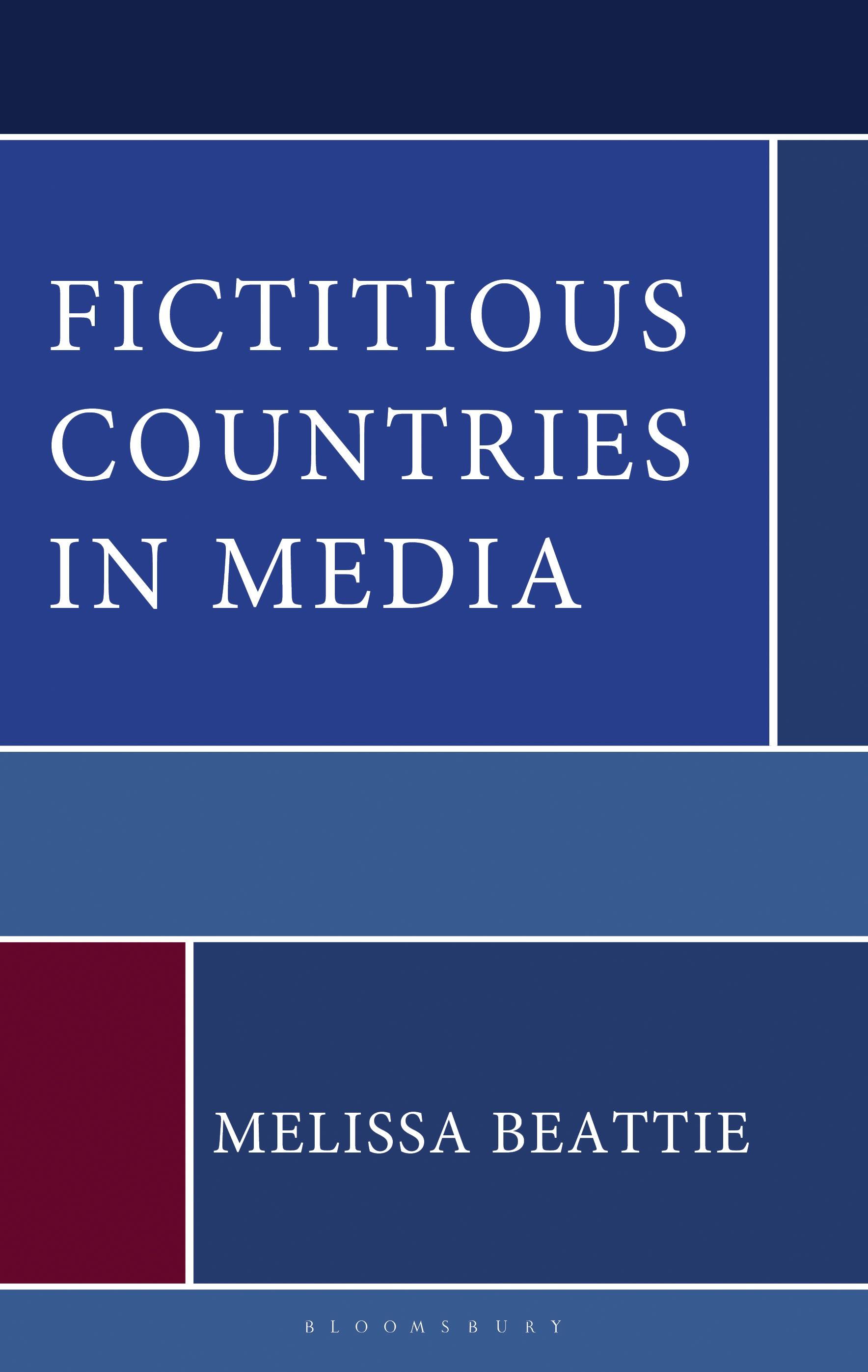
Melissa Beattie explores the promises and pitfalls of fabricated nations as a setting and subject of fictional narratives, interrogating the methods and motivations of their creation and, more importantly, who they purport to represent.
Drawing upon aesthetics, industrial analyses, and postcolonial theory, Beattie argues that in (re)combining elements of real nations into constructed ones, we introduce the opportunity for existing perceived-stereotypes to be either subverted or reinforced. As the resulting narratives tend to repackage real discourses about the regions being synthesized, she contends, these media texts often prioritize characters from “real” countries and dominant groups, ultimately replicating existing geopolitical and sociocultural power imbalances.
As Beattie examines portrayals of “nations” that are fictitiously located across the globe as case studies – including “African” nations like “Equatorial Kundu” from The West Wing, “Latin American” countries like “Parador” from Moon Over Parador (1988), “Eastern European” nations like “Sokovia” in the Marvel Cinematic Universe, and “post-Soviet” states like “Karastan” in Lost in Karastan (2014) – she highlights how the cultural specificity of each region being “represented” is utilized in Othering that same region.
Ultimately, this book emphasizes the importance of critique and reflection from media theorists, practitioners, students and audiences alike to work toward more ethical representation of the societies and (sub)cultures in which these texts are produced and consumed.
Drawing upon aesthetics, industrial analyses, and postcolonial theory, Beattie argues that in (re)combining elements of real nations into constructed ones, we introduce the opportunity for existing perceived-stereotypes to be either subverted or reinforced. As the resulting narratives tend to repackage real discourses about the regions being synthesized, she contends, these media texts often prioritize characters from “real” countries and dominant groups, ultimately replicating existing geopolitical and sociocultural power imbalances.
As Beattie examines portrayals of “nations” that are fictitiously located across the globe as case studies – including “African” nations like “Equatorial Kundu” from The West Wing, “Latin American” countries like “Parador” from Moon Over Parador (1988), “Eastern European” nations like “Sokovia” in the Marvel Cinematic Universe, and “post-Soviet” states like “Karastan” in Lost in Karastan (2014) – she highlights how the cultural specificity of each region being “represented” is utilized in Othering that same region.
Ultimately, this book emphasizes the importance of critique and reflection from media theorists, practitioners, students and audiences alike to work toward more ethical representation of the societies and (sub)cultures in which these texts are produced and consumed.
Strony: 192
Kategoria: Film- & Medievetenskap
e-ISBN: 9781978759398
Waga przesyłki: 1.2 kg
Wysyłka w ciągu: 1-2 dni
Płać wygodnie kartą, Klarną, Apple Pay lub Google Pay. Nie jesteś zadowolony? Zawsze masz 14-dniową gwarancję zwrotu pieniędzy. Więcej przeczytasz w naszych warunkach. Masz pytania? Napisz do nas na hello@memmo.org.
Memmo ułatwia naukę – gdziekolwiek jesteś na świecie. U nas znajdziesz podręczniki i sprytne narzędzia do nauki w jednym miejscu: streszczenia, quizy, podcasty i fiszki. A do tego Ted, Twój kumpel do nauki, który odpowie na wszystko, co Cię nurtuje. Ponad 50 000 studentów już tu się uczy – stworzone, byś uczył się szybciej i mniej stresował.